“Jungle Jim” Liberman
He Won One NHRA National Event. Nobody Told the Fans That Was Supposed to Make Him Ordinary.
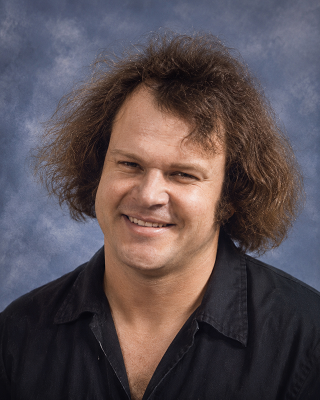
There is a problem with judging “Jungle Jim” Liberman by the record book. He won exactly one NHRA national event.
One.
Don Prudhomme won 35 Funny Car national events. John Force eventually won 157. Jungle Jim won the 1975 Summernationals at Englishtown and stopped there.
Yet when NHRA celebrated 50 years of Funny Car and fans voted for the greatest Funny Car of them all, Liberman’s 1973 Vega finished No. 1. That tells you what the record book missed.
Jungle Jim was built for the match-racing era, when a Funny Car’s job was not merely to collect points. It had to fill grandstands on Wednesday night in Maryland, Friday night in Pennsylvania and Saturday night somewhere several hundred miles away.
Liberman did long smoky burnouts, backed up at speeds sensible people reserved for going forward, carried wheelstands farther than the chassis designer had requested and understood that fans had bought a ticket to see something. He did not have the biggest trophy collection in Funny Car. He had something promoters valued nearly as much: people came through the gate because Jungle Jim was on the poster.
The Jungle Started in California
Russell James Liberman was born September 12, 1945, in Pennsylvania. He left high school before graduating and eventually landed in Northern California, where the early Funny Car movement was turning ordinary-looking compact cars into machinery that made very little ordinary sense.
Liberman worked building headers at Goodie’s Speed Shop in San Jose and began racing at Fremont in the mid-1960s. His early rides included the injected-nitro Hercules Nova and Lew Arrington’s supercharged Brutus GTO. By 1966 he had his own Goodie’s-sponsored Chevy II.
That was the car that supplied the name. One account has the Fremont announcer watching Liberman’s wild driving and deciding the fellow drove as though he had just come out of the jungle.
“Jungle Jim” was considerably easier to put on a race poster than Russell James Liberman. It stuck.
He Figured Out the Match-Race Business Early
Funny Car was still developing into a formal national championship category, and the real money for many teams was in booked match races. A promoter did not care much whether a driver had finished fifth or seventh in some distant points standings. He cared whether people bought tickets.
Liberman learned that part quickly. His Chevy-powered cars looked good, ran hard and rarely went down the track without giving the crowd something to discuss on the ride home.
By 1968 the Jungle Jim name was in enough demand that Liberman added a second Funny Car. Clare Sanders became one of the drivers, with others later including Pete Williams, Jake Crimmins, Russell Long and Roy Harris.
The arithmetic was easy enough. One Jungle Jim booking was good. Two bookings on opposite sides of the country paid better.
One of His Cars Won Pomona Before Jim Did
The second-car arrangement produced an interesting piece of Jungle Jim history at the 1969 NHRA Winternationals. Liberman did not qualify, but Clare Sanders did. Driving Liberman’s second Chevy II, Sanders went through eliminations and won the Funny Car title.
So a Jungle Jim Funny Car had an NHRA national-event victory years before Jungle Jim himself did.
Sanders later credited Liberman as a sharp racer and tuner, and when Liberman’s own car failed to qualify at Pomona he concentrated on making the second one quicker. The showman knew what was happening inside the car too.
Then Came the Vega
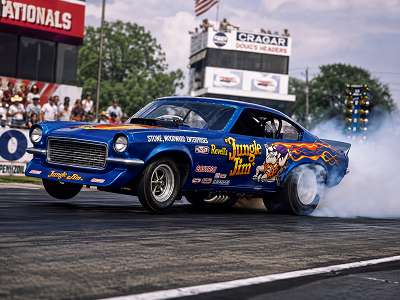
Liberman raced a succession of Chevy-bodied Funny Cars — Chevy IIs, Camaros and then Vegas. The 1973 Jungle Jim Vega became the machine most closely associated with him.
It was low, blue, beautifully lettered and carried a cartoon Jungle Jim swinging through the scenery. More important, it spent its life doing exactly what a seventies match-race Funny Car was supposed to do: travel, race, break, get fixed and head for the next track.
There were racers chasing championships. Jungle was chasing the next booking.
Jungle Pam Became Part of the Show
In 1972, Liberman met 18-year-old Pam Hardy in West Chester, Pennsylvania, shortly before she finished high school. She joined him on the road and became Jungle Pam.
Her official job around the starting line included guiding Liberman backward after his burnouts, but nobody involved was confused about the promotional value of the arrangement. Pam’s distinctive outfits, Liberman’s wild burnouts, the Jungle Jim graphics and the brightly painted Vega turned the starting-line routine into part of the attraction.
Funny Car was show business with nitromethane. Jungle understood that before plenty of racers did.
Lots of teams had somebody backing the car up. Only one had Jungle Pam.
The Burnout Was Not Merely Preparation
Most racers use the burnout to heat the tires. Jungle Jim used it to remind everybody who they had paid to see.
He became famous for long, smoky burnouts stretching hundreds of feet down the strip, then putting the car in reverse and coming back toward the starting line at speeds that made the crew suddenly pay close attention.
He also liked wheelstands, and not the tidy little front-wheel lift that tells the photographer the chassis is working. Jungle’s version could become a separate event.
None of this guaranteed the quickest elapsed time. It did guarantee that people remembered who had been in the car.
Sometimes He Arrived Just in Time to Race
The schedule created another piece of the Jungle Jim legend. He was frequently late, and not five minutes late. Jungle Jim late.
At one famous Atco match race, Pat Foster’s car was already being prepared to race a substitute because Liberman had not arrived. Then Jungle appeared near the highway.
The Funny Car was unloaded, fired and driven through the property toward the starting line, where Liberman rolled directly into a huge burnout. The crowd went wild.
The fellow in the other lane had technically arrived first. Nobody seemed to care.
1974: He Lost the Race and Won the Crowd
The 1974 Summernationals at Englishtown provided one of the purest Jungle Jim moments ever captured. Liberman reached the Funny Car final against Al Segrini, then the Vega stood up and stayed there.
The car carried a towering wheelstand far down the racetrack before Liberman finally had to give up the run. Segrini won the Summernationals. Jungle Jim supplied the picture everybody remembered.
It was almost a perfect summary of his career: the other fellow got the official result and Jungle still managed to leave with half the attention.
1975: This Time He Got the Trophy Too
A year later Liberman returned to Englishtown for a Summernationals that became a rain-soaked mess and did not finish until roughly two o’clock Tuesday morning.
Funny Car had also become the Don Prudhomme show. The Snake was in the middle of one of the most dominant seasons the class had seen, but Tom McEwen knocked him out in the first round.
That opened the door, and Liberman went through it. He reached the final against Tom Prock and won.
After years of match-race victories, packed grandstands and one spectacular national-event final that had ended with the front wheels pointed at the sky, Jungle Jim finally had an NHRA Wally.
It would be his only one. Ticket sales survived the disappointment.
He Almost Became a Top Fuel Driver
In late 1974 Liberman had Don Garlits and Gary Werner build him a rear-engine dragster for the 1975 season. Then reality interfered.
Promoters were not booking Jungle Jim because they desperately wanted to see another dragster. They wanted the Funny Car, so the order was canceled.
Garlits needed a new car anyway. He kept the dragster, added enough seat padding to fit his smaller frame, called it Swamp Rat 21 and won the 1975 Winternationals with it.
Even Jungle Jim’s unused race cars could cause trouble.
The Monza Was the Last Jungle Car
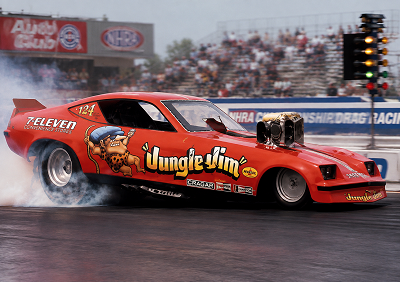
Liberman moved from the Vega to Chevrolet Monza bodies for 1976 and 1977. By then NHRA national-event Funny Car was increasingly dominated by teams built around championship campaigns, but Liberman remained what he had always been: a match racer.
He kept the Jungle Jim operation moving through dozens upon dozens of booked appearances across the country. National-event results never reflected how often the car was actually racing.
The ramp truck accumulated almost as much mileage as the Funny Car.
The 1973 Vega Outlived the Record Book
Decades after Liberman’s career ended, NHRA asked fans to rank the great Funny Cars from the category’s first fifty years. The list included championship cars from Prudhomme, Raymond Beadle, Kenny Bernstein and John Force.
Fans put Jungle Jim’s 1973 Vega at No. 1.
That car had never won an NHRA national event.
The result makes considerably more sense if you understand seventies drag racing. The Vega had been seen everywhere. It had performed fire burnouts, run match races, carried the Jungle Jim artwork and supplied the stage for one of the sport’s most memorable personalities.
Fans were not merely voting for a chassis and fiberglass body.
They were voting for Saturday night.
The Road Ended in 1977
Liberman was still only 31 when his racing career ended. On September 9, 1977, three days before his 32nd birthday, he was driving his Corvette near West Chester, Pennsylvania, when it collided head-on with a transit bus on West Chester Pike.
Jungle Jim Liberman was killed.
His final Monza had been carrying hopeful new 7-Eleven sponsorship, and there was every reason to think the Jungle Jim operation would continue into 1978. Instead, one of Funny Car’s shortest careers became one of its longest memories.
The Numbers Miss Almost Everything
Liberman’s official résumé looks strangely small for somebody this famous: one NHRA national-event victory, no NHRA world championship and a career cut off at 31.
Then start counting the things the points book did not record — hundreds of match races, multiple Jungle Jim cars, packed local tracks, long burnouts, wild wheelstands and a national touring identity before race shops regularly talked about personal brands.
In 2001, NHRA ranked Liberman No. 17 among its 50 greatest drivers. That is a remarkably high position for a man with one Wally.
It is also completely understandable.
The Bottom Line
Jungle Jim Liberman understood something about professional drag racing that the stopwatch could not measure. Winning the race was important. So was making sure the people in the grandstands believed they had seen something worth coming back for.
He could drive, tune, promote and sell bookings. He built the Jungle Jim name into a touring operation and gave local tracks a headliner people knew before national television made every successful racer familiar.
His one NHRA national-event victory came at Englishtown in 1975. His real trophy case was considerably larger: every kid who bought the model, every fan who crowded the fence for the burnout and every promoter who knew putting Jungle Jim on the poster would help fill the grandstands.
Most racers wanted to win the round. Jungle Jim wanted to win the crowd too.
Jungle Jim Liberman understood that Funny Car racing was supposed to entertain the crowd before, during and occasionally well outside the actual race, which gave Racing Shenanigans plenty to work with.
➤ See the Jungle Jim traveling-show story in Racing Shenanigans
➤ See the Jungle Jim match-race hustle in Racing Shenanigans
➤ See Jungle Jim unscrew his own red light in Racing Shenanigans
➤ See how Jungle Pam turned backing up into part of the show in Racing Shenanigans
➤ See Jungle Jim turn the burnout into a wall of fire in Racing Shenanigans
➤ See Bill Doner’s promotion story in Racing Shenanigans
↑ Back to the Top, Before Jungle Decides the Burnout Wasn’t Long Enough