Richard Childress
He Became a Great NASCAR Owner When He Realized Somebody Else Needed to Drive the Car.
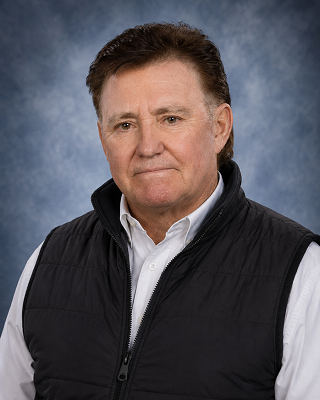
Richard Childress never won a NASCAR Cup race as a driver. That may have been the most useful fact of his career.
He was good enough to stay in NASCAR’s top division for years, good enough to finish fifth in the championship and stubborn enough to keep an underfunded independent operation alive when merely arriving at the next race required most of the week’s available machinery, money and sleep.
Eventually Childress did something racers are not famous for doing voluntarily: he looked at the evidence and admitted somebody else could drive his car faster.
First came Dale Earnhardt. Then Ricky Rudd proved the operation itself could win. Then Earnhardt returned and the little team that once depended on Childress personally doing nearly every job became Richard Childress Racing, winner of six Cup championships with Earnhardt and championships in all three NASCAR national series.
Richard Childress did not become great by figuring out how to make himself a better driver. He became great by figuring out what everybody else needed to do their jobs better.
It Started With Peanuts and a Twenty-Dollar Taxi
Childress was born in Winston-Salem, North Carolina, in 1945. He did not inherit a famous race shop or a fleet of prepared cars. As a boy, he sold peanuts and popcorn in the grandstands at Bowman Gray Stadium to help his family.
That provided a useful education. He could watch the cars, hear the engines and see which fellows went home carrying trophies instead of broken parts. Eventually watching became insufficient.
At seventeen, Childress and a friend bought an old 1947 Plymouth that had previously served as a taxi. The price was twenty dollars. They flipped a coin to decide who would drive, and Childress won.
Considering what eventually grew out of the result, the other fellow suffered a fairly expensive ten-dollar loss.
Talladega Gave Him the Break Everybody Else Refused
Childress’ first NASCAR Cup start arrived in 1969 under circumstances NASCAR has shown no interest in recreating. Alabama International Motor Speedway — later Talladega Superspeedway — had opened with enormous speeds and serious tire concerns.
Many of NASCAR’s established drivers decided the inaugural Talladega 500 was unsafe and withdrew. Bill France Sr. still had a race scheduled and suddenly found himself with more starting positions than willing stars.
Childress was already at Talladega racing in a preliminary event. When NASCAR needed cars, the young independent found an opening that had not existed when he unloaded.
He entered and finished 23rd. Nobody keeps a career scrapbook open to the page showing a 23rd-place finish, but Childress went home with several thousand dollars between his race earnings and money paid to help fill the field.
For an independent racer in 1969, that was not pocket change. It was equipment money.
The established drivers had made their point about safety. Richard Childress came home with the beginnings of a better race team.
For Years, Richard Childress Racing Meant Richard Childress
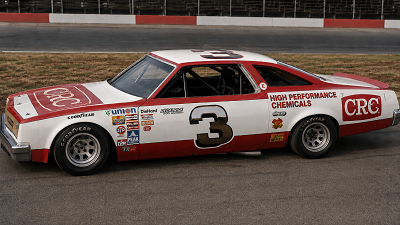
There was no sprawling RCR campus, engineering department or row of specialists staring at computer screens. There was Richard Childress: driver, mechanic, engine builder, owner, truck driver and whatever else the car required before somebody waved the green flag.
He worked side jobs, put in eighteen- to twenty-hour days, traveled for weeks and sometimes slept in the truck. It was not glamorous, but neither was going home because the fuel bill had eaten the money intended for tires.
Childress made 285 Cup starts from 1969 through 1981. He recorded six top-five finishes and 76 top tens, finished fifth in the 1975 championship standings and posted a career-best third-place race finish at Nashville in 1978.
That is a respectable driving career.
It is also enough evidence to tell an honest fellow that Richard Childress was probably not going to become Richard Petty.
Childress eventually stopped arguing with the evidence.
Dale Earnhardt Gave Him a Look at the Other Side
In 1981, reigning Cup champion Dale Earnhardt suddenly needed somewhere to race after Rod Osterlund sold his team and Earnhardt left the new organization.
He landed with Childress for the final 11 races of the season.
Childress moved himself out of the seat and put a championship driver into equipment he knew intimately. Financially, the decision stretched the operation badly enough that Childress later recalled selling nearly everything he could to keep Earnhardt racing.
But the experiment answered an important question. Childress already knew what his cars did with Richard Childress driving them. Now he had seen what happened when Dale Earnhardt climbed through the window.
Earnhardt left for Bud Moore in 1982 and 1983.
Childress did not climb back in and pretend the lesson had been temporary. He kept building the team.
Ricky Rudd Proved the Owner Was Right
Childress committed himself to ownership and put Ricky Rudd in the No. 3. In 1983, fourteen years after Childress had stumbled into that first Talladega Cup race, RCR finally won one.
Rudd won at Riverside International Raceway and then again at Martinsville. He also collected four poles.
The victories settled something Childress needed to know. The race team could win without Richard Childress driving it.
That may sound obvious from several decades away. It was considerably less obvious when the fellow surrendering the steering wheel had built the car, hauled the car and spent most of his adult life trying to prove he belonged in it.
Now Childress knew what he really owned.
A race team.
In 1984, Earnhardt Came Home
Earnhardt returned to RCR full time in 1984, beginning the partnership that would define both men. Their first victory together came at Talladega on July 29, the first of 67 Cup wins Earnhardt would score for Childress.
The arrangement worked because they brought different tools to the job. Earnhardt had remarkable feel for a race car and an unreasonable interest in moving it toward the front. Childress understood organization, machinery and how to surround a demanding driver with people capable of producing another competitive car next week.
He also understood that there was no useful reason for the owner to compete with his driver for attention. Earnhardt could handle the black No. 3, the microphones and most of the arguments on Sunday afternoon.
Childress needed to make sure there was another black No. 3 ready for Sunday.
That division of labor worked reasonably well.
Six Championships Settled the Question
Earnhardt and Childress won their first Cup championship together in 1986. They repeated in 1987, when Earnhardt won 11 of NASCAR’s 29 races, and added titles in 1990, 1991, 1993 and 1994.
Six championships for Childress. Six of Earnhardt’s eventual seven.
For most of that run, RCR remained a one-car Cup operation. That looks almost peculiar now, when large organizations regularly arrive with multiple teams sharing engineers, information and enough personnel to populate a respectable factory.
Childress built one operation around one extraordinarily demanding driver and kept the combination winning for nearly two decades.
There were larger teams.
For quite a while, finding a better one was more difficult.
Daytona Took Twenty Years to Cooperate
One race kept refusing to join the collection. Earnhardt could win almost anywhere, but the Daytona 500 repeatedly found some fresh method of leaving him without the trophy.
Then came 1998.
On his twentieth attempt, Earnhardt finally won. As the No. 3 rolled toward Victory Lane, members of competing crews lined pit road to congratulate him.
Childress had finally won Daytona too.
After six championships and years of winning nearly everything else worth winning, one race had remained stubbornly unfinished. NASCAR’s most famous speedway finally quit arguing.
The Team Had to Become Bigger Than the No. 3
Childress had already begun learning the next lesson. A great driver can define an organization, but eventually the organization has to become capable of surviving without that driver.
When NASCAR launched its national Truck Series in 1995, RCR entered a Chevrolet for Mike Skinner. Skinner won eight races and the inaugural championship.
RCR expanded its Cup operation in 1997. The shop that once depended on Richard Childress personally performing almost every task had become a real motorsports organization with enough depth to operate beyond one driver and one car.
That development was about to matter more than anybody wanted.
Then Daytona Took Dale Earnhardt
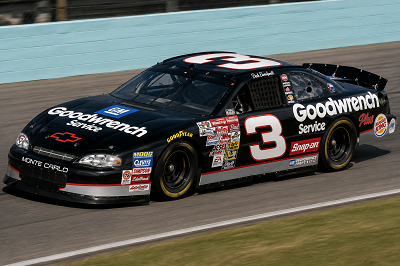
On February 18, 2001, Dale Earnhardt was killed on the final lap of the Daytona 500. The driver who had defined Richard Childress Racing for seventeen seasons was gone.
Childress seriously considered whether the team should continue. He remembered a conversation from a hunting trip when he and Earnhardt had agreed that if something happened to one of them, the other was supposed to keep going.
So RCR kept going.
Childress did not put another driver into Earnhardt’s black No. 3 and ask everybody to act as though only the name above the window had changed. The number disappeared from RCR’s Cup operation, Busch Series driver Kevin Harvick was promoted immediately and the car became the No. 29.
It was painted primarily white instead of black.
Harvick was not being asked to replace Dale Earnhardt. He was being asked to drive the next Richard Childress race car.
Three Starts Later, RCR Won Again
Harvick made his Cup debut for RCR at Rockingham. Two races later, in only his third Cup start, he arrived at Atlanta and found himself battling Jeff Gordon late in the race.
The margin at the finish was 0.006 seconds.
Harvick won.
Less than a month after Earnhardt’s death, Richard Childress Racing was back in Victory Lane.
Nothing about that replaced what had been lost. What it proved was that the organization Childress had spent three decades building was still capable of doing its job.
Harvick eventually won 23 Cup races for RCR before leaving after the 2013 season.
The Organization Survived Its Defining Driver
Mike Skinner had already delivered the 1995 Truck Series championship. In 2001, Harvick won the Busch Series title.
That made Childress the first owner to win championships in all three NASCAR national series.
There would be more titles in NASCAR’s lower national divisions, but the important result was larger than another line in the record book. Earnhardt had made RCR famous. Childress had built it well enough that it did not disappear when Earnhardt did.
That is the difference between owning a famous race car and building a racing organization.
The Number 3 Came Back as a Family Number
Childress had driven the No. 3 before Earnhardt made it one of the most recognizable numbers in American racing. After 2001, bringing it back required more consideration than ordering another stack of decals.
Eventually Childress returned the number to Cup competition with his grandson Austin Dillon.
Dillon won the 2011 Truck Series championship and the 2013 Nationwide Series championship for RCR. In 2014, he brought the No. 3 back to full-time Cup competition and put it on the pole for the Daytona 500.
Four years later, Dillon won the 2018 Daytona 500.
Twenty years after Earnhardt’s only Daytona 500 victory, another Richard Childress No. 3 rolled into Victory Lane.
This time the driver was his grandson.
The Fellow Who Never Won One Built a Team That Wouldn’t Go Away
Richard Childress entered the NASCAR Hall of Fame with the Class of 2017. By then, his 285 starts as a driver had become the least interesting portion of the résumé.
His ownership record included six Cup championships with Earnhardt, championships in all three national series, more than a hundred Cup victories and an organization that remained competitive through enormous changes in NASCAR.
RCR survived the independent era, corporate sponsorship, multicar teams, the loss of its defining driver and the arrival of another generation of the Childress family.
More than half a century after Childress took an unexpected starting spot at Talladega because other drivers refused it, his race team was still winning.
That is a better ownership statistic than most of the numbers engraved on trophies.
The Bottom Line
Richard Childress wanted to become a great race-car driver.
He didn’t.
He became a competent one, which may have been more useful. Driving taught him what racers needed from the machinery and the people outside the car. Years of running his own shoestring operation taught him what happened when any one piece of that support disappeared.
Then Childress had the uncommon sense to recognize where his own talent was greater. He stopped trying to be the fastest fellow in the car and concentrated on building the place where faster fellows could win.
That place won six Cup championships with Dale Earnhardt. More important, it remained a race team after losing him.
Richard Childress never found Victory Lane as a Cup driver.
Once he climbed out of the car, he spent the rest of his career building ways back there.
Richard Childress spent enough decades inside NASCAR’s garage wars, rule disputes and political battles to occasionally give Racing Shenanigans another story worth dragging into the light.
➤ See the 1969 Talladega driver boycott in Racing Shenanigans
➤ See the 2015 tire-bleeding investigation in Racing Shenanigans
↑ Back to the Top, Before Richard Decides Somebody Else Should Drive