Cruz Pedregon
He Broke the Force Streak. Sixteen Years Later, He Won Another One His Own Way.
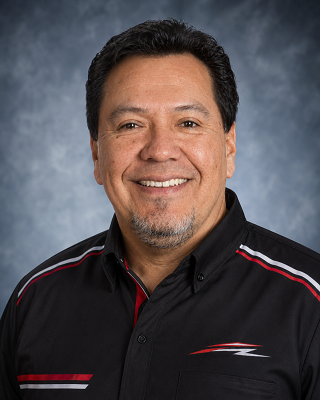
Look at the list of NHRA Funny Car champions from the 1990s and it starts to resemble a printing error. John Force won in 1990 and 1991. Cruz Pedregon won in 1992. Force took the championship back in 1993 and kept it through the rest of the decade.
Ten seasons. Nine championships for Force. The other one belonged to Cruz Pedregon.
That alone would have given the Cruzer a permanent place in Funny Car history. Instead, he kept going. He won races for Larry Minor and Joe Gibbs, left established teams to build his own operation and spent years finding out exactly how much harder Funny Car becomes when the driver also has to worry about sponsors, payroll, parts and keeping the transporter pointed toward the next race.
Then, sixteen years after the first championship, Pedregon won another one as an owner-driver. By then his career was no longer about interrupting John Force. It was about proving the interruption had never been an accident.
Drag Racing Was Already in the Family
Cruz Pedregon was born September 19, 1963, in Torrance, California, into a family that already understood what happened when perfectly sensible machinery was introduced to nitromethane. His father, Frank Pedregon Sr., raced Top Fuel dragsters in the 1960s. Cruz’s brothers Tony and Frank Jr. would also become successful Funny Car racers, turning the Pedregon name into one of drag racing’s better-known family businesses.
Cruz’s first drag-racing victory came in 1980 behind the wheel of a 1953 Kenworth truck. Most future Funny Car champions begin with something lighter.
By the late 1980s he had moved into NHRA’s alcohol categories, winning three national events in Top Alcohol Dragster during 1988 and 1989 and another in Top Alcohol Funny Car in 1990. The progression was becoming serious even if the opening chapter had involved considerably more truck than most racers prefer.
Top Fuel Turned Out to Be the Detour
Larry Minor put Pedregon into an Otter Pops-sponsored Top Fuel dragster for a partial 1991 season. Pedregon made a dozen starts and reached the semifinals in Seattle, where the rookie eliminated both Don Prudhomme and Cory McClenathan.
Then Minor’s Funny Car driver, Ed McCulloch, asked to move into Top Fuel for 1992. That left a Funny Car seat open, and Pedregon took it.
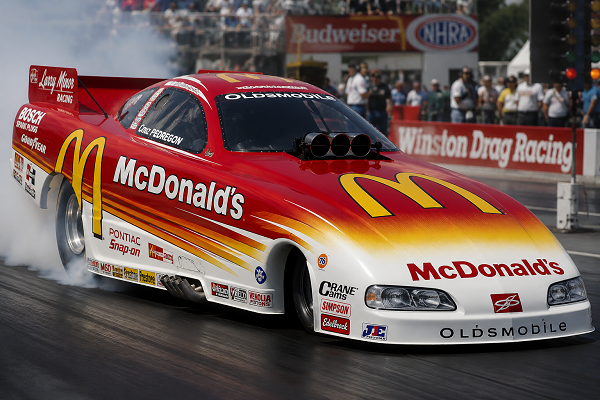
The new arrangement carried McDonald’s sponsorship, serious equipment and enough potential that the fellow who had spent 1991 learning Top Fuel suddenly found himself driving one of the most visible Funny Cars in the country. Cruz did not spend much time easing into the new job.
1992 Started Rough and Ended With Everybody Chasing Him
The championship car did not begin the season behaving like one. Pedregon’s team fought blower problems and struggled to find the combination it wanted. Then the pieces started cooperating.
Pedregon won his first Funny Car national event at Houston. Later in the season, the McDonald’s car became nearly impossible to stop, winning five consecutive races at Brainerd, Indianapolis, Reading, Topeka and Dallas.
Five straight Funny Car victories would be impressive in any season. Doing it while trying to take a championship away from John Force made the timing particularly useful.
The Indianapolis victory also began Pedregon’s remarkable run at the U.S. Nationals. He would win the sport’s biggest race again in 1994 and 1995, giving him three Indy victories in four years. Cruz had arrived in Funny Car quickly enough. He was not having much trouble making himself comfortable.
Dallas Turned Into a Funny Car Argument
The fifth victory in Pedregon’s streak came against Force at the Texas Motorplex, and neither car seemed especially interested in reaching the finish line politely. Both drivers smoked the tires. Both pedaled their cars. Force hit the wall, got back into the throttle and hit it again while Pedregon fought his own car through the tire smoke.
Pedregon got there first.
By the season finale at Pomona, Force still had a mathematical chance at the championship. He rolled his Funny Car during qualifying but remained in the field for eliminations. On Sunday, Pedregon beat Paul Smith in the opening round and mathematically clinched the championship before Force made his own first-round run. Force then lost to Gary Bolger.
Cruz finished 1992 with six victories and the NHRA Funny Car world title in his first season in the class. Force resumed winning championships the following year and did not stop until 2002, leaving Pedregon’s name sitting by itself in the middle of the 1990s list.
That is a lonely-looking line in the record book. Cruz earned every bit of it.
The McDonald’s Car Kept Winning
The championship was not a one-season accident followed by disappearance. Pedregon won two more races for Larry Minor in 1993 and three in 1994.
For 1995, the McDonald’s sponsorship moved into an operation owned by former NFL coach Joe Gibbs, and Pedregon went with it. The victories continued, with another ten wins during the Gibbs years. In 1998 he qualified No. 1 at 12 races, demonstrating that the McDonald’s car could still spend an unreasonable amount of time at the sharp end of the field.
Pedregon could have remained a hired driver with somebody else worrying about the unpleasant parts of owning a nitro team.
He wanted his own.
Owning the Car Made Winning Considerably Harder
Pedregon launched his own operation around the turn of the century and immediately learned the difference between driving a Funny Car and being responsible for everything required to put one on the starting line.
He won at Englishtown in 2000 as an owner-driver, which made the new operation look promising. The rest of the season supplied the invoice: Pedregon also failed to qualify four times in his other seven starts.
Sponsorship, crew, parts, transportation, tuning and the endless expense of running a nitro car were no longer somebody else’s problems. Pedregon sat out the 2001 NHRA season while working on sponsorship and spent time in the television booth. He returned in 2002 with Advance Auto Parts backing, but the climb back was slow.
There were good weekends, bad weekends and too many weekends when the car did not make the field. Pedregon later compared building the operation to starting an expansion team. That was about right, except expansion teams generally do not burn nitromethane while emptying the checking account.
Rahn Tobler Helped Put the Pieces Together
By 2008, veteran tuner Rahn Tobler was calling the shots on Pedregon’s Advance Auto Parts Toyota, and the combination began turning years of owner-driver frustration into a genuine championship threat.
Pedregon won the $100,000 Funny Car bonus event at Indianapolis, but Tim Wilkerson carried the points lead deep into the Countdown, with Robert Hight, Jack Beckman and both Pedregon brothers still involved. With three races remaining, Cruz needed more than respectable round wins.
So he won all three races.
Richmond. Las Vegas. Pomona.
Pedregon won at Richmond and climbed from sixth to third in the standings. At Las Vegas he won again, beating Robert Hight in the final and taking the points lead into the last race of the season.
At Pomona, Wilkerson lost in the first round when he fouled against John Force. Hight still had a chance until he lined up against Cruz’s brother Tony, who beat him and secured Cruz Pedregon’s second Funny Car championship, sixteen years after the first.
Cruz then finished the job by beating Ron Capps in the final, giving him three consecutive victories to close the season.
The first championship had come in Larry Minor’s car with McDonald’s on the body. The second came with Pedregon’s own name on the race team. Same driver, considerably harder route.
The Owner-Driver Part Was the Hard Part
Funny Car history has plenty of champions who drove excellent machinery for excellent organizations. Pedregon had already done that. Building an organization capable of winning a championship was another job entirely.
He had gone from one of the hottest young drivers in the sport to a team owner who occasionally could not qualify. He lost a full season while putting sponsorship together, spent years searching for the right combination and kept the operation alive long enough for Tobler and the crew to turn it back into a championship car.
The sixteen-year gap between Pedregon’s titles is not dead space in the story. It is the story. A fellow who had already demonstrated that he could drive a championship Funny Car spent those years proving he could build an organization capable of giving him one.
He Wasn’t Finished After the Second Championship Either
Pedregon kept racing his own Funny Car operation long after 2008, winning in 2010, 2011, 2012, 2013 and 2014. Then came a long dry stretch before victories in 2021, another in the 2022 season finale at Pomona and, eventually, Reading in 2025.
By Reading, Pedregon had gone 55 races without a victory. He reached the final against Blake Alexander, ran 3.969 seconds at 330.63 mph and collected Funny Car victory number 40.
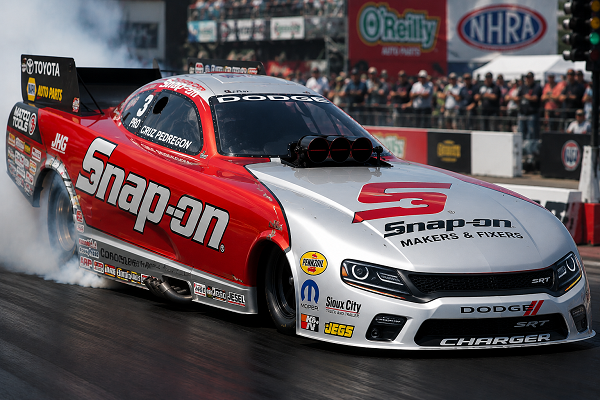
Earlier that season he had made his 700th NHRA Pro-class start at Indianapolis. Only John Force had reached the mark before him. By the 2026 season, the Cruzer was still driving his own Snap-on Tools Dodge Hellcat Funny Car, more than three decades after the rookie season that upset the established order.
Funny Car had changed considerably during those years. Cruz Pedregon had proven unusually difficult to remove from it.
Bottom Line
Cruz Pedregon’s record contains two Funny Car championships, 40 Funny Car national-event victories, three U.S. Nationals wins and more than 700 professional starts. Those are plenty of numbers for one career.
The better story is where the championships sit. Pedregon entered Funny Car in 1992 and immediately won the only title John Force surrendered during the entire decade. Then Cruz left the comfort of established teams, built his own operation, struggled with it and kept the doors open long enough to climb all the way back.
Sixteen years after taking Force’s championship away, he won another one with his own name on the race team.
John Force owned the 1990s. Cruz Pedregon took one year away from him — then spent the rest of his career proving that one year belonged exactly where it was.
↑ Back to the Top, Before Cruz Starts Another Championship Run