Darrell Waltrip
He Talked Like He Was the Best. Then He Spent Years Proving It.
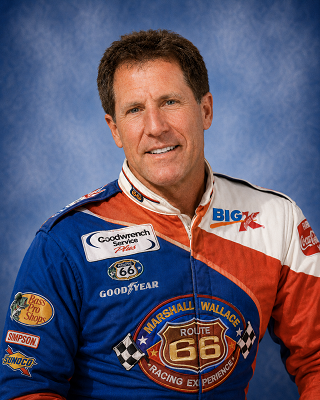
Darrell Waltrip did not sneak quietly into NASCAR. He arrived talking.
He talked about how fast he was, how good he intended to become and what everybody else was doing wrong. This was the 1970s, when Richard Petty, David Pearson and Cale Yarborough already owned enough trophies to support the argument that a young fellow might want to win a few things before explaining the business to them.
Waltrip considered waiting an unnecessary delay.
That irritated competitors and fans right up until the inconvenient part became obvious: Darrell Waltrip really was that good.
He eventually won 84 Cup races, 59 poles and three championships. He won 12 times at Bristol, captured the Daytona 500 and spent much of the 1980s making anybody chasing a championship deal with the No. 11.
Cale Yarborough called him Jaws.
The nickname required very little explanation.
Nashville Gave Him Somewhere to Practice
Darrell Lee Waltrip was born February 5, 1947, in Owensboro, Kentucky. He started in go-karts and moved into stock cars during the 1960s, but Nashville Speedway was where the complete Darrell Waltrip package began to become obvious.
He won races and track championships while learning how to be fast, aggressive and memorable. The first two qualities made him a racer. The third made sure everybody knew about the first two.
By 1972, Waltrip had reached NASCAR’s premier series and was trying to establish himself with his own equipment. The established teams had more money, more experience and considerably deeper parts shelves.
Darrell’s confidence was already fully funded.
His First Cup Win Came at Home
Waltrip’s first Cup victory came May 10, 1975, at Nashville Speedway in his own No. 17 Chevrolet.
Winning at NASCAR’s top level was difficult enough. Doing it at the track where he had built his local reputation was a useful way to announce that Nashville’s loud young driver had graduated.
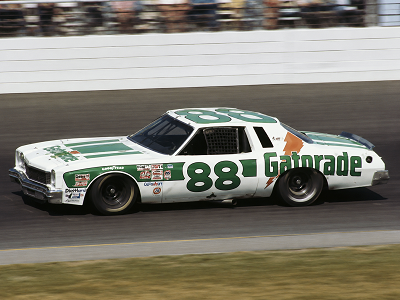
Later that year, Waltrip joined DiGard Racing and took over the No. 88. He won at Richmond in October, and once DiGard supplied consistently competitive machinery, the victories stopped looking accidental.
Waltrip won six races in 1977 and seven in 1979. By then nobody had to enjoy listening to him.
They did have to listen.
Cale Yarborough Found the Right Nickname
The nickname arrived after the 1977 Southern 500 at Darlington, where Waltrip, Cale Yarborough and D.K. Ulrich became involved in a wreck.
Yarborough was displeased and referred to Waltrip as “that talky Jaws.”
Some nicknames require promotion. This one merely required people to meet Darrell.
Waltrip already had a reputation for saying the quiet part, the loud part and several additional parts nobody had requested. Fans booed him. Competitors complained about him. “Anybody But Waltrip” became a perfectly reasonable rooting position.
There is an important difference between being obnoxious while running twentieth and being obnoxious while carrying the trophy home.
Waltrip kept carrying trophies home.
Richard Petty Beat Him by Eleven Points
By 1979, Waltrip had enough speed to win a championship and enough confidence to assume everybody else had noticed.
He won seven races and reached the season finale at Ontario Motor Speedway holding a two-point advantage over Richard Petty, who was chasing championship number seven.
Petty finished fifth. Waltrip finished eighth.
The King won the championship by 11 points.
That is a remarkably efficient lesson in the difference between almost being champion and being champion.
Waltrip stayed with DiGard for one more season.
Then Junior Johnson called.
Junior Johnson Gave Him the Right Machinery
Junior Johnson understood race cars. Darrell Waltrip understood how to drive them and was willing to explain the arrangement to anybody who remained uncertain.
The partnership began in 1981. Everybody else immediately acquired a problem.
Waltrip won 12 races and beat Bobby Allison for his first Cup championship. In 1982, he won another 12 races and another championship.
Twenty-four wins and two titles in two seasons took much of the fun out of arguing that Waltrip was merely a fellow who talked too much.
The Johnson operation suited him. Junior expected results, knew how to produce fast machinery and was unlikely to become emotionally damaged because the driver had opinions.
Darrell had found a shop tough enough to use him properly.
Bristol Became His Personal Short Track
If one track explains why Waltrip was such a nuisance during his prime, Bristol will do.
Beginning in 1981, he won seven consecutive Cup races there.
Seven consecutive races.
Not seven top fives. Not seven strong afternoons. Seven trips to Bristol followed by seven trips to Victory Lane.
He eventually won 12 Cup races at the track.
Bristol demanded traffic management, aggression, patience and the ability to spend hundreds of laps with another stock car occupying roughly the space normally reserved for the passenger door.
Waltrip considered that normal working conditions.
The Third Championship Required a Different Trick
By 1985, Bill Elliott had become NASCAR’s great speed story. Elliott won 11 races while Waltrip won only three.
Only three is an interesting phrase when attached to a championship season.
Waltrip won the inaugural running of The Winston at Charlotte and kept collecting points while Elliott collected headlines. When the season ended, Darrell owned the championship.
Titles number one and two had come with 12-win seasons. Number three arrived by making fewer bad Sundays than the fellow winning most of the spectacular ones.
Waltrip now had championships in 1981, 1982 and 1985, all with Junior Johnson.
The mouth had never been especially subtle.
The racecraft was considerably more sophisticated.
Hendrick Gave Him the Tide Ride
Waltrip remained with Johnson through 1986, then joined Rick Hendrick’s organization for 1987 and moved into the familiar orange-and-yellow No. 17 Tide Chevrolet.
He won nine races for Hendrick from 1987 through 1990.
By then Darrell had championships, short-track records and enough victories to guarantee that the Hall of Fame would eventually need a chair for him.
One trophy remained annoyingly absent.
The Daytona 500.
Seventeen Tries Was Enough
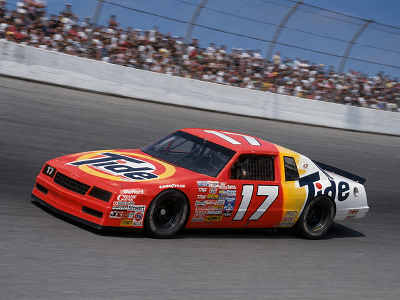
The 1989 Daytona 500 was Waltrip’s seventeenth attempt.
Conveniently, he was driving car No. 17. Racing occasionally provides details that would look suspicious if somebody put them in a movie.
Late in the race, crew chief Jeff Hammond and Waltrip gambled on fuel mileage. With 35 laps remaining, Darrell was running seventh and began saving fuel while the cars ahead continued using theirs in the traditional manner.
Ken Schrader and Dale Earnhardt eventually had to pit. Alan Kulwicki moved ahead and then suffered a tire problem.
Waltrip found himself leading.
He stretched the final tank 53 laps — more than 132 miles — and won by 7.64 seconds over Schrader.
After seventeen attempts, Darrell Waltrip had finally won the Daytona 500.
Apparently even Jaws could wait when the fuel gauge required it.
Then Jaws Temporarily Ran Out of Useful Words
The Victory Lane interview became nearly as famous as the race. Waltrip grabbed broadcaster Mike Joy and repeatedly announced that he had won the Daytona 500, as though seventeen previous attempts had taught him somebody might still reconsider the decision.
Then came his version of the Ickey Shuffle and a helmet spike.
For a driver who had spent years as one of NASCAR’s most reliable villains, something unexpected happened.
People enjoyed it.
By 1989, fans had watched Waltrip long enough to understand the fellow behind all the noise. The arrogant newcomer had become one of the veterans.
Winning Daytona tends to improve a man’s reception.
Then He Decided to Own the Headaches Too
Waltrip left Hendrick after 1990 and formed Darrell Waltrip Motorsports.
Driving his own cars produced five Cup victories, proving the operation could win and also giving Darrell personal access to every expensive problem he had previously been able to discuss with somebody else’s team owner.
His final victory came in the 1992 Southern 500 at Darlington. It was his first Southern 500 win after 19 attempts and arrived when rain stopped the race with Waltrip leading.
Career victory number 84.
It was also the last one.
There are worse places for a winner’s list to end than Darlington.
The Wins Stopped Before the Driving Did
Waltrip continued racing through the 1990s as NASCAR changed around him. The owner-driver operation became difficult to sustain, and later rides never returned him to the level he had reached with DiGard, Junior Johnson and Hendrick.
He made his final Cup starts in 2000 and finished with 809 starts, 84 victories and 59 poles.
The career had lasted long enough for the brash young fellow who annoyed NASCAR’s established stars to become one of the established stars younger drivers were trying to race past.
Time has a sense of humor too.
Giving Him a Microphone Was Probably Inevitable
Retirement removed Waltrip from the race car.
It did not remove his voice from NASCAR.
In 2001, he joined FOX Sports as a television analyst and discovered a profession where talking continuously was not merely tolerated but included in the job description.
Excellent career planning.
Waltrip spent nearly two decades in the booth, becoming familiar to another generation of fans through his explanations, stories and “Boogity, boogity, boogity” opening call.
He retired from full-time broadcasting in 2019.
One of NASCAR’s most booed young drivers had become one of its familiar old voices.
Jaws had finally found an occupation designed around Jaws.
The Bottom Line
Darrell Waltrip won 84 Cup races, 59 poles and three championships. He won 12 times at Bristol, including seven consecutive races there, and finally captured the Daytona 500 in 1989.
He entered the NASCAR Hall of Fame in 2012.
The numbers explain why he belongs there. They do not explain why everybody knew his name before he had accumulated most of them.
Waltrip promoted himself, irritated competitors, aggravated fans and talked with the confidence of a fellow who had already seen the future.
Then he spent years making the future inconveniently similar to what he had predicted.
Cale Yarborough called him Jaws because Darrell Waltrip talked too much.
The nickname lasted because the fellow attached to it kept giving himself something worth talking about.
Waltrip spent enough years around NASCAR’s garage wars to turn up in Racing Shenanigans whenever somebody found an especially creative interpretation of the rulebook.
➤ See Daytona 1976: Nitrous in the Wedge Bar in Racing Shenanigans
➤ See the 1976 Daytona inspection circus in Racing Shenanigans
➤ See the 1979 Daytona 500 fight in Racing Shenanigans
➤ See Earnhardt and Labonte’s Bristol battles in Racing Shenanigans
↑ Back to the Top, Before Jaws Finds Another Microphone