David Pearson
He Didn’t Race Every Week. He Just Kept Winning When He Showed Up.
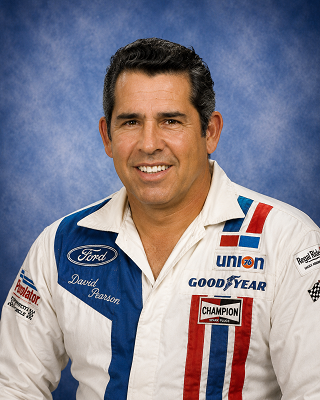
David Pearson won 105 NASCAR premier-series races. Only Richard Petty won more.
Pearson did it in 574 starts because he had the inconvenient habit of skipping large pieces of the schedule.
He never ran every race in a season. When he came reasonably close, he won championships in 1966, 1968 and 1969. With the Wood Brothers from 1972 through 1979, Pearson won 43 races while running selected events.
That was the Silver Fox.
He did not spend the first half of a race proving how badly he wanted to lead Lap 43. He watched the tires, watched the traffic, watched other drivers use up their equipment and waited until the race reached the part that paid.
David Pearson did not race as though every lap needed to know he was there.
Only the last one needed convincing.
The First Season Was Already Annoyingly Efficient
David Gene Pearson was born in Spartanburg, South Carolina, in 1934 and began racing on local dirt tracks before reaching NASCAR’s premier division in 1960.
He ran only about half the schedule.
NASCAR named him Rookie of the Year anyway.
That established a pattern Pearson would spend most of his career refusing to correct. He did not need to be everywhere.
He needed to be good where he was.
His First Win Finished on Three Tires
Pearson’s first premier-series victory came in the 1961 World 600 at Charlotte, driving a Pontiac prepared by Ray Fox.
He led 225 laps and had built a four-lap advantage when the right-rear tire blew with a little more than a lap remaining.
A reasonable driver would have stopped.
A driver leading the World 600 by four laps had another option.
Pearson kept going.
The Pontiac dragged itself around Charlotte with sparks pouring off the wheel and won the race. Career victory number one came in NASCAR’s longest event with the car attempting to finish as a tricycle.
The rest of the garage should probably have taken the hint.
Cotton Owens Gave Him the No. 6
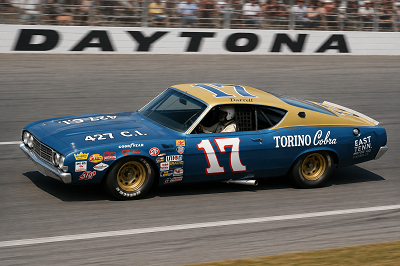
Pearson eventually teamed with fellow South Carolinian Cotton Owens, one of the finest mechanics and car owners in stock-car racing.
The combination suited both men. Owens built fast Dodges, and Pearson had a talent for bringing fast machinery home while other drivers were discovering which parts of theirs had been installed too loosely.
In 1966, Pearson ran 42 of the season’s 49 races, won 15 times and took his first NASCAR championship.
There is something almost disappointing about that season.
Pearson finally bothered to run enough races to chase the points properly, and the points behaved exactly as expected.
Holman-Moody Made Him Even Worse
Pearson moved into the powerful Holman-Moody Ford operation during 1967.
In 1968, he ran 48 of 49 races, won 16 and captured championship number two. In 1969, he won another 11 races and another championship.
The lesson was fairly clear.
If David Pearson showed up often enough for the points to count properly, everybody else had a problem.
The Silver Fox Did Not Waste Much Motion
Pearson earned the nickname The Silver Fox partly from his prematurely gray hair and mostly from the way he raced.
He was patient without being slow, a distinction that disappears whenever somebody mistakes aggression for intelligence.
Pearson could run at the front whenever necessary. He simply did not believe the engine, tires and brakes needed to spend four hours proving it.
The stories tended to follow the same pattern: Pearson hanging around, Pearson watching, Pearson waiting.
Then the race reached the last stretch and everybody else’s afternoon became urgent.
He understood where other cars were going before they arrived and was unusually good at seeing trouble soon enough not to become part of it.
That looks less dramatic than bouncing off somebody’s door.
It also leaves more paint on the car.
The Wood Brothers Had the Perfect Job for Him
In 1972, Pearson joined the Wood Brothers and their famous No. 21.
The Woods were not chasing the full championship schedule.
Neither was Pearson.
Excellent arrangement.
The team concentrated on major races and tracks where its equipment could win. Pearson concentrated on making sure it did.
From 1972 through 1979, the partnership produced 43 victories.
No championship.
No apology required.
The trophy shelf was busy enough.
Eleven Wins in Eighteen Starts
The 1973 season is probably the cleanest explanation of how unreasonable the arrangement became.
Pearson entered 18 races.
He won 11.
That is more than sixty percent of the NASCAR races he bothered to attend.
At one point he won five consecutive events that he entered while other races passed on the schedule without him.
Pearson and the Woods had decided showing up was optional.
Winning wasn’t.
Richard Petty Was Usually Somewhere Nearby
No David Pearson biography gets very far without Richard Petty wandering into it.
They were not enemies. That would have been simpler.
They respected each other, understood each other’s habits and spent years making the other fellow’s afternoon unnecessarily complicated.
Pearson and Petty finished first and second in NASCAR races 63 times. Pearson won 33 of those. Petty won 30.
That is not a rivalry manufactured from press conferences and bruised feelings.
That is two racers repeatedly reaching the end of the same race and discovering the same nuisance still beside them.
The Petty Problem Worked Both Ways
Petty won more races, more championships and considerably more popularity contests.
Pearson never seemed especially troubled by the arrangement. He just kept beating Richard whenever the opportunity appeared.
Petty later called Pearson the toughest competitor of his career.
That is a substantial recommendation from a fellow with 200 victories.
Pearson could beat him on short tracks, superspeedways, road courses and dirt.
Worse yet, Pearson rarely looked particularly excited while doing it.
Some opponents beat you loudly.
The Silver Fox tended to make it look as though he had noticed the outcome several laps earlier.
1976 Daytona Needed One More Petty-Pearson Argument
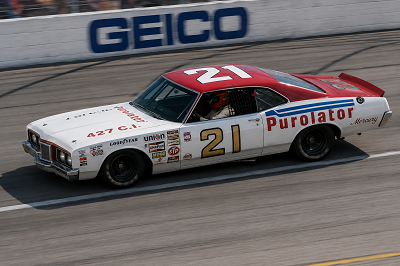
The 1976 Daytona 500 came down to Pearson and Petty because NASCAR had apparently run out of original ideas.
Petty was chasing his sixth Daytona 500 victory. Pearson had won three summer races at Daytona but had never won the 500.
They spent the closing laps working the draft and trying to arrange the other fellow’s mistake.
Pearson let Petty take the lead late, tucked in behind him and waited.
Of course he did.
On the final lap, Pearson made the slingshot pass down the backstretch. Petty crossed back underneath coming out of Turn Four.
The cars touched.
Both went into the wall and spun toward the grass within sight of the finish line.
Petty’s Dodge stopped.
Pearson’s Mercury was wrecked too, but its engine was still running.
That small mechanical detail became rather important.
The Wrecked Car Still Had One Job Left
Pearson straightened the No. 21 and began crawling toward the finish while Petty’s crew ran across the infield trying to get his Dodge moving.
Pearson limped through the grass and crossed the line first.
David Pearson had won the Daytona 500 at roughly parking-lot speed.
The front of the Mercury looked like something that should have been waiting for a wrecker.
Instead it went to Victory Lane.
There may be no better Pearson race. Fast enough to fight Petty all afternoon. Patient enough to arrange the last-lap move. Calm enough after the crash to remember that a wrecked car with a running engine still had about a hundred yards of racing left in it.
1976 Was More Than One Famous Wreck
Pearson won 10 races in 1976, including the Daytona 500, the World 600 and both Darlington races.
The championship went somewhere else.
Pearson’s trophies did not appear offended.
Darlington Might As Well Have Put His Name on a Garage
Darlington rewarded exactly the sort of driver Pearson was.
The place chews up tires, punishes impatience and has spent decades introducing drivers to a wall they were certain was farther away.
Pearson won there 10 times. Nobody has won more. He also earned 12 poles there, with victories stretching from 1968 through 1980.
That is twelve years of visiting one of NASCAR’s hardest racetracks and repeatedly leaving with its property.
The Track Too Tough to Tame had found one fellow who seemed to regard the slogan as advertising.
The Wood Brothers Split Ended Over Two Loose Wheels
The Pearson-Wood Brothers partnership ended in 1979 at Darlington in suitably mechanical fashion.
The crew had changed the right-side tires and loosened the left-side lug nuts in preparation for finishing a four-tire stop. Leonard Wood told Pearson to wait.
Pearson thought he heard go.
The Mercury left pit road with the left-side wheels poorly interested in continuing the relationship.
They came off.
Eight years and 43 victories ended the following week.
Even great racing partnerships occasionally discover that clear communication is cheaper than repairing race cars.
So He Went Back to Darlington and Won Again
Pearson did not retire after leaving the Woods.
He won later in 1979 driving for Rod Osterlund.
At Darlington.
In 1980, he joined Hoss Ellington for a limited schedule. Their first race together was Darlington.
Pearson won.
Career victory number 105.
His final NASCAR victory came at the track where he had already won more races than anybody else.
Sometimes even the Silver Fox allowed the ending to be obvious.
The Numbers Are Almost Rude
Pearson finished with 105 wins in 574 starts, 113 poles and three championships.
He still owns the Darlington record with 10 victories, and only Richard Petty stands ahead of him on NASCAR’s all-time victory list.
The King accumulated the larger kingdom.
The Silver Fox made remarkably efficient use of visiting hours.
The Bottom Line
David Pearson was not NASCAR’s loudest driver or greatest self-promoter.
He understood race cars, traffic, tires and other drivers well enough to spend the first part of an afternoon letting everybody else reveal what they intended to do.
When the race finally became worth winning, Pearson became considerably more noticeable.
He never needed every race on the schedule.
He never needed every lap of the race.
Give the Silver Fox enough time to study the problem, and the last lap had an irritating tendency to belong to him.
Pearson spent enough years around NASCAR’s factory wars, inspection arguments and driver standoffs to earn a couple of appearances in Racing Shenanigans.
➤ See Daytona 1976: Nitrous in the Wedge Bar in Racing Shenanigans
↑ Back to the Top, Before Pearson Decides You’ve Been Leading Long Enough