Junior Johnson
He Learned to Read the Road, the Air and the Rulebook Before Everybody Else.
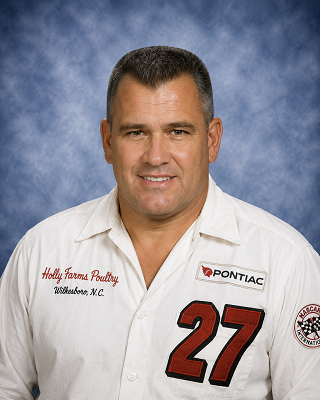
Junior Johnson was driving fast cars before anybody offered him a trophy for it. There were no grandstands, no pace car and no Victory Lane. There was untaxed whiskey in the car and occasionally somebody with a badge behind it.
That part of the story became so famous that it threatens to swallow everything else, which would be a waste. Moonshine taught Johnson how to handle a car. Racing revealed what actually made him dangerous.
Junior watched. He experimented. He noticed things other racers were too busy driving to notice. In 1960, he took an underpowered Chevrolet to Daytona and figured out that another car could punch a hole through the air for him. After retiring from driving, he built cars that treated every unexplained inch of NASCAR’s rulebook as unfinished business.
Then he built an organization that won 132 Cup races and six championships.
Junior Johnson’s great talent was not simply going faster than the next fellow. It was noticing where the next advantage was hiding before everybody else started looking for it.
The Family Business Wasn’t Exactly Legal
Robert Glenn Johnson Jr. was born near Ronda, North Carolina, in 1931. The Johnson family farmed, and it also made a considerable quantity of whiskey.
Young Junior grew up around modified Fords used to haul the product, and his father let him drive long before the State of North Carolina showed any interest in issuing him a license. By Johnson’s own account, he was sliding cars around the family’s dirt roads while barely into his teens.
Later he began hauling liquor himself. The cars needed horsepower, brakes and handling because getting the load to its destination was the whole assignment. A broken car did not earn partial credit. Neither did getting caught.
Johnson became famous for saying law officers never caught him while he was running whiskey.
The federal government eventually solved that problem by waiting at the still.
He was convicted on a moonshine charge in 1956 and served part of an 11-month federal prison sentence in 1957. It interrupted the racing career. It did not seem to improve his enthusiasm for being told what machinery was permitted to do.
NASCAR Was a More Convenient Place to Drive Fast
Johnson had made his first NASCAR Cup start in 1953 and was winning by 1955, when he took five races. After prison, he returned to the circuit and resumed exactly where he had left off.
Junior was strong, aggressive and particularly effective on the short tracks where a driver spent much of the afternoon wrestling the steering wheel while surrounded by automobiles that had never been taught the concept of personal space.
He rarely chased NASCAR’s enormous schedule from beginning to end, which explains one strange-looking line on the résumé: Junior Johnson won 50 Cup races and never won a championship.
There is less mystery once somebody notices how many points-paying races he simply did not enter. Junior was interested in winning races. NASCAR had plenty available.
Daytona Gave Him a Slower Car
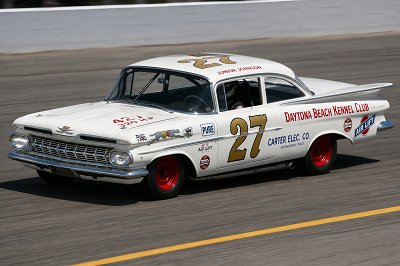
The 1960 Daytona 500 presented Johnson with an irritating problem: his Chevrolet was not fast enough. The Pontiacs had more power, and Daytona’s huge new superspeedway had very little sympathy for horsepower shortages.
So Junior started experimenting during practice.
When he tucked the Chevrolet closely behind a faster car, his car accelerated. Pull out into clean air and the advantage disappeared. Get back into the wake and it returned.
The air itself had become useful.
Drivers had experienced aerodynamic effects before, but Johnson recognized what was happening and deliberately turned it into race strategy. Let the faster car shove the air aside. Stay in its wake. Save the Chevrolet the work it could not afford to do. Then move when the opportunity arrived.
The technique became known as drafting.
Junior won the Daytona 500.
The slower car went home with the larger trophy. There are worse advertisements for paying attention.
1965 Was a Good Time to Quit
Johnson’s driving career reached another peak in 1965. He entered 36 Cup races, won 13 of them and added nine poles.
Then, while still one of NASCAR’s fastest drivers, he started climbing out of the seat.
Johnson ran only seven Cup races in 1966 and was thirty-five when his driving career effectively ended. The final numbers were 313 starts, 50 victories and 46 poles.
Plenty of racers would have kept going until somebody took away the steering wheel. Junior had already spotted another place where races could be won.
The shop.
The Yellow Banana Explained the Next Career
If anybody wondered how Junior Johnson would approach building race cars, the answer appeared at Atlanta in 1966.
It was yellow, and calling it a Ford Galaxie required a generous interpretation of the original automobile.
Johnson’s team had reshaped the body for aerodynamic advantage. The nose drooped. The roof was lowered. The windshield leaned back. The rear body swept upward. Competitors took one look at the profile and supplied the obvious nickname: the Yellow Banana.
Fred Lorenzen drove it. NASCAR inspected it. Somehow, after the necessary conversations, it raced.
The Banana qualified near the front and led before crashing out. It never raced again, which did not make the experiment useless.
The car explained Junior’s operating system perfectly. If NASCAR specifically prohibited a change, there was an answer. If NASCAR had forgotten to discuss it, there was still engineering work to be done.
Inspection procedures became considerably more systematic over the years.
Junior Johnson had a habit of helping rulebooks become thicker.
The Driver Became the Fellow Making the Decisions
Johnson moved fully into building, owning and managing race cars, carrying the same habits that had discovered the draft into a larger operation. He understood what drivers felt because he had been one. He understood what cars needed because he had spent years trying to make imperfect ones win.
Most important, Junior was willing to try something before everybody else had agreed it was sensible.
One of his early stars was LeeRoy Yarbrough. In 1969, Yarbrough won seven Cup races in Johnson’s cars, including the Daytona 500, World 600 and Southern 500 — the first driver to win all three in the same season.
Nine years earlier, Johnson had won Daytona by figuring out how to use another car’s air.
Now somebody else was winning Daytona in Junior’s machinery.
The steering wheel had changed hands. The fellow trying to outthink the race had not.
Cale Turned the Team Into a Dynasty
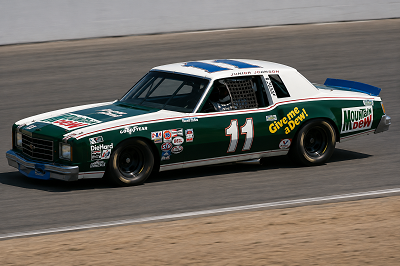
The championship years arrived with Cale Yarborough, who was about as likely to require encouragement to drive harder as a bulldog requires encouragement to bite a steak.
Johnson built the operation. Yarborough supplied the right foot.
They won the Cup championship in 1976, then again in 1977, then again in 1978.
Three consecutive championships. No driver in NASCAR’s modern era had done that before.
There was a certain symmetry to it. Junior had been a 50-race winner who never cared enough about running the whole schedule to win a title. As an owner, he finally solved the scheduling problem by hiring somebody else to do all the driving.
Then Darrell Waltrip Wanted the Seat
Darrell Waltrip arrived at Junior Johnson & Associates in 1981 already established as one of NASCAR’s quickest drivers and certainly one of its easiest to hear.
Waltrip had wanted the opportunity for years. Junior gave it to him, and the result was immediate.
Waltrip won 12 races and the 1981 championship. Then he won another 12 races and another championship in 1982. They added a third title together in 1985.
Junior now owned six Cup championships: three with Yarborough and three with Waltrip.
The former moonshine runner had become one of NASCAR’s most successful team owners.
He remained noticeably uninterested in losing.
Knowing Drivers Was Part of the Machinery
Johnson’s strength as an owner went beyond supplying horsepower. He understood what kind of driver was sitting in the car.
Yarborough and Waltrip did not need somebody reminding them to try harder. They needed machinery capable of surviving what they were already planning to do with it.
Johnson later fielded cars for Neil Bonnett, Terry Labonte, Geoffrey Bodine, Jimmy Spencer and Bill Elliott. The operation kept winning through different drivers, manufacturers and eras because Junior understood that managing a racer was another form of chassis adjustment: first figure out what the thing naturally wants to do, then stop fighting it unnecessarily.
Johnson’s cars eventually accumulated 132 Cup victories. The final one came with Bill Elliott in the 1994 Southern 500 at Darlington.
Thirty-four years after Junior had won the Daytona 500 from behind the wheel, his cars were still reaching Victory Lane with somebody else doing the steering.
Tom Wolfe Found Him Before the Hall of Fame Did
Junior Johnson became something larger than a race driver before his driving career was even finished.
In 1965, writer Tom Wolfe went south and produced an Esquire story titled “The Last American Hero Is Junior Johnson. Yes!” The piece turned Johnson into a national symbol of the stock-car culture that had grown from the rural South.
The moonshine, the farm, the fast cars and the refusal to behave as though respectable motorsports required permission from somebody wearing a blazer all fit neatly into the story.
The legend became larger than the actual fellow.
That happens more easily when the actual fellow keeps supplying material.
The Government Eventually Reconsidered
The moonshine conviction stayed on Johnson’s record long after the prison sentence had become an old story and Junior had become one of NASCAR’s most important figures.
On December 26, 1986, President Ronald Reagan granted Johnson a presidential pardon for the old federal conviction.
Thirty years had passed. The fellow who once hauled illegal liquor through North Carolina was now a championship team owner operating in one of America’s largest spectator sports.
Johnson later returned to the moonshine name legally through the spirits business.
Some stories refuse to waste a perfectly good circle.
The Hall Didn’t Have Much to Debate
NASCAR named Johnson one of its 50 Greatest Drivers in 1998. When the NASCAR Hall of Fame opened with its first induction class in 2010, Junior went straight in.
The résumé covered almost every useful part of stock-car racing: 50 wins as a driver, a Daytona 500 victory, technical innovation, race-car construction, 132 owner victories and six championships.
He had also helped give NASCAR an identity no other American racing series could quite duplicate.
Johnson died in 2019 at age eighty-eight. By then, the sport he had entered in 1953 was almost unrecognizable.
Some of that was his doing.
The Bottom Line
Junior Johnson’s moonshine story is real. It just is not the whole story.
The important habit followed him from the back roads to Daytona and then into the race shop: look for the advantage everybody else has not noticed yet.
At Daytona, it was hiding in the air behind another car. In the shop, it might be hiding in suspension geometry, body shape or a sentence the rulebook had neglected to include. As an owner, it might be hiding in the driver another team could not manage properly.
Junior kept finding it.
That produced 50 victories behind the wheel, another 132 as an owner and six championships after he stopped driving.
Junior Johnson learned early that the shortest way past an obstacle was not always to overpower it.
Sometimes the trick was noticing the road around it before everybody else did.
Junior Johnson understood that a NASCAR rule could occasionally tolerate considerably more interpretation than the fellow who wrote it probably intended.
➤ See Junior Johnson’s Yellow Banana in Racing Shenanigans
↑ Back to the Top, Before Junior Finds Something the Rulebook Forgot