Lee Petty
He Crashed the Family Buick, Built a Race Team Anyway and Gave NASCAR Its First Dynasty.
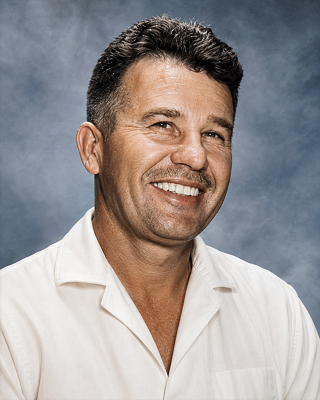
Before Richard Petty became The King, somebody had to build the kingdom.
That job belonged to Lee Petty, who entered NASCAR at thirty-five, crashed the family Buick in his first race and somehow concluded that the sensible response was to build a race team.
The judgment improved considerably from there.
Lee won 54 NASCAR premier-series races, became the sport’s first three-time champion and won the inaugural Daytona 500. At Level Cross, North Carolina, he also built the family operation that became Petty Enterprises.
Richard eventually supplied 200 victories and seven championships of his own, but treating Lee merely as Richard Petty’s father gets the order backward.
Lee was the original Petty racer: practical, stubborn, careful with money and perfectly willing to argue with NASCAR, another driver or his own son if the scoring sheet looked wrong.
Thirty-Five Was a Little Late to Start
Lee Arnold Petty was born near Randleman, North Carolina, in 1914. By the time NASCAR held its first Strictly Stock race at Charlotte Speedway on June 19, 1949, Petty was thirty-five.
Most modern drivers reach that age with several hundred starts behind them. Lee arrived with the family Buick.
He finished seventeenth.
The Buick finished less successfully.
Lee crashed it.
This gave the Petty household useful evidence that professional stock-car racing might be an expensive way to ruin transportation.
Lee considered the evidence and kept racing anyway.
The Race Team Started in a Shed
Petty Engineering did not begin with transporters, computer modeling, hospitality suites or enough employees to require name tags.
It began on the family property at Level Cross in a small reaper shed where Lee worked on race cars. Richard and younger son Maurice grew up around the operation and eventually became part of it.
Early NASCAR made this arrangement fairly normal. A fellow built the car, hauled the car, raced the car, repaired whatever fell off and then checked whether the purse had covered enough of the damage to justify doing it again next week.
Lee paid particular attention to that last calculation.
Racing was not supposed to be an expensive hobby that happened to provide trophies.
It had to pay.
That may be the most important thing Lee Petty contributed to the family operation. He treated racing as a business before there was much of a stock-car racing business to join.
Plymouth Worked Better Than the Buick
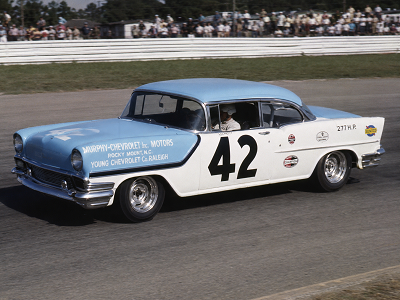
Petty moved into Plymouths and became one of NASCAR’s most dependable front-runners.
Dependable sounds less exciting than spectacular right up until somebody starts adding championship points.
From NASCAR’s first season through 1960, Lee never finished worse than sixth in the premier-series standings. He won seven races and his first championship in 1954, then collected another title in 1958.
Two championships were already more than most drivers would ever see.
Lee was not done counting.
Daytona Was a Lot of Racetrack
Bill France Sr. opened Daytona International Speedway in 1959, complete with banking steep enough to make ordinary highway construction look timid.
Lee Petty regarded the place with a healthy amount of suspicion.
Then somebody waved the green flag, which tends to reduce philosophical objections among race drivers.
The first Daytona 500 ran the entire 500 miles without a caution. At the finish, Petty’s Oldsmobile and Johnny Beauchamp’s Ford reached the line almost together while Joe Weatherly’s lapped Chevrolet happened to be alongside them making visual inspection less useful than anybody would have preferred.
NASCAR announced Beauchamp as the winner.
Lee disagreed.
This would become a recurring administrative condition whenever Lee Petty believed the numbers were wrong.
Lee Didn’t Wait for NASCAR to Agree
Petty protested the result. Bill France asked photographers and spectators for film and photographs of the finish, and NASCAR spent three days examining the evidence.
Beauchamp had already experienced the slightly awkward business of being photographed as the winner.
Eventually the pictures settled the matter.
Lee Petty had won the first Daytona 500.
The trophy was three days late.
Lee had apparently been less confused about its destination.
There are drivers who accept an official decision because somebody wearing the proper shirt has announced it.
Lee preferred the approach where the scoring had to survive inspection.
1959 Was Bigger Than Daytona
The first Daytona 500 became the famous piece of Lee’s 1959 season, but it was hardly the only one.
He won 11 races and captured his third championship, becoming NASCAR’s first three-time champion.
At the time, nobody had won more premier-series races either.
By the end of his career, Petty had 54 victories in 427 starts, along with 231 top-five finishes and 332 top tens.
Thirty-two of those victories came on dirt, still the most premier-series dirt-track wins credited to any driver.
For a man who had started racing NASCAR at thirty-five after damaging the family transportation, the experiment had become fairly difficult to dismiss.
Then Richard Wanted a Turn
Richard Petty grew up inside the operation and eventually wanted to drive.
Lee allowed it.
He did not confuse allowing his son to race with agreeing to become easier competition.
At Lakewood Speedway in Atlanta in 1959, Richard crossed the finish line believing he had won his first NASCAR premier-series race.
Lee protested the scoring.
His own son’s scoring.
NASCAR checked the laps and agreed with Lee. Richard had incorrectly been credited with a lap. The result was changed, Richard was moved back and Lee was declared the winner.
Contemporary accounts had Lee explaining that Richard’s first victory needed to be earned.
There are gentler ways to teach a son how professional competition works.
They would not have been Lee Petty’s way.
Family Racing Still Had to Be Racing
The Lakewood argument explains Petty Enterprises better than a family photograph ever could.
Lee built a family business, but the word family never meant everybody received a position because Thanksgiving would otherwise become uncomfortable.
Richard drove. Maurice became the engine builder. Cousin Dale Inman became the crew chief. Eventually Lee, Richard, Maurice and Inman would all enter the NASCAR Hall of Fame.
That is an impressive family tree.
It also had performance standards.
The cars had to run.
That was the family rule that mattered.
Then Daytona Nearly Killed Him
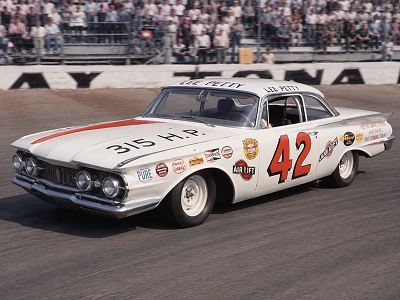
Two years after winning the first Daytona 500, Petty returned for Speedweeks in 1961.
During the second qualifying race, he and Johnny Beauchamp tangled again. Both cars went over the guardrail near Turn Four and rolled outside the speedway.
Lee suffered multiple fractures and a collapsed lung. He spent about four months in the hospital.
He survived, but the driving career never really returned to what it had been.
Petty made a handful of later starts through 1964, but the fellow who had spent more than a decade attacking stock-car races was not interested in pretending the wreck had changed nothing.
His final victory had already happened.
The race team was just approaching its largest chapter.
See the 1961 Daytona crash in Walked Away
The No. 42 Made Room for the No. 43
Lee had raced primarily with the No. 42. Richard eventually settled into the No. 43.
As Lee stepped away from regular driving, Petty Enterprises did not need to invent a future. Lee had already assembled most of it at Level Cross.
Richard became the driver everybody remembers. Maurice built engines. Dale Inman handled cars and strategy.
The little operation from the reaper shed became the most successful team in NASCAR history, eventually accumulating 268 premier-series victories.
Richard supplied 196 of those Petty Enterprises wins.
Lee supplied the first 54.
The dynasty did not begin when Richard became famous.
It began when Lee looked at a wrecked Buick in 1949 and somehow failed to take the hint.
Lee Was Running NASCAR Before NASCAR Knew What It Was Becoming
Petty’s career stretched across NASCAR’s first great transformation.
He started when the premier series raced ordinary-looking automobiles on dirt tracks, fairgrounds and whatever pavement happened to be available.
By the end, Daytona International Speedway had announced that stock-car racing was becoming a much larger business.
Lee succeeded in both versions.
That matters because early NASCAR statistics can look deceptively easy from several generations away. Petty did not win merely because everybody was still figuring out how racing worked. He remained one of the sport’s dominant drivers while the schedules expanded, the machinery improved and professional teams became more serious.
His 12.64-percent career winning percentage remains among the best of NASCAR’s major long-term winners.
And while producing those numbers, he was also running the organization responsible for putting the car underneath him.
Driver and businessman were not separate departments yet.
Lee handled both.
The Hall of Fame Had to Look Past the No. 43
Lee Petty died on April 5, 2000, at age eighty-six. He had already entered the International Motorsports Hall of Fame and the Motorsports Hall of Fame of America.
When NASCAR began inducting its own legends, Lee entered with the Class of 2011.
By then the Petty name had become so closely associated with Richard that Lee could easily be reduced to the fellow who came first.
That misses the useful part.
Richard Petty became NASCAR’s most successful driver.
Lee had already built the kind of racing business capable of producing one.
The Bottom Line
Lee Petty entered NASCAR at thirty-five and crashed the family Buick.
From there he won 54 races, three championships and the first Daytona 500.
He became NASCAR’s first three-time champion, its leading winner before Richard eventually passed him, and the founder of the operation that turned Petty into something larger than one driver’s last name.
He was practical enough to insist racing had to pay, stubborn enough to dispute the first Daytona 500 for three days and competitive enough to protest his own son’s scoring when the numbers said Richard had not actually won.
That last one explains quite a bit.
Petty Enterprises became a family dynasty because Lee Petty treated family racing as serious work.
Richard eventually became The King.
Lee was the fellow who built the place, kept the books and made sure even his own kid had to earn admission.
↑ Back to the Top, Before Lee Checks the Scoring Again