
Larry Dixon
He Learned Top Fuel From the Crew Side Before Winning Three Championships From the Driver’s Seat.
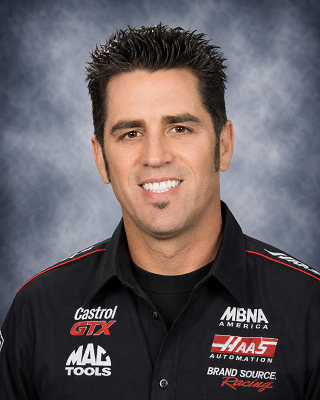
Larry Dixon grew up around Top Fuel. That did not mean anybody handed him one.
His father had won the 1970 Winternationals, and Dixon spent his childhood around drag strips. Then he went to work for Don Prudhomme.
Not as the driver.
He cleaned parts, washed cars, fetched lunch and did whatever else the established racers needed done. In the process, he learned the car, learned the crew and learned what happened between the spectacular four-second runs everybody in the grandstands had paid to see.
Then Prudhomme retired from driving and put Dixon in the Top Fuel car. Dixon responded by winning four races as a rookie.
Eventually he won 62 NHRA Top Fuel events, four U.S. Nationals and championships in 2002, 2003 and 2010.
Larry Dixon became one of Top Fuel’s great drivers by first learning that winning a four-second race requires a lot of work during all the hours when the car isn’t moving.
He Was in Victory Lane Before He Could Drive
Larry Dixon Jr. was born in Van Nuys, California, in 1966. His father, Larry Dixon Sr., was already deeply involved in Southern California drag racing.
In 1970, Dixon Sr. won Top Fuel at the NHRA Winternationals in Pomona. Three-year-old Larry Jr. joined him in the winner’s-circle photographs.
The family was already in drag racing. The son wanted to make it his profession.
The Snake Hired Him to Work, Not Drive
In 1988, Dixon went to work for Don Prudhomme and started near the bottom: wash the car, clean the parts, run errands, then learn enough that somebody trusts you with something more expensive.
As crew members changed, Dixon’s responsibilities grew. He worked around Prudhomme’s Funny Cars and learned professional drag racing without pretending the driver’s seat was the only job worth understanding.
That education would become useful later.
The Crewman Got the Car
Dixon briefly left Prudhomme in 1993 to drive a Top Alcohol Dragster, then returned to the crew for 1994.
That was supposed to mean more work on Prudhomme’s race car. The Snake had another idea.
Prudhomme announced that 1994 would be his final season as a driver. He needed somebody for the Top Fuel car in 1995.
He chose the crewman.
Before the season began, Dixon tested the dragster at Bakersfield. A rear tire failed, the car crashed and Dixon was okay.
Then he got back in, and the crewman turned out to be able to drive.
The Rookie Won Four Times
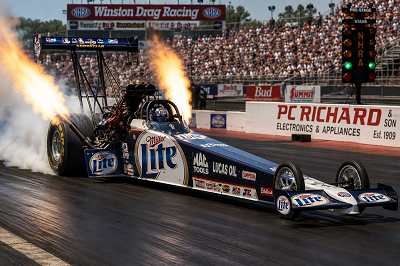
Dixon’s first NHRA Top Fuel victory came at Phoenix in 1995. By the end of his rookie season he had four national-event victories.
One came at Indianapolis.
Dixon entered the U.S. Nationals for the first time as a professional driver and won it. Thirty years earlier, Prudhomme had done the same thing in Top Fuel.
Now the driver’s seat belonged to his former crewman, and the Snake was back in the Indianapolis winner’s circle as an owner.
Dixon finished third in the championship standings and was named NHRA Rookie of the Year.
That was a fairly efficient transition from washing the car.
Good Came Before Great
Dixon and Prudhomme remained together, and the victories accumulated. Dixon won the Winternationals in 1998, twenty-eight years after his father had won the same event.
He won Indy again in 2001 and finished second in the championship behind Kenny Bernstein.
By then Dixon was no longer the surprising crewman somebody had allowed to drive. He was one of the best Top Fuel racers in the country.
There was still one missing item.
The championship.
Dick LaHaie Helped Finish the Package
Prudhomme’s team added another experienced mind in Dick LaHaie. LaHaie had won the 1987 Top Fuel championship as a driver and become one of the class’s most respected tuners.
With Dixon driving and LaHaie leading the tune-up, the Miller Lite team became brutally consistent.
Dixon’s job was not to turn every run into a personal performance demonstration. Stage correctly, leave on time, keep the car in the groove and give the combination every chance to finish.
At several thousand horsepower, simple becomes a highly paid skill.
2002 Started at the Front and Stayed There
Dixon opened the 2002 season by winning the Winternationals. He took the championship lead and never gave it back.
The Miller Lite dragster won nine of the season’s 23 events. Dixon reached 14 final rounds and compiled a 57-13 elimination-round record.
The championship finally belonged to Larry Dixon.
It also gave Don Prudhomme his first championship as a team owner. Dixon had gone from working on the Snake’s car to delivering the Snake another world championship.
There are worse ways to repay an apprenticeship.
Then They Did It Again
The Miller Lite team returned in 2003 and removed any possibility that 2002 had been a lucky season.
Dixon again won the Winternationals, again took the points lead and again nobody took it away. He won eight races and reached 15 final rounds.
Then came the Western Swing: Denver, Seattle and Sonoma on three consecutive weekends.
Dixon won all three.
By the end of 2003, he had consecutive Top Fuel championships and 17 victories in two seasons.
Quiet consistency had become domination.
Tony Schumacher Made Sure It Wasn’t Easy
Dixon’s championship years overlapped with the rise of Tony Schumacher and the U.S. Army team. Schumacher would eventually accumulate more championships and more victories.
Dixon was not waiting politely for that to happen.
He held a winning career head-to-head record against Schumacher and was especially strong against him during the 2002 and 2003 title seasons.
At Indianapolis, Schumacher became almost impossible to beat during the 2000s. The only other Top Fuel driver to win the U.S. Nationals during that decade was Larry Dixon, who did it in 2001 and 2005.
Twenty Years With Prudhomme Finally Ended
Dixon remained with Prudhomme through 2008. Counting the crew years, the relationship had lasted two decades.
Dixon left with 43 national-event victories as Prudhomme’s Top Fuel driver and two world championships.
His final race for the team ended appropriately.
He won at Pomona.
Then he changed teams.
Alan Johnson Had Just Spent Years Beating Him
Alan Johnson had been the tuning force behind Tony Schumacher’s championship run. After 2008, Johnson left Schumacher and formed Al-Anabi Racing.
He hired Larry Dixon.
There is something efficient about hiring the fellow you had spent years trying to beat.
The new operation stumbled at first, then became a championship contender almost immediately. Dixon won five races in 2009, and the title came down to the final event.
Tony Schumacher won it by two points.
The closest Top Fuel championship finish in NHRA history.
Dixon had changed teams and immediately found himself fighting the old enemy for another title. He had simply changed which side Alan Johnson was standing on.
2010 Was About as Efficient as Top Fuel Gets
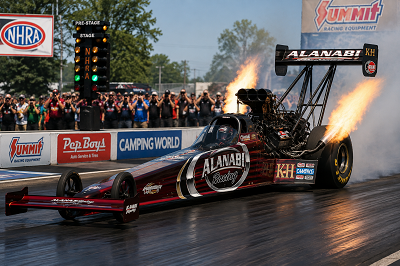
The disappointment of 2009 did not last long. Dixon began 2010 by winning the 50th Winternationals, and the Al-Anabi car kept winning.
By the end of the season, Dixon had won 12 of 23 races.
Even better: Dixon went 12-for-12 in final rounds.
No runner-up finishes. If the car made the final, Larry Dixon won the race.
His elimination-round record was 62-11, and at Pomona he clinched his third Top Fuel championship.
Seven years had passed since the second one. The driver had changed teams.
The result looked familiar.
Four Indy Wins Put Him in Serious Company
Dixon won the U.S. Nationals in 1995, 2001, 2005 and 2010. Fifteen years separated the first from the fourth.
The first came as a rookie driving for Prudhomme. The last came while driving for Alan Johnson on the way to his third championship.
Different cars. Different teams. Same Indianapolis.
Then the Career Became Less Orderly
The Al-Anabi relationship eventually ended. Dixon spent the next few years moving among opportunities, racing in Australia and making selected appearances.
In 2015, he returned to a full NHRA season with Bob Vandergriff Racing.
That season became considerably harder than anybody expected.
At Gainesville, the Dragster Broke in Half
During qualifying at the 2015 Gatornationals, Dixon was approaching the finish line at roughly 280 mph when the front portion of the dragster failed.
The chassis buckled, the front of the car separated, and Dixon and the rear portion launched high into the air before coming back down hard.
The impact reached roughly 109 g.
Dixon climbed from the wreckage and walked toward the ambulance. Later examinations found fractures to his T4 and T5 vertebrae.
He returned to competition anyway.
Top Fuel racers have occasionally displayed questionable definitions of the word sore.
Walked Away: Larry Dixon — Gainesville, 2015
Fourth Place Required No Apology
Dixon was also dealing with throat cancer during the 2015 season. He underwent treatment and continued racing while recovering from the Gainesville injuries.
At the end of the year, Larry Dixon finished fourth in the Top Fuel standings.
Broken vertebrae. Cancer treatment. Fourth in points.
There are seasons when fourth place requires an explanation. This was not one of them.
The Numbers Were Never Quiet
Dixon was not Top Fuel’s loudest personality. The statistics took care of the noise.
He finished with 62 Top Fuel victories in 380 starts, three world championships, four U.S. Nationals victories and 53 No. 1 qualifying positions.
He won championships for two different operations: two with Don Prudhomme and one with Alan Johnson.
That is useful evidence that the fellow holding the steering wheel was contributing something.
The Bottom Line
Larry Dixon was born into drag racing. He still had to earn the seat.
He started by cleaning parts for Don Prudhomme, learned how professional fuel teams worked, won Indy as a rookie and waited seven seasons for his first championship.
Then he won two in a row.
He changed teams, lost a championship by two points, came back the next year and won 12 times without losing a final.
Long after the championships, he survived a dragster coming apart at nearly 280 mph and returned to finish the season fourth.
The spectacular moments are easy to remember. The career was built on everything between them.
Larry Dixon spent years learning that Top Fuel rewards the fellow who gets every little job right. Then he spent three championship seasons demonstrating just how large those little jobs can become.
↑ Back to the Top, Before Larry Finds Another Final Round