1957 Chrysler 300C — Luxury Inside. Hemi Underhood.
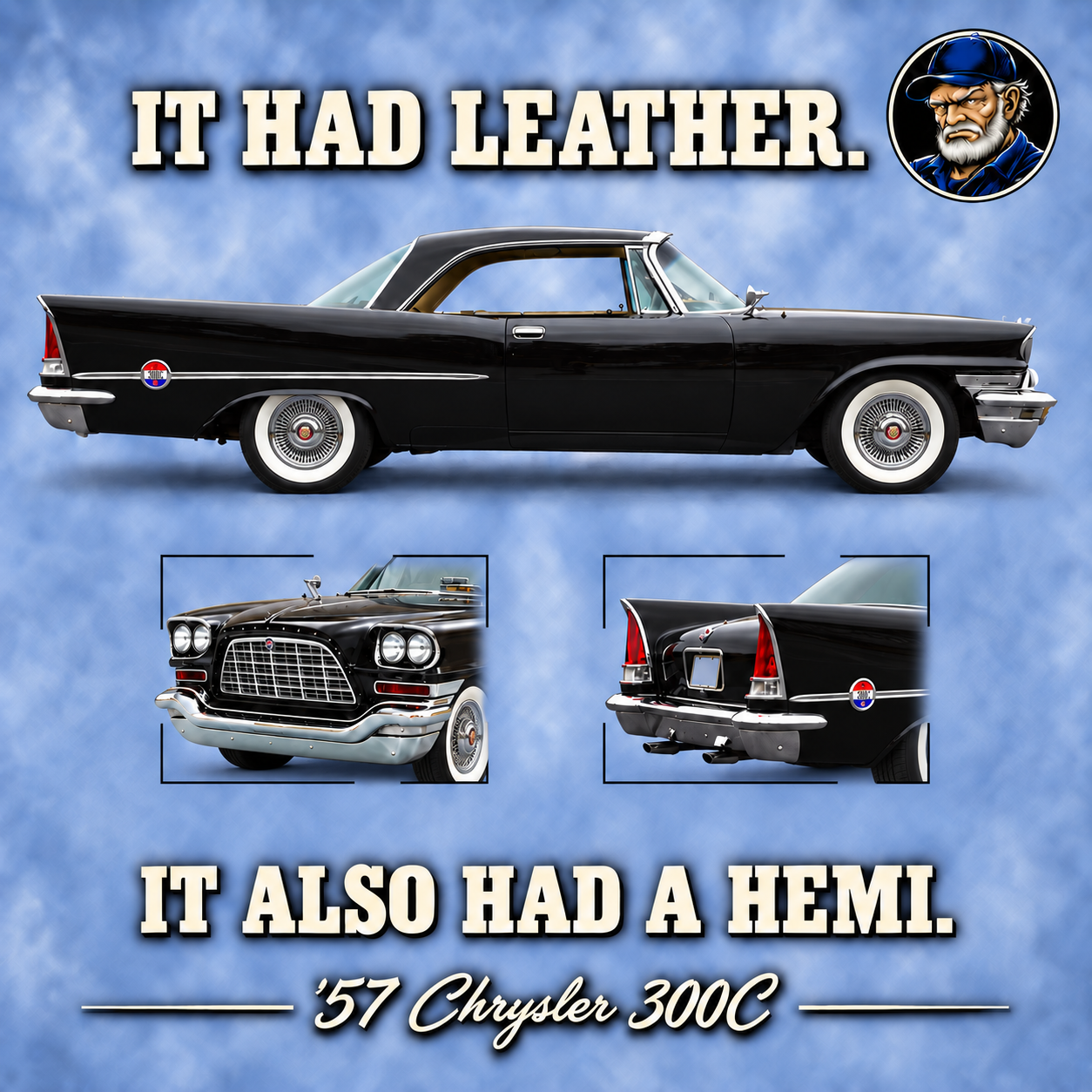
Luxury Inside. Hemi Underhood.
The 1957 Chrysler 300C looked like a car that ought to spend its evenings parked outside a country club.
Leather inside. Chrome outside. Virgil Exner’s Forward Look bodywork stretched low and wide, with fins rising off the rear quarters and enough presence to make sure nobody mistook it for the cheap seat in the Chrysler showroom.
Then you opened the hood.
That’s where the respectable part started falling apart.
Underneath sat 392 cubic inches of FirePower Hemi, making 375 advertised horsepower in standard form. Buyers wanting still more could get a hotter version rated at 390.
In 1957, those weren’t numbers you expected to find attached to something with this much leather.
Chrysler hadn’t simply taken a luxury coupe and stuffed in a bigger engine as a publicity stunt. The 300 Letter Series had already been building a reputation for serious performance before the C arrived. The original 1955 C-300 had come out swinging with Hemi power and a connection to Chrysler’s NASCAR success, and the 300B pushed the idea harder the following year.
By 1957, Chrysler knew exactly what the car was supposed to be: expensive, comfortable, fast, and not particularly interested in apologizing for any of it.
The new 392 Hemi was the heart of the thing. Dual four-barrel carburetors fed an engine with enough torque to move a big Chrysler with considerably more enthusiasm than its size suggested. This wasn’t some lightweight coupe depending on gearing and noise to feel quick. The 300C had a lot of car to move, and Chrysler gave it a lot of engine to do the moving.
Push the throttle and the Hemi handled the complaint.
But Chrysler also knew horsepower wasn’t worth much if the rest of the car acted like a sofa with license plates. The 300C got firmer suspension hardware than an ordinary Chrysler, including heavier-duty pieces intended to keep the car under control when somebody actually used the power. Chrysler’s torsion-bar front suspension helped the big coupe stay flatter and more composed than a fellow might expect from something wearing this much chrome.
That mattered because the 300C wasn’t supposed to be impressive only on the specification sheet.
Period road tests showed it could run 0–60 in roughly eight seconds. For a luxury coupe weighing around two tons, that was serious business in 1957, especially when the driver was sitting in leather instead of staring at bare floors and a heater-delete plate.
The 300C wasn’t a muscle car in the later GTO and Road Runner sense. It was too expensive, too luxurious, and aimed at a different buyer.
But the basic formula was already sitting there: take a handsome street car, give it more engine than good manners really require, upgrade enough of the chassis to use the power, and let the fellow in the next lane discover what he’d pulled up beside.
Detroit would spend much of the next decade turning that idea into an industry.
Chrysler was already doing it.
The 1957 Forward Look made the 300C look lower and sleeker than the cars that came before it. The fins were dramatic without completely taking over the body, the grille looked expensive, and the long proportions gave the car the kind of presence Chrysler wanted.
It wasn’t supposed to look like a racer.
That was part of the trick.
A stripped-down performance car tells everybody what it is before the engine starts. The 300C made you look twice. From twenty feet away, it was a big, expensive Chrysler. From behind the steering wheel, there was a 392 Hemi waiting for somebody to stop behaving.
The interior kept playing the same game. Leather upholstery, bright trim and the kind of equipment expected in an expensive Chrysler made the car comfortable enough for a long highway trip, while the engine made sure the ride home didn’t have to remain dignified.
That’s why the 300C deserves more than a footnote as another finned Chrysler from the 1950s.
It brought together two sides of Detroit that usually lived in different parts of the brochure: luxury and horsepower, comfort and chassis tuning, country-club looks and an engine with something to prove.
Chrysler wrapped all of it into one car years before the muscle-car era made the formula common.
It didn’t need stripes down the side.
It didn’t need a hood scoop big enough to swallow birds.
It already had 392 cubic inches doing the talking.
Leather on the seats. Fins on the quarters. Hemi under the hood. Chrysler had already figured out the formula.