Richard Petty
Two Hundred Wins Made Him The King. Stopping for the Fans Made Him NASCAR.
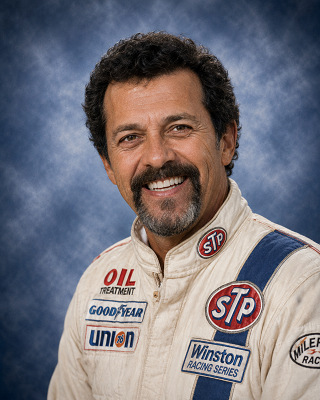
Richard Petty won 200 NASCAR Cup races.
Nobody else has come close. He also won seven championships, seven Daytona 500s, 27 races in one season, 10 races in a row and 123 poles across 1,185 Cup starts.
Those numbers explain why people called him The King.
They do not completely explain Richard Petty.
The fellow in the cowboy hat and sunglasses also spent decades signing autographs until the line disappeared. He shook hands, talked to children, thanked people for coming and somehow remained approachable while owning records that made most of the garage look temporary.
Plenty of champions helped build NASCAR.
Petty helped ordinary people feel as though NASCAR belonged to them too.
The Family Business Already Had a Champion
Richard Lee Petty was born in North Carolina in 1937, and racing was already family business. His father was Lee Petty, one of NASCAR’s first great drivers and winner of the inaugural Daytona 500.
The Petty operation at Level Cross was not a glamorous racing empire. It was a shop where cars and engines came apart and everybody figured out how to put them back together faster.
Richard worked around his father’s cars before beginning his own NASCAR career in 1958. He was named 1959 Rookie of the Year, then earned his first official Cup victory on February 28, 1960, on the dirt at the Southern States Fairgrounds in Charlotte.
It paid $800.
The next 199 improved the retirement account considerably.
The Hemi Changed Everything
By 1964, Petty was already a serious NASCAR winner. Then Chrysler arrived with the 426 Hemi.
Everybody else acquired a mechanical problem.
Petty dominated the Daytona 500, leading 184 of 200 laps and winning his first Great American Race. He won nine races that season and his first NASCAR championship.
The No. 43 Plymouth was becoming more than another successful stock car. It was becoming the car everybody else used to measure the afternoon.
NASCAR changed the engine rules for 1965 and effectively excluded Chrysler’s Hemi.
Chrysler was not amused.
Neither were the Pettys.
So Petty Went Drag Racing
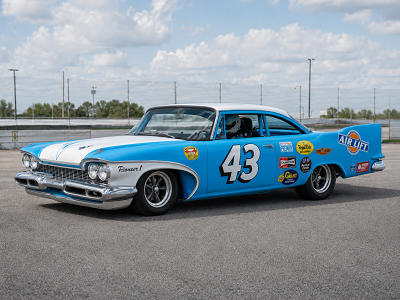
Rather than spend 1965 pretending the Hemi dispute did not matter, Chrysler and Petty Enterprises largely stepped away from NASCAR.
Richard Petty went drag racing.
The team put a Hemi into a Plymouth Barracuda and eventually painted OUTLAWED on the side.
Subtlety was not required.
During a February 1965 exhibition race at Southeastern Dragway in Georgia, the Barracuda suffered a mechanical failure and crashed into spectators. A child was killed and several other people were injured.
Petty was devastated. The wrecked Barracuda was buried on family property. Another drag car was built and raced briefly, but the accident permanently changed what had begun as a factory protest and promotional adventure.
Petty returned to NASCAR later that year and was back full time in 1966.
The detour was over.
1967 Was Ridiculous
There are dominant seasons.
Then there is Richard Petty in 1967.
He won 27 Cup races, including 10 in a row. Both remain NASCAR records.
Petty won on dirt and pavement, in short races and long ones. Wherever NASCAR put a racetrack, the No. 43 developed an irritating tendency to arrive at the finish first.
During the season, Richard also passed his father Lee on NASCAR’s all-time victory list.
By the end of the year he had another championship and a new nickname.
The King.
For once, the nickname department had shown admirable restraint.
Petty Enterprises Was More Than Richard
The statistics belong to the driver. Making those statistics repeatable required a family operation unusually good at keeping race cars alive through a NASCAR schedule.
Richard’s brother Maurice Petty became one of the sport’s great engine builders. Cousin Dale Inman became the crew chief most closely associated with the championship years.
Richard supplied feedback and drove the car. The shop had to prepare another one capable of doing the same thing a few days later.
In an era when NASCAR might race more than fifty times in a season, brilliance on one Sunday was not enough.
Petty Enterprises learned how to manufacture repetition.
Darlington Changed More Than the Car
Petty’s career also included crashes that remind anybody looking at old racing photographs how much safety equipment had not yet been invented, required or taken seriously enough.
At Darlington in 1970, a steering failure sent Petty’s Plymouth violently into the wall. The car overturned several times, and Petty’s arm and upper body were partially exposed through the driver’s window. He survived with a serious shoulder injury.
Window nets already existed, but NASCAR did not universally require them.
After Petty’s wreck, it did.
The little mesh net beside a driver’s head does not look particularly heroic.
Good safety equipment usually isn’t supposed to.
Seven Daytona 500s Is Getting Greedy
Petty won the Daytona 500 in 1964, 1966, 1971, 1973, 1974, 1979 and 1981.
Seven victories.
Still the record.
He could also lose one spectacularly.
In the 1976 Daytona 500, Petty and David Pearson came off Turn Four fighting for the victory on the final lap. They made contact and both cars spun.
Petty’s Dodge stopped only a short distance from the finish line. Pearson’s Mercury also spun into the grass, but Pearson kept the engine running and limped the wrecked car across the stripe.
Petty sat there while another fellow won one of the greatest Daytona finishes ever run.
Being The King did not include diplomatic immunity.
STP Wanted the Car Red
By 1972, sponsorship was becoming serious NASCAR business. STP president Andy Granatelli wanted Richard Petty.
He also wanted the car painted STP’s Day-Glo red.
Petty wanted the sponsorship.
He did not want to surrender Petty Blue.
The compromise produced one of the most recognizable paint schemes in American racing: Petty Blue with STP red.
The partnership lasted for decades. Petty, the No. 43 and STP became a demonstration of how a driver, race car and sponsor could become one recognizable package without making the automobile look as though somebody had merely rented the doors.
People were not just following cars anymore.
They were following personalities.
Seven Championships Took More Than One NASCAR
Petty won championships in 1964, 1967, 1971, 1972, 1974, 1975 and 1979. Seven became the standard later matched by Dale Earnhardt and Jimmie Johnson.
His first title came while NASCAR still raced regularly on dirt and wandered through small tracks around the country.
His last arrived after major corporate sponsorship and national television had begun transforming the sport.
The tracks changed. The cars changed. The money changed.
The fellow in the No. 43 kept figuring out how to win.
1979 Brought the King Back
For the first time in his Cup career, Petty went through the entire 1978 season without a victory.
At forty-one, that raised the obvious question.
Was The King finished?
The 1979 Daytona 500 supplied an answer.
Petty was running behind Cale Yarborough and Donnie Allison on the final lap when those two made contact and went into the infield. Richard came through and won.
Then Yarborough and the Allison brothers supplied the nationally televised fight that made sure millions of new viewers remembered the afternoon.
Petty led only 12 laps.
He led the useful one.
Later that season he beat Darrell Waltrip for the championship by 11 points.
The King had looked finished for roughly one year.
The Crown Did Not Include a Halo
Petty’s public image was unusually clean.
The race cars were still NASCAR race cars.
In 1983, Petty won at Charlotte for career victory number 198. NASCAR inspected the car afterward and found an oversized engine along with left-side tires mounted on the right side.
The team was fined $35,000 and lost 104 championship points, although the victory remained in the record book.
It was a substantial penalty and a useful reminder that Petty Enterprises could interpret competitive opportunity with the same enthusiasm found elsewhere in the garage.
The cowboy hat stayed white.
The race car had been less innocent.
Number 200 Arrived With the President Watching
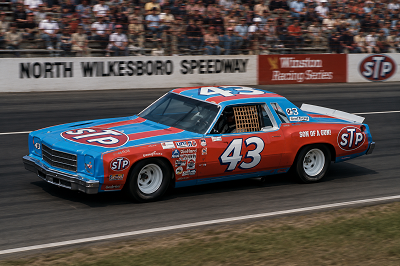
On July 4, 1984, President Ronald Reagan attended the summer NASCAR race at Daytona.
Richard Petty arrived with 199 career victories.
At that point subtlety was no longer available.
Late in the race, Petty and Cale Yarborough were fighting at the front when a crash brought out the caution. They raced back toward the yellow flag, and Petty beat Yarborough by roughly a bumper.
Win number 200.
Independence Day. Daytona. President of the United States watching.
There are public-relations departments that would spend years trying to arrange something half that tidy.
The victory was Petty’s last.
He raced another eight seasons, but nobody ever had to change the number again.
Then He Kept Signing
The part of Richard Petty’s career that cannot be measured in trophies usually involved a pen.
He became famous for staying until the autograph line disappeared.
Petty used the elaborate signature he had practiced when he was young, looked at people and talked to them. An autograph request meant somebody had cared enough to ask, so he treated it accordingly.
That turned out to be excellent business for NASCAR.
Fans who met Richard Petty generally left liking Richard Petty.
Then they told somebody.
The cowboy hat and sunglasses became almost a uniform, but The King never behaved as though ordinary race fans needed an appointment with the throne.
Two hundred victories got people’s attention.
That behavior kept it.
The Farewell Took an Entire Season
Petty announced that 1992 would be his final season, and NASCAR spent the year saying goodbye.
The last race came at Atlanta. Six drivers entered with a mathematical chance at the championship, twenty-one-year-old Jeff Gordon was making his first Cup start, and Richard Petty was making start number 1,185.
Petty’s car crashed and caught fire on Lap 95.
That should have ended the afternoon.
The crew repaired enough of the No. 43 to send him back onto the track for the final two laps. There was no victory available and no meaningful finishing position to rescue.
The point was simply to finish the farewell on the racetrack.
Those last two laps were for the people who had come to watch him take them.
Richard Petty came around one final time while Jeff Gordon’s Cup career was beginning.
NASCAR changed eras without needing another speech.
The Numbers Still Look Broken
Petty retired with 200 Cup victories, 123 poles and 1,185 starts, along with 27 victories in one season, 10 consecutively, seven Daytona 500 wins and seven championships.
Several of those records look almost unreasonable under a modern NASCAR schedule.
But the arithmetic is only half the reason The King remained The King after the driving stopped.
Petty stayed around the sport, represented teams and sponsors, attended races and kept meeting people.
When the NASCAR Hall of Fame opened with its inaugural class in 2010, Petty entered alongside Dale Earnhardt, Junior Johnson, Bill France Sr. and Bill France Jr.
There was not much need for a recount.
The Bottom Line
Two hundred wins explains Richard Petty’s place in the record book.
It does not completely explain his place in NASCAR.
The sport changed enormously during the thirty-five years he drove, from family race shops and factory wars to superspeedways, corporate sponsorship and national television.
Through every version, the No. 43 remained recognizable.
So did the fellow beside it.
Winning made people notice Richard Petty.
Stopping to shake their hands made them remember him.
The records made Richard Petty The King.
The remarkable part was that after climbing above everybody else in the record book, he spent decades making sure the people buying the tickets never felt he was looking down at them.
Petty Enterprises supplied Racing Shenanigans with its share of stories about fast cars, creative engineering and the occasional disagreement with NASCAR’s measuring equipment.
➤ See the oversized-engine inspection story in Racing Shenanigans
➤ See how the 1979 Daytona 500 fight handed Petty the victory in Racing Shenanigans
➤ See Daytona 1976: Nitrous in the Wedge Bar in Racing Shenanigans
➤ See NASCAR’s Yellow Banana inspection battle in Racing Shenanigans
↑ Back to the Top, Before The King Starts Another Autograph Line