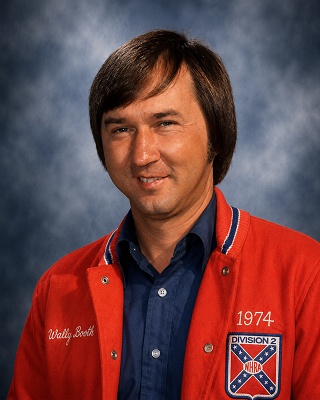
Wally Booth
Everybody Else Had a Pro Stock Engine. Wally Had to Invent One.
American Motors wanted to race Pro Stock. There was one small problem.
Chevrolet, Ford and Chrysler racers already had years of development, aftermarket parts and proven engine combinations. AMC had a Gremlin, a pile of largely undeveloped engine pieces and considerably fewer people waiting to sell somebody a race-winning cylinder head.
Wally Booth took the job anyway.
Working with Dick Arons and a small group of Detroit-area engine people, Booth turned AMC’s neglected V8 into a genuine Pro Stock engine. Then he discovered the Gremlin body was fighting him, switched to a Hornet and started beating the established factory combinations.
He eventually won five NHRA national events, including the Gatornationals and U.S. Nationals. Every NHRA Pro Stock victory ever credited to AMC came with Wally Booth driving the car.
Not bad for a program most of the class did not expect to become a championship threat.
Detroit Dragway Started the Trouble
Wallace Elston Booth was born September 27, 1937, in Huntington, West Virginia. His family moved to Michigan in 1957, putting Wally only a few miles from Detroit Dragway.
He did not attend his first drag race until 1962. Once he heard and saw the 409 Chevrolets running there, the delay was corrected quickly.
Booth started with a Chevrolet 409 street car, then bought a 1962 bubbletop equipped with the stronger 409-horsepower version. He wanted more from it but did not yet know how to build a serious racing engine.
That led him to a 17-year-old Detroit racer named Dick Arons. Arons knew engines, Booth paid attention, and the arrangement became Booth-Arons, one of the stronger engine-building partnerships in Detroit drag racing.
The Chevrolet Years Built the Reputation
By 1966, Booth was racing a 396-powered Chevelle in B/Stock and winning divisional events. He moved into Super Stock in 1967 and continued collecting class wins.
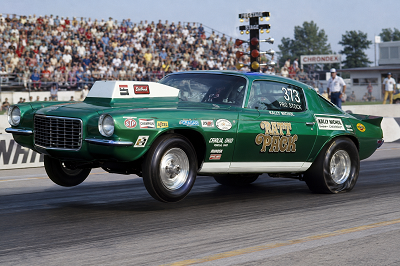
For 1968 came a Camaro that put Booth among the country’s better Chevrolet Super Stock racers. At the U.S. Nationals, he reached the Super Stock Eliminator final before losing to Arlen Vanke.
The Detroit Dodge dealers recruited him for 1969 and supplied a Hemi Super Bee. Booth appreciated the opportunity but never became particularly fond of the big Dodge as a racing platform.
When NHRA announced Pro Stock for 1970, he bought his Camaro back, updated it for the new heads-up class and qualified third at the inaugural Winternationals with a 10.09 at 138.88 mph.
He belonged.
Then He Started Learning From the Grump
Booth had known Bill “Grumpy” Jenkins since his earlier Super Stock years, and the relationship became especially useful as Pro Stock developed.
During preparation for the 1971 season, Vic Edelbrock Jr. offered Booth access to Edelbrock’s California facilities and dynamometer. Jenkins was developing his Chevrolet engines there as well.
The two racers kept their combinations private during the day and compared notes after hours. At one point Jenkins’ engine produced about 670 horsepower while Booth’s made 668.
For a small independent Detroit operation, being two horsepower behind Grumpy Jenkins was a reasonably encouraging problem.
Then AMC called.
American Motors Needed Somebody Brave
In late 1971, AMC racing director Bob Swaim was looking for a driver to establish the company in Pro Stock. Dick Maskin recommended Booth.
The proposition was not especially comforting. AMC wanted its new Gremlin promoted, but there was almost no serious Pro Stock aftermarket for AMC engines. Chevrolet and Chrysler racers could choose from years of developed racing parts. Booth would have to help create much of his own combination.
AMC offered factory backing and access to engineers and suppliers. Booth saw both the opportunity and the workload.
The other manufacturers already had Pro Stock programs. AMC needed Booth to help build one.
The Parts Catalog Was Mostly Blank
AMC had strong production-engine fundamentals and special blocks developed for programs such as NASCAR and Trans-Am, but Pro Stock required a different level of development.
Booth and Arons experimented with displacement because NHRA’s weight breaks tied vehicle weight to engine size. They tried combinations ranging from the low 340s into the 380-cubic-inch range and discovered that reducing displacement did not reduce the horsepower they could actually use on the track.
The team eventually favored roughly 362 cubic inches.
Smaller engine. Lighter race car. Same useful horsepower.
That was a trade Booth could understand.
The Gremlin Had One Problem Nobody Could Port Away
The first AMC Pro Stocker was a Gremlin X built for 1972. Booth and the engine crew kept improving the power, and the car produced respectable elapsed times.
The speed numbers remained disappointing, and Booth suspected aerodynamics.
In the spring of 1973, he tested his Gremlin against Dick Maskin’s AMC Hornet using essentially identical engine power. The Hornet ran about fifteen hundredths quicker and roughly 3.5 mph faster.
The engine had not found fifteen hundredths. The body had been stealing it.
Booth ordered a Hornet.
The Hornet Finally Let the Engine Work
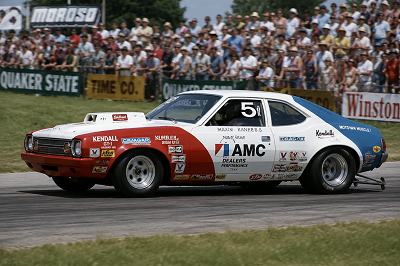
The new Hornet arrived during 1973 and immediately gave Booth a better platform. It was longer, more stable and aerodynamically cleaner than the Gremlin.
Now the engine became the main argument again.
Booth, Arons and the AMC development group worked through pistons, rods, camshafts, intake manifolds and cylinder heads. Suppliers that had never needed serious AMC Pro Stock components began making them, while other pieces had to be developed from scratch.
Booth was not simply tuning a mature racing package. He was helping create one.
Gainesville Proved the Program Worked
On March 17, 1974, Booth arrived at the Gatornationals with the Hornet and finally turned the development program into an NHRA national-event trophy.
He reached the final against Jack Roush in the Gapp & Roush Mustang II. Booth ran 8.97 to Roush’s 9.01 and gave AMC its first NHRA Pro Stock victory.
The win provided exactly what the program needed: proof that AMC’s money, Booth’s development work and a Hornet nobody had expected to dominate could produce a national-event winner.
The season became even more serious from there.
He Nearly Won the Championship Too
By the 1974 World Finals, Booth was no longer simply the fellow who had pulled off one surprising victory. He arrived leading the Pro Stock standings by 47 points over Wayne Gapp, with Bob Glidden sitting third.
The championship was still there for Booth to take.
Glidden won the World Finals and took the title, while Booth slipped to third in the final standings. The trophy got away, but the season established something just as important for the AMC program.
The Hornet had gone from experiment to championship contender in roughly two years.
Four Heads Became Two Better Ones
Booth kept attacking the AMC engine after Gainesville. Cylinder-head airflow remained one of its biggest limitations, so later in 1974 he developed one of the more extreme solutions of the era.
Multiple cylinder-head castings were cut apart and useful sections welded back together into a pair of heads with larger, better-shaped ports.
Four heads went onto the bench. Two race heads came off.
They were not especially interested in remaining leak-free, but they produced horsepower.
Pro Stock engineering has occasionally required a flexible definition of elegant.
1975 Proved Gainesville Wasn’t an Accident
The national-event wins did not pile up immediately, but Booth’s AMC program kept getting stronger.
At the 1975 U.S. Nationals, he qualified the Hornet No. 1. Away from the NHRA tour, he won the Popular Hot Rodding Championships at Martin, Michigan, plus IHRA events at Rockingham and Bristol.
By then nobody sensible was laughing at the AMC. The Hornet was one of the cars everybody else had to account for when qualifying began.
Then Came 1976
Everything Booth and his crew had learned finally came together in 1976. He won the NHRA Springnationals in Columbus and later took the U.S. Nationals at Indianapolis, putting an AMC Hornet in the winner’s circle at the biggest drag race of the season.
Then Booth won the Fallnationals in Seattle.
Three late-season NHRA victories had turned the little AMC operation into one of the hottest teams in Pro Stock.
There was still Ontario.
AMC Versus AMC
The 1976 World Finals produced something NHRA Pro Stock has never repeated: an all-AMC final.
Booth faced Dave Kanners, whose Hornet used Booth-Arons engine power. The championship was already going elsewhere, but manufacturer pride remained available.
Booth left first and won on a holeshot. It was his fourth NHRA victory of the season and fifth of his career. Booth finished third in the championship standings behind Larry Lombardo and Warren Johnson.
AMC had entered Pro Stock as the little manufacturer with the odd-looking compact. Five years later, it had both cars in the final round of the World Finals.
Five Wins Were All of Them
Booth continued campaigning AMC machinery through 1979 before retiring from driving to concentrate on engine building.
His NHRA total stopped at five national-event victories: Gainesville in 1974, then Columbus, Indianapolis, Seattle and Ontario in 1976.
Five wins is a respectable career total by itself. Booth’s carried an unusual footnote.
They were every NHRA Pro Stock victory AMC ever won.
The Engine Shop Stayed Open
Retirement from driving did not separate Booth from performance work. Booth-Arons Racing Enterprises continued building engines, and Booth later operated Booth Automotive in the aftermarket-parts business.
His reputation among racers remained unusually strong because the AMC success had never come from simply possessing better factory hardware. Booth and his partners had been forced to solve problems other racers could address by ordering another developed part.
In 2013, Wally Booth was inducted into the International Drag Racing Hall of Fame. He died November 13, 2024, at age 87.
By then the AMC Pro Stock experiment had been history for nearly half a century.
It had not become any less impressive.
The Bottom Line
Wally Booth was already one of Chevrolet’s better Super Stock and early Pro Stock racers when AMC handed him a Gremlin and an engine with almost no serious racing aftermarket behind it.
He and his partners developed the parts, experimented with displacement, cut cylinder heads apart, discovered the Gremlin was aerodynamically hopeless and replaced it with a Hornet. By 1974, Booth had won the Gatornationals and arrived at the World Finals leading the championship standings.
Two years later he won Indy and finished the season by beating another AMC Hornet in the World Finals.
AMC won five NHRA Pro Stock national events.
Wally Booth drove every one of them.
↑ Back to the Top, Before Wally Cuts Up Another Set of Heads