Bill “Grumpy” Jenkins
He Treated Drag Racing Like an Engineering Problem — Then Helped Invent Pro Stock
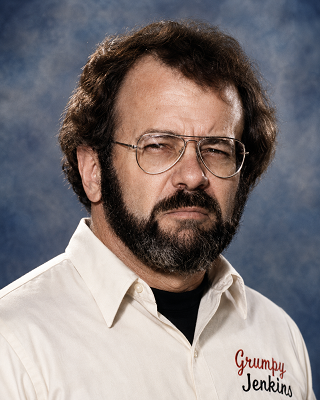
Bill Jenkins did not get called “Grumpy” because he was trying to build a lovable racing character. He got the name because there was work to do and somebody kept trying to talk to him.
That explains quite a bit.
Jenkins approached drag racing as an engineering problem. Measure it. Change something. See what happened. Keep what worked. Throw away what did not. Then go looking for the next two horsepower while everybody else was still admiring the last ten.
He became a first-rate driver in the process, winning 13 NHRA national events and eventually ranking eighth on NHRA’s list of the greatest drivers from its first fifty years.
But the steering wheel was never the whole story. Bill Jenkins helped turn factory-stock drag racing into Pro Stock because he kept treating supposedly finished automobiles as unfinished engineering projects.
Engineering School Followed Him to the Race Shop
William Tyler Jenkins was born in Philadelphia in 1930 and studied mechanical engineering at Cornell University before leaving school after his father’s death.
He did not leave the engineering habits behind. When something improved an engine, Jenkins wanted to know why. When it slowed the car down, he wanted to know that too. Racing folklore was welcome to stay in the conversation, provided somebody eventually brought measurements.
The arrival of Chevrolet’s small-block V8 in 1955 gave him exactly the sort of machinery he wanted to investigate: compact, light, willing to breathe and full of places where a careful engine builder could find more.
Jenkins spent most of the rest of his career finding them.
He Was Thinking About the Rules Early
In 1956 Jenkins helped devise stock-class rules for the Eastern Hot Rod Association using advertised horsepower and minimum vehicle weight to sort cars into competitive categories.
The problem was simple enough to describe and difficult to solve: how do you let different factory combinations race heads-up without handing the trophy automatically to whichever manufacturer built the largest engine?
Weight. Horsepower. Cubic inches. Body size. Engine design.
Pro Stock was still years away, but Jenkins was already looking at racing as a problem in arithmetic as much as acceleration.
Old Reliable Made Him Hard to Ignore
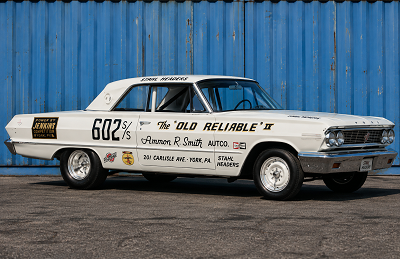
By the early 1960s Jenkins had teamed with Pennsylvania racer Dave Strickler. Their series of Old Reliable Chevrolets became some of the best-known factory-stock racers in the country.
Strickler could drive. Jenkins could make a Chevrolet considerably less interested in behaving like the automobile that had left the assembly line.
In 1963 the team received a lightweight Chevrolet Z-11 Impala with the 427 engine package. Detroit supplied the pieces. Jenkins wanted to know which clearances, cam timing, cylinder-head work, gearing and adjustments would make those pieces beat somebody else’s.
Old Reliable won enough that the answer was usually visible on the scoreboard.
Then Chevrolet Quit Racing. Sort Of.
General Motors officially withdrew from organized racing support in 1963, creating an awkward situation for Chevrolet racers who had become accustomed to useful things arriving from Detroit.
Jenkins and Strickler switched to Dodge for a time, and Jenkins won Top Stock Eliminator at the 1965 Winternationals. Then he went back to Chevrolet.
In 1966 Jenkins campaigned an L79-powered Chevy II. It became the first of a long series of cars carrying a name that did not exactly suggest a major engineering program: Grumpy’s Toy.
Chevrolet performance chief Vince Piggins noticed what Jenkins was doing, and the supposedly racing-free corporation found ways for useful information and hardware to remain within conversational distance.
Pro Stock Finally Put a Name on the Argument
By the late 1960s Jenkins, Ronnie Sox, Dick Landy, Don Nicholson and other factory-car specialists were drawing crowds with heads-up match races.
The attraction was obvious. These still looked like production cars, but underneath the sheet metal the best racers in the country were pushing naturally aspirated V8s and four-speed transmissions as hard as the rules allowed.
NHRA turned that idea into a national eliminator for 1970: Pro Stock.
More than forty cars entered its debut at the Winternationals. Jenkins brought Grumpy’s Toy IV, his big-block 1968 Camaro. Ronnie Sox brought the feared Sox & Martin Hemi Plymouth.
The final came down to those two.
Jenkins won.
The first NHRA Pro Stock national event in history belonged to Grumpy. He followed it by winning the first Pro Stock Gatornationals as well.
For a class that would spend decades arguing over engines, weight and rules, putting Bill Jenkins in the first winner’s circle was almost too appropriate.
The Hemi Won the Next Argument
The Chrysler Hemi combinations of Sox & Martin and the other Mopar teams soon became the machinery to beat.
Jenkins could make the Chevrolet run, but during Pro Stock’s first two seasons the rules favored combinations that made the big Hemi difficult to handle consistently.
Then NHRA revised the weight rules for 1972, allowing smaller wedge-head engines to run in lighter cars.
Jenkins looked at the new arithmetic and stopped trying to win the old argument.
The Vega Changed the Math
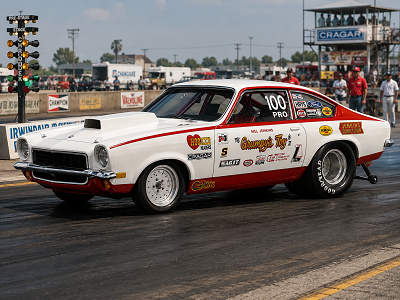
Grumpy’s Toy IX was a Chevrolet Vega powered by a small-block Chevrolet.
Against the big-block machinery that had defined the class, the little Vega looked like somebody had brought a pocket calculator to a sledgehammer contest.
Then Jenkins started winning.
He won six NHRA national events during 1972 and took the Pro Stock championship. The car was light, efficient and exceptionally well developed, and Jenkins was brutally consistent with the four-speed.
The International Motorsports Hall of Fame credits him with making 250 passes during the season without missing a shift. That does not happen because the driver gets excited and hopes his right hand finds third gear.
Jenkins had taken a rule change, discarded the assumption that Pro Stock required a huge engine and built a better answer around the new numbers.
The Vega did more than beat the Hemi cars. It demonstrated that the quickest way forward did not have to look anything like yesterday’s winning combination.
Then He Changed the Car Under the Body
The 1972 Vega won more races. The later Vega may have changed more race cars.
Grumpy’s Toy XI, built for 1974, pushed Pro Stock farther from its modified-production-car origins. It used a full tube-frame chassis, rack-and-pinion steering, MacPherson-strut front suspension and dry-sump oiling.
The tube chassis gave Jenkins better control of weight and rigidity. The front suspension improved packaging and weight transfer. Rack-and-pinion simplified the steering system, while dry-sump lubrication offered more freedom in engine placement and oil control.
The body still said Vega. The machinery underneath was becoming a purpose-built race car.
That was where Pro Stock was going. Jenkins had helped define the class with production-based cars; now he was helping remove the production-car compromises that no longer served the job.
Driving Was Only One of His Jobs
Jenkins accumulated 13 NHRA national-event victories as a driver and the 1972 Pro Stock championship. Those numbers explain only part of his reputation.
Jenkins built engines and cars for other racers, developed components, refined chassis ideas and kept Jenkins Competition busy long after he stopped driving professionally. His engines powered numerous NHRA Eliminator victories and multiple championships.
He stepped away from regular driving in the mid-1970s because building and developing the cars interested him more than continuing to prove he could shift one.
His work even reached stock-car racing, including machinery connected with Donnie Allison’s pole position for the 1975 Daytona 500 and later NASCAR engine programs.
The track could change. The workbench still wanted answers.
The Bottom Line
Bill Jenkins died on March 29, 2012, at age 81. By then calling him the “Father of Pro Stock” required very little argument.
He came out of the factory-stock wars, helped shape the kind of heads-up racing that produced Pro Stock, won the class’s first NHRA national event, answered the Hemi with the championship-winning small-block Vega and then helped push the cars toward the purpose-built chassis that followed.
But Grumpy’s real advantage was not any one engine, car or rulebook.
It was getting to the useful question before everybody else.
Other racers could copy the answer after Jenkins proved it worked. His advantage was usually getting to the question first.
↑ Back to the Top, Before Grumpy Finds Another Two Horsepower