Bill Elliott
He Won a Million Dollars, Qualified at 212 MPH and Still Had to Wait for the Championship
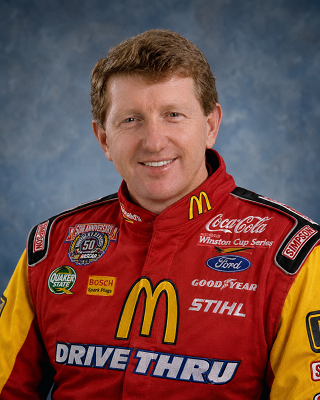
Bill Elliott came out of Dawsonville, Georgia, with a family race team that spent its early years stretching money, building its own cars and giving NASCAR’s established operations very little reason to worry about them.
Then the No. 9 Ford started going faster than everybody else’s. By 1985, Elliott had become one of stock-car racing’s biggest stars. He won 11 races, captured the Daytona 500, recovered nearly two laps under green at Talladega and collected NASCAR’s new million-dollar bonus by winning the Southern 500.
Two years later, he qualified at Talladega at 212.809 mph. NASCAR has never seen a faster qualifying lap. Elliott eventually finished with 44 Cup victories, 55 poles, two Daytona 500 wins and the 1988 championship.
The fans called him Awesome Bill from Dawsonville. For once, the nickname department had shown admirable restraint.
Dawsonville Was the Race Shop
William Clyde Elliott was born October 8, 1955, in Dawsonville, a small north Georgia town that did not look much like the future headquarters of one of NASCAR’s fastest operations. The Elliott team was a family affair. Bill drove, brothers Ernie and Dan worked on the machinery, Ernie became particularly important on the engine side, and their father George helped get the whole thing moving.
They had talent. Money was less cooperative. Elliott made his Cup debut in 1976, but the early seasons brought limited schedules, mechanical failures and the sort of finishes that rarely cause established race teams to lose sleep.
The Elliotts kept building anyway. A family operation without much money cannot afford to learn slowly, and by the time somebody with money noticed them, they had accumulated quite an education.
Harry Melling Put Fuel in the Family Operation
Michigan businessman Harry Melling sponsored Elliott for part of the 1981 season, supplying something every clever little race shop eventually requires: enough money to turn clever ideas into actual race-car parts.
Melling purchased the operation in 1982, but the Elliott family remained at its center. Melling supplied backing while the Elliotts supplied years of accumulated knowledge about how to make a Ford go faster than Ford had originally intended.
The breakthrough finally came at Riverside in the last race of 1983. Elliott’s first victory arrived in his 115th Cup start, and he led only the final five laps. Five was enough. NASCAR has never paid extra for leading the ones after the checkered flag.
Then the No. 9 Started Getting Everybody’s Attention
Elliott won three races in 1984 and finished third in the championship standings for the second consecutive season. The No. 9 was particularly unpleasant on the big tracks. Ernie Elliott’s engines made serious horsepower, the Thunderbird slipped through the air well, and Bill seemed perfectly comfortable at speeds that caused other people to reconsider their career choices.
The pieces were in place. Then came 1985, and the rest of NASCAR got to see what happened when all of them worked at once.
The Daytona 500 Was the First Warning
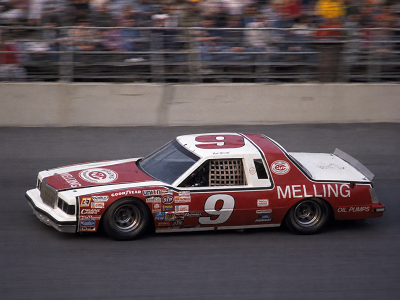
Elliott started the 1985 Daytona 500 from the pole, led 136 of 200 laps and won. This was not a fuel-mileage surprise, a lucky caution or one of those afternoons where the best car lost and somebody else happened to be standing nearby with an empty trophy shelf.
The No. 9 was simply faster than the field for most of the afternoon.
The victory made Elliott eligible for a new promotion called the Winston Million. Win three of NASCAR’s four major events — the Daytona 500, Winston 500 at Talladega, World 600 at Charlotte and Southern 500 at Darlington — and R.J. Reynolds would hand over one million dollars.
It sounded like excellent advertising because nobody was supposed to actually collect it. Bill had already checked the first box.
Talladega Tried to Take Him Out of It
The 1985 Winston 500 produced a better demonstration of the No. 9’s speed than an ordinary victory ever could. An oil-system problem sent Elliott to the pits for repairs and cost him nearly two laps. At Talladega, that meant more than five miles of racetrack.
Normally, the driver starts hoping for a caution. No caution came, so Elliott went after the field without one.
The Ford recovered the entire deficit under green, caught the leaders and won. Some comebacks require clever strategy, somebody else’s bad pit stop or a yellow flag arriving at a convenient moment. This one mostly required Bill Elliott to spend several miles driving faster than everybody else.
The Million Came Down to Darlington
Elliott had won two of the four Winston Million races when NASCAR reached Charlotte, but a mechanical problem left him 18th in the World 600. That left one opportunity: the Southern 500 at Darlington.
One race. One million dollars. And Darlington, a track that has spent generations punishing drivers for becoming pleased with themselves.
Elliott started from the pole, passed Cale Yarborough for the lead late and stayed there. When the No. 9 crossed the finish line, Million Dollar Bill stopped sounding like something an advertising department had invented.
He became the first driver to collect the Winston Million, in the very first season NASCAR offered it.
Eleven Wins Still Didn’t Buy the Championship
The peculiar part of Elliott’s extraordinary 1985 season is what he did not win. He collected 11 races, 11 poles, some of NASCAR’s largest trophies and a million-dollar bonus.
Darrell Waltrip collected the championship.
NASCAR’s points system rewarded finishing races consistently, and Elliott’s spectacular afternoons could not completely erase the bad ones. It was a useful reminder that being the fastest car on the schedule and being the champion are related occupations, but NASCAR has never promised they are the same job.
212.809 MPH
In 1987 at Daytona, Elliott qualified at 210.364 mph. Apparently the number needed improvement.
On April 30 at Talladega, he drove the No. 9 Ford around the 2.66-mile superspeedway in 44.998 seconds, averaging 212.809 mph. That remains the fastest qualifying lap in NASCAR history.
The record has survived partly because NASCAR looked at what the cars were doing and decided there was no pressing need to keep arranging opportunities for somebody to beat it. Restrictor plates arrived at Daytona and Talladega, eventually followed by other methods of controlling horsepower and speed.
The rulebook effectively put Elliott’s number behind glass. A stock car may someday qualify faster. Nobody seems particularly eager to recreate the circumstances.
The Championship Finally Arrived in 1988
After the fireworks of 1985 and the raw speed of 1987, Elliott’s championship season almost looked sensible. He won six races, including another Southern 500, and produced 15 top-five finishes and 22 top tens in 29 starts.
The speed had not disappeared. This time the bad Sundays quit undoing enough of the good ones.
When 1988 ended, Bill Elliott was finally the NASCAR Cup champion.
Dawsonville Had Its Own Siren
Elliott’s popularity became almost as unusual as his speed. Dawsonville’s local pool hall became famous for sounding a siren whenever Bill won, and the fans eventually voted him NASCAR’s Most Popular Driver a record 16 times.
That was an interesting result for a fellow who never seemed determined to become anybody’s television personality. Elliott was not Darrell Waltrip searching for the nearest microphone. He did not manufacture feuds or spend much time explaining his own importance.
Bill mostly climbed into the Ford, went very fast and returned to Dawsonville. The fans apparently considered that sufficient promotion.
1992 Came Down to One Lap
Elliott left Melling after 1991 and joined Junior Johnson. The new combination worked immediately, winning four consecutive races at Rockingham, Richmond, Atlanta and Darlington early in 1992.
He reached the famous Atlanta finale still capable of winning another championship. Six drivers arrived with a mathematical chance, but by the end the argument had narrowed to Elliott and Alan Kulwicki.
Elliott won the race and led 102 laps. Kulwicki finished second and led 103.
That one extra lap gave Kulwicki the bonus for leading the most laps and helped him win the championship by ten points. Bill Elliott had won the race. Alan Kulwicki had counted one lap better.
Sometimes NASCAR championship mathematics has a particularly dry sense of humor.
Then the Wins Disappeared for a While
Elliott left Junior Johnson after 1994 and formed his own team. The operation kept him racing but did not put him back in Victory Lane.
Then Ray Evernham called. Evernham was building Dodge’s return to NASCAR and wanted Elliott in one of the cars. At Homestead in 2001, Bill ended a 226-race winless streak.
Awesome Bill was forty-six years old. Apparently he had merely been inconvenienced for a while.
Indianapolis Was Still Missing
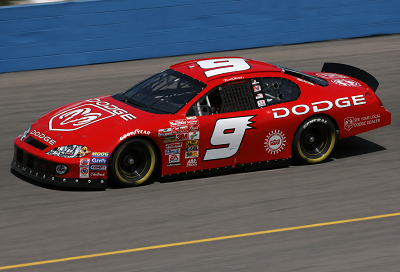
The Evernham years supplied one more major trophy. In 2002, Elliott won the Brickyard 400 at Indianapolis while leading 93 laps.
By then the résumé already contained Daytona, Talladega, Darlington, a championship, a million-dollar bonus and enough superspeedway records to keep a respectable trophy room busy. Indianapolis fit nicely on the remaining shelf.
His final Cup victory came at Rockingham on November 9, 2003. Elliott was forty-eight and led 140 laps. Career win number 44.
He continued making selected Cup starts through 2012 and eventually finished with 828 starts and 55 poles.
Then Another Elliott Took the No. 9
The Elliott name did not leave NASCAR when Bill reduced his schedule. His son Chase came through the development ranks, won the NASCAR Xfinity Series championship and eventually became a Cup champion himself.
He also ended up driving the No. 9.
Some family businesses hand the next generation an office. The Elliotts have traditionally preferred something with a roll cage.
The Bottom Line
Bill Elliott finished with 44 Cup victories, 55 poles, 828 starts and the 1988 championship. He won the Daytona 500 twice, the Southern 500 three times and NASCAR’s Most Popular Driver award 16 times. NASCAR inducted him into its Hall of Fame in 2015.
Those numbers explain the career. The stopwatch explains why the legend feels different.
At Talladega in 1985, Elliott lost nearly two laps and simply drove them back under green. Two years later, the same track timed him at 212.809 mph. The sport eventually changed enough that nobody has repeated it.
Awesome Bill from Dawsonville always sounded a little like somebody in advertising had gotten carried away.
The inconvenient part for everybody else was how often the stopwatch agreed.
Bill Elliott spent enough time racing NASCAR’s fastest cars against equally stubborn competitors to occasionally provide Racing Shenanigans with something more memorable than another clean lap.
➤ See Elliott, Earnhardt and the Pass in the Grass in Racing Shenanigans
↑ Back to the Top, Before Ernie Finds Another Five Horsepower