Fireball Roberts
He Made NASCAR Look Like a Major-League Sport Before It Really Was One.
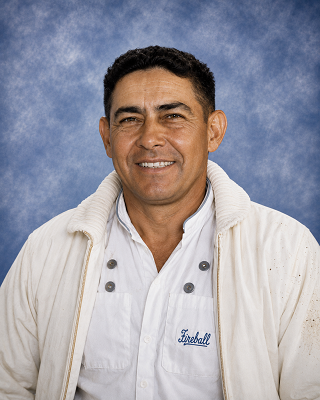
With a name like Fireball Roberts, the fellow should have looked as though he slept behind the grandstands and settled technical disagreements with a tire iron.
He didn’t.
Glenn Roberts was clean-cut, well spoken and educated enough to study engineering at the University of Florida. He liked airplanes, understood machinery and could talk to reporters and sponsors without making anybody nervous about what might come out next.
Then he climbed into a stock car and became one of the fastest men NASCAR had.
Roberts won 33 Cup races in only 207 starts, captured the Daytona 500, won the Southern 500 twice and collected seven victories at Daytona International Speedway.
The numbers made him great. The package made him important. NASCAR was trying to grow from a Southern racing series into a national sport, and Fireball Roberts already looked like the sort of professional driver the larger version was going to need.
The Name Came From Baseball
Edward Glenn Roberts Jr. was born in Florida in 1929 and grew up around Apopka before his family later moved to Daytona Beach.
The Fireball nickname had nothing to do with race cars. Roberts was a baseball pitcher who threw hard enough that teammates supplied the name before stock-car racing had any use for it.
Then he started racing, and one of the finest promotional names in motorsports arrived already attached to the driver.
Roberts attended the University of Florida and studied engineering while spending weekends around race cars. Eventually the two activities began competing for his time.
Racing won.
His early experience included modified stock cars and the old Daytona Beach and Road Course, where one part of the lap used pavement and another used sand because apparently one surface was not enough complication.
It was not the laboratory an engineering professor would have designed.
It still taught useful lessons.
He Was Fast Before NASCAR Had Superspeedways
Roberts entered NASCAR’s top division in 1950, won that year and finished second in the championship standings.
That remained his best points finish, but not because the speed disappeared.
As NASCAR’s schedule grew, Roberts increasingly selected the races he wanted rather than spending most of the year chasing championship points across the country. That produces statistics that look peculiar if somebody expects every great driver to run every available Sunday.
In 1958, NASCAR held 51 championship races. Roberts entered ten.
He won six.
Nine of the ten ended with him in the top ten, yet he finished only eleventh in the championship.
A points racer would call that a terrible schedule. A fellow winning sixty percent of the races he bothered to enter might reasonably conclude the weekends were being used efficiently.
Darlington Was Where the Speed Became Obvious
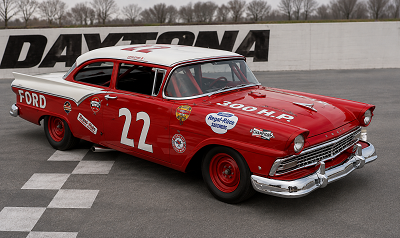
Darlington Raceway was NASCAR’s first true superspeedway and one of the places where Roberts became especially unpleasant competition.
In the 1958 Southern 500, early leader Curtis Turner developed engine trouble. Roberts took over, led the final 196 laps and won by five laps.
Five laps.
His 102.585-mph average set a record for a 500-mile stock-car race.
That was not somebody nursing a car home while everybody else broke. Fireball Roberts had taken one of NASCAR’s hardest races and removed most of the suspense.
He returned to win the Southern 500 again in 1963 and also won Darlington’s shorter spring race twice.
If NASCAR wanted to build a reputation around fast paved tracks, Roberts was becoming a very convenient fellow to have near the front.
Then NASCAR Built Tracks That Fit Him Even Better
The late 1950s changed stock-car racing. Daytona International Speedway opened in 1959, with Atlanta and Charlotte following.
The old schedule of dirt tracks, fairgrounds and whatever pavement happened to be available was gaining enormous speedways where a car had to remain fast for lap after lap instead of merely surviving another rough corner.
Roberts fit the new version of NASCAR almost perfectly.
He was smooth at speed, mechanically knowledgeable and good enough with equipment to understand that driving hard and abusing a race car were not the same thing. He was also an exceptional qualifier.
As the sport moved toward superspeedways, Fireball Roberts stopped looking like one of NASCAR’s old racers and started looking like somebody designed for what came next.
Daytona Became His Track
Roberts won the first summer NASCAR race at the new Daytona International Speedway in 1959.
That was merely the introduction.
He eventually won seven NASCAR races at Daytona and three consecutive Daytona 500 poles from 1961 through 1963.
The centerpiece came in 1962. Roberts put his Pontiac on the pole, won his Daytona 500 qualifying race and then led 144 of 200 laps in the Daytona 500 itself.
He won by 27 seconds.
There was no fuel-mileage mystery, fortunate caution or last-lap accident requiring six camera angles and a committee meeting.
The fastest combination won.
Smokey Gave Him the Right Pontiac
The 1962 Daytona victory paired Roberts with one of NASCAR’s finest mechanical minds: Smokey Yunick.
Yunick’s Daytona operation had won the 1961 Daytona 500 with Marvin Panch. With Roberts in 1962, it won again.
The pairing made mechanical sense. Smokey wanted drivers who could tell him what a race car was doing instead of merely reporting that it was slow. Roberts had studied engineering, understood machinery and could give useful feedback from the seat.
Smokey asked questions with wrenches.
Fireball could answer some of them at 150 mph.
Everybody else at Daytona got to deal with the finished conversation.
Then He Came Back in July
Winning the Daytona 500 would have been enough to make 1962 respectable.
Roberts returned for the July race and won that too.
He became the first driver to win both Daytona Cup races in the same season.
The year therefore included the Daytona 500 pole, the qualifying-race victory, the Daytona 500 victory and the summer Daytona victory.
There are subtler ways to establish ownership of a racetrack.
He Looked Different From Early NASCAR
Roberts mattered for reasons beyond the stopwatch.
Early NASCAR already had plenty of unforgettable characters: moonshine runners, farmers, mechanics and fellows whose public-relations training had mostly involved garage arguments.
Roberts offered something different. Crew cut. Clean clothes. Easy smile. Comfortable interview. Interested in engineering and aviation.
And very fast.
Ned Jarrett later called Roberts NASCAR’s first real superstar. The description fits because Fireball arrived just as the sport needed somebody who could move naturally from local racing hero to nationally recognizable professional.
The nickname got attention.
The fellow carrying it made the attention worthwhile.
No Championship Required an Explanation
Roberts never won a NASCAR Cup championship, which looks like a hole in the résumé until somebody checks how he used the schedule.
He never ran a complete Cup season.
Roberts increasingly concentrated on important and better-paying races instead of chasing every stop on schedules that could exceed fifty events.
That strategy was excellent for winning big races and making money.
Championship points were less impressed.
His career still produced 33 victories and 32 poles in 207 starts, along with wins in the biggest events NASCAR offered.
The trophy case managed without a championship plaque.
1963 Proved Fireball Could Wait
Roberts’ second Southern 500 victory showed another side of his driving.
He arrived at Darlington after recovering from injuries, and his car was damaged during practice before being repaired. Roberts started ninth and then resisted the common temptation to win a 500-mile race in its first hundred miles.
He waited.
Late in the race, Roberts began moving forward. With roughly 75 laps remaining, he took the lead and won comfortably.
For a fellow named Fireball, he understood that patience could occasionally be the fastest part on the car.
1964 Was Already a Bad Year
The 1964 season reminded NASCAR how quickly its biggest names could disappear.
In January, two-time champion Joe Weatherly was killed during the race at Riverside. Roberts and Weatherly had been close.
The sport continued, as racing did.
Four months later, NASCAR arrived at Charlotte Motor Speedway for the World 600. Fireball Roberts was thirty-five years old and still one of its biggest stars.
Seven laps later, everything changed.
The Fire Was Worse Than the Crash
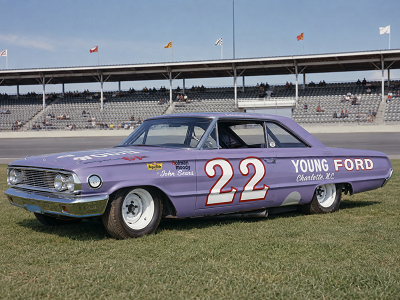
On May 24, 1964, Roberts was caught in an early accident during the World 600. Junior Johnson and Ned Jarrett became involved ahead of him, and Roberts’ Ford struck the inside wall, overturned and burst into flames.
Jarrett stopped and helped pull Roberts from the burning car.
Roberts suffered severe burns over much of his body. He survived the immediate crash and spent weeks in the hospital. For a time, there was hope he might recover.
Complications followed.
Fireball Roberts died on July 2, 1964.
He was thirty-five.
The nickname that had looked so good on race posters had acquired a meaning nobody wanted.
NASCAR Had to Look at Fire Differently
Racing in the early 1960s was dangerous in ways that went far beyond striking a wall. Fuel tanks could rupture, gasoline could enter the cockpit, fire-resistant clothing was primitive and inconsistently used, and driver restraints and seat design still had considerable room to improve.
Roberts’ death came during a brutal period of racing fatalities in 1964 and added urgency to safety changes that were becoming impossible to ignore.
Better fire-resistant clothing followed. Safer fuel systems and fuel cells became increasingly important, while restraints, seats and other driver-protection systems improved.
None of that made racing safe.
It made surviving an accident less dependent on luck.
Roberts had helped show NASCAR how fast its new superspeedway era could become. His death helped force the sport to confront what happened when that speed stopped suddenly.
The Career Was Shorter Than the Influence
Roberts’ record never needed tragedy to make it significant: 33 Cup victories, two Southern 500 wins, the 1962 Daytona 500 and seven victories at Daytona International Speedway.
There was also that remarkable 1958 season when he entered ten races and won six, plus a reputation as one of NASCAR’s great superspeedway drivers just as superspeedways were beginning to define the sport.
NASCAR named Roberts one of its 50 Greatest Drivers in 1998. He entered the NASCAR Hall of Fame with the Class of 2014, fifty years after his final race.
By then, NASCAR had become the national sport Roberts had looked ready to represent before anybody knew how large it would become.
The Bottom Line
Fireball Roberts had one of the finest names racing ever produced.
The important part was that the driver underneath it did not need the advertising help.
He could dominate Darlington, own Daytona and understand a race car well enough to work productively with Smokey Yunick. He could also stand in front of a television camera and make NASCAR look like a professional sport instead of something television had accidentally discovered behind a service station.
Stock-car racing was becoming faster, larger and more polished.
Fireball Roberts already looked like he belonged in that future.
He did not live long enough to see it arrive.
NASCAR did.
And when it got there, quite a bit of what a national stock-car star was supposed to look like had already been demonstrated by Fireball Roberts.
↑ Back to the Top, Before Fireball Finds Another Superspeedway