
Darrell Gwynn
He Had 18 Top Fuel Wins at Twenty-Eight. The Car Broke. The Racer Didn’t.
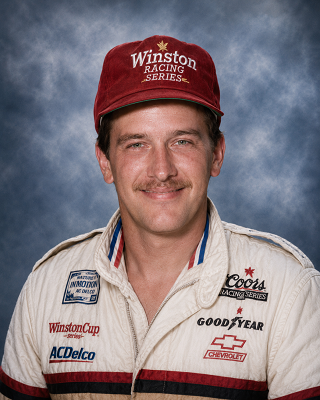
Darrell Gwynn never won an NHRA Top Fuel championship. Normally that sentence would require an explanation on a Legends page.
Gwynn won 18 Top Fuel national events in only 79 starts. From 1986 through 1989, he never finished worse than fourth in the championship. He won six races in 1988 and still finished second because Joe Amato had the bad manners to keep collecting points when Gwynn wasn’t looking.
Then Gwynn opened 1990 by winning Gainesville and soon ran an NHRA-record 4.909 seconds. He was twenty-eight years old, and everything about the racing said there should have been another decade coming.
There wasn’t.
Darrell Gwynn’s driving career did not end because he became too old, too slow or short of talent. A Top Fuel car broke apart at more than 200 mph and ended it for him. The remarkable part is that the crash took away the driver’s seat without managing to take away the racer.
The Family Business Was Going Fast
Darrell Gwynn was born in Miami in 1961 into a family where race cars did not require much explanation. His father, Jerry Gwynn, was a racer, tuner and 1969 NHRA world champion. When Darrell was seven, Jerry built him a scaled-down dragster.
Some fathers start with a bicycle. Jerry skipped a few steps.
Darrell earned his competition license by eighteen and moved into Top Alcohol Dragster in 1980. The first season produced a U.S. Nationals runner-up, and after that the trophies started showing up regularly.
Gwynn won three national events in 1981, two in 1982, two more in 1983 and three in 1984. He also won the 1983 NHRA Top Alcohol Dragster championship, making Jerry and Darrell the first father and son to become NHRA world champions.
Ten national-event wins and a championship had settled the alcohol-dragster question.
Time for nitro.
Top Fuel Did Not Hand Him the Keys to the Place
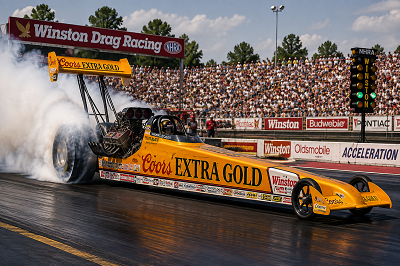
Gwynn moved into Top Fuel in 1985 at twenty-four. He did not win immediately, which probably qualified as a slump after the alcohol years, but the rookie still qualified No. 1 once, reached two finals and finished sixth in the championship.
One of those finals was Indianapolis. Waiting in the other lane was Don Garlits.
Garlits won.
There are easier introductions to professional drag racing than getting within one round of winning Indy and discovering Big Daddy has decided to attend.
Gwynn came back in 1986 with a better answer.
The Kid Became Everybody’s Problem
Gwynn won the 1986 Winternationals, his first Top Fuel national event, then kept winning. By midseason, the twenty-four-year-old from Miami was fighting Garlits for the championship.
He finished the year with four victories and three runner-up finishes. Garlits took the title, but the argument over whether Gwynn belonged had lasted about one season too long already.
Indianapolis supplied an even better demonstration. Gwynn qualified with a national-record 5.34, covering the rest of the field by roughly a tenth and a half.
In Top Fuel, a tenth and a half is not a small advantage. It is enough time to wonder whether everybody else received the same rulebook.
Gwynn reached the final. Garlits was there again. Gwynn ran 5.44; Garlits ran 5.39.
Second Top Fuel season. Second Indy final. Same elderly Floridian cluttering up the winner’s-circle plans.
The Wins Kept Coming
Gwynn won four more races in 1987 and finished third in points. Then came 1988, when he won six national events — more than anybody else in Top Fuel that season.
The championship still went to Joe Amato, who won four races but did a better job of collecting points everywhere else. Drag racing occasionally provides this useful reminder: the fellow carrying the most individual trophies does not automatically receive the biggest one.
Gwynn finished second. At twenty-seven, he already had fourteen Top Fuel victories and three consecutive seasons in the top three.
The championship no longer looked like a question of ability. It looked overdue.
Indianapolis Finally Cooperated
By 1989, Gwynn had already been Top Fuel runner-up at Indy twice and had won the U.S. Nationals in Top Alcohol Dragster. There was still one empty spot on the shelf.
Gwynn reached the Top Fuel final against Dick LaHaie. This time Garlits was nowhere near the other lane.
LaHaie’s blower drive failed, and Gwynn collected the 1989 U.S. Nationals Top Fuel victory. After losing two Indy finals to Big Daddy, he finally got to leave with the right trophy.
Gwynn finished fourth in the championship and entered 1990 with 17 Top Fuel victories.
Number eighteen came quickly.
Gainesville Was Number Eighteen
Florida was home territory, and Gwynn treated the Gatornationals accordingly. He had won Gainesville in 1989. In 1990, he returned and beat Eddie Hill in the final for Top Fuel victory number 18.
At Houston, Gwynn ran 4.909 seconds and reset the NHRA national elapsed-time record. The car was quick, the driver was winning, and although the championship had escaped him several times, nothing in the performance suggested he was running out of chances.
He was twenty-eight.
Then he went to England.
On April 15, 1990, the Car Broke
Gwynn was at Santa Pod Raceway for an exhibition appearance when, during a run at more than 200 mph, something went badly wrong. The dragster veered left, broke apart and struck the guardrail.
There was no save available.
Gwynn suffered a broken neck and severe spinal-cord injuries. Part of his badly damaged left arm eventually had to be amputated, and he was left paralyzed.
The fellow who had won Gainesville a month earlier would never drive a Top Fuel dragster again.
Sometimes a terrible thing is just a terrible thing.
The Driver Was Finished. The Team Wasn’t.
The easy version of Gwynn’s story ends at Santa Pod. Gwynn had other plans.
He kept the race team alive, with former Funny Car champion Frank Hawley taking over the driving. Only a couple of months after the accident, Hawley drove Gwynn’s dragster to victory at the Springnationals.
The owner was no longer sitting behind the engine. His race car was still making other teams load up early.
Gwynn continued as an owner through the 1990s with drivers including Hawley, Michael Brotherton and Mike Dunn. The operation kept winning national events and remained capable of contending for championships.
Racing had taken away the driver’s seat. Gwynn did not hand over the rest of the shop with it.
The Wheelchair Logo Had Already Been on the Car
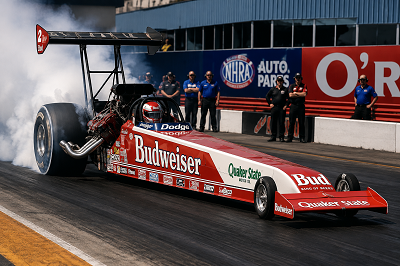
Before his own accident, Gwynn had already become involved with The Miami Project to Cure Paralysis. He donated money, supported the organization and put its wheelchair logo on his Top Fuel dragster.
Then the racer carrying the wheelchair logo became a wheelchair user himself.
Life occasionally has all the subtlety of a connecting rod through the oil pan.
Gwynn could not change what had happened. He could decide what to do with what he now knew firsthand.
The Foundation Put Useful Hardware Where It Belonged
Darrell and his wife Lisa established the Darrell Gwynn Foundation in 2002. The organization supported paralysis research, injury prevention and people dealing with the practical costs of spinal-cord injuries.
One of its best-known programs provided custom wheelchairs to people who needed them and could not afford them. More than 300 custom wheelchairs were provided.
A proper wheelchair is not patio furniture with large wheels attached. It is fitted equipment that affects mobility, independence, pressure management and whether somebody spends the day using the chair or fighting it.
It is also expensive. Gwynn understood both problems without needing a brochure.
Eventually the Work Went Back Where It Started
In 2015, Gwynn folded the foundation’s work into The Buoniconti Fund to Cure Paralysis, the fundraising arm of The Miami Project. The Darrell Gwynn Quality of Life Chapter continued the work he had begun through his own foundation.
So the wheelchair logo placed on a race car before the accident eventually became part of a relationship lasting decades after it.
His professional driving career had been brutally short. The work that followed wasn’t.
Don’t Let the Crash Hide the Race Record
Gwynn’s accident is so large that it can swallow the racing career if the numbers are allowed to sit quietly.
They shouldn’t.
He won 18 Top Fuel races in 79 starts, plus ten national events in Top Alcohol Dragster and the 1983 championship. From 1986 through 1989, he finished second, third, second and fourth in Top Fuel points.
He won Indianapolis in both Top Alcohol Dragster and Top Fuel, set national records and spent most of his brief professional career fighting established champions for the biggest trophy in the class.
And all of that was finished before he turned twenty-nine.
NHRA later named Gwynn one of its 50 Greatest Drivers. He entered the International Drag Racing Hall of Fame in 2002 and the Motorsports Hall of Fame of America in 2023.
Nobody had to award him imaginary victories for the seasons he never got. The ones he actually won were plenty.
The Bottom Line
Darrell Gwynn was not a promising young racer whose reputation was created by what might have happened. It was already happening.
He had eighteen Top Fuel wins, an Indianapolis victory, national records and four straight seasons finishing fourth or better in the championship before he turned twenty-nine.
Then the car broke and the driving stopped.
Gwynn kept racing from the owner’s side of the trailer. Then he spent decades putting his name and effort behind people dealing with the kind of injury that had rearranged his own life.
The missing Top Fuel championship makes an interesting argument for bench racers. The rest of the record makes it unnecessary.
Darrell Gwynn lost the driver’s seat before anybody found out how large his Top Fuel record might become. What the crash did not take was the part of him that kept asking the only question racers really trust: all right, what do we do next?
↑ Back to the Top, Before Somebody Mistakes Eighteen Wins for a Promising Start