
Cory McClenathan
He Put I PLAY TO WIN on the Car and Spent Twenty Years Proving He Meant It.
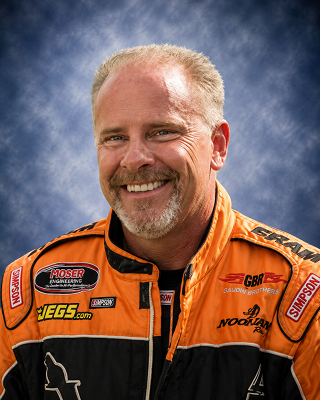
Cory McClenathan had three words painted on his race cars: I PLAY TO WIN.
That was not marketing copy somebody invented after the trophies started showing up. It came from the family-team days, when McClenathan was racing on money thin enough that missing one event could cost a championship. He kept the motto when the cars got faster, the sponsors got bigger and the competition included Joe Amato, Scott Kalitta, Gary Scelzi, Kenny Bernstein, Don Garlits, Larry Dixon and Tony Schumacher.
Then he won 34 NHRA Top Fuel races, Indianapolis twice, swept the Western Swing, put Top Fuel into the 4.7s, became the first driver over 320 mph and kept racing long enough to win the first Four-Wide Nationals.
He also finished second in the championship four times. That’s aggravating, but it is not the biography.
Cory Mac’s career was built around a simpler idea: whatever car, owner, budget or format happened to be sitting in front of him, start it up and try to beat somebody.
It Started With Volkswagens
McClenathan began racing with his parents, Dick and Carol McClenathan, in Volkswagen competition. The progression started with a 1956 VW and eventually reached a turbocharged Karmann Ghia Funny Car running in the sevens.
Cory knew Volkswagen engines. V8s came later. He even experimented with a little nitromethane because a turbocharged Volkswagen evidently needed additional opportunities to become unreasonable.
The family eventually moved into Top Alcohol Dragster. In 1989, McClenathan entered his first NHRA national event at Denver and won it. The fellow in the other lane was Blaine Johnson.
Most racers use their first national event to learn where registration is. Cory Mac used his to take home the trophy.
Top Fuel Required a Used Car and Some Common Sense
By 1991, McClenathan wanted to move into Top Fuel. He did not build a brand-new dragster and volunteer to pay for every lesson from scratch. He bought the former Darrell Gwynn Coors Extra Gold car, which gave the family proven hardware and, more important, actual data.
Nitromethane is expensive enough without paying it to repeat somebody else’s education.
At Seattle, McClenathan qualified No. 16 and then beat No. 1 qualifier Frank Hawley on a holeshot. The year ended less gracefully when a blower problem sent him into the Pomona sand trap and tore up the car.
Top Fuel had introduced itself. Cory came back anyway.
Jimmy Prock Helped Make the Family Car Dangerous
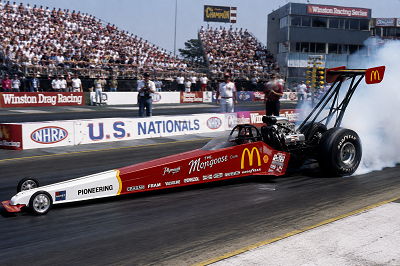
McClenathan knew enough about tuning to know when he needed somebody who knew more. For 1992, he hired a young Jimmy Prock, who had been learning nitro from Dick LaHaie.
That turned out reasonably well for both of them. McClenathan won two races and spent the year chasing Joe Amato for the championship.
At Reading, McClenathan and Prock ran 4.799 seconds — the first Top Fuel pass in the 4.7s. The family team was no longer merely trying to survive in professional drag racing. It was showing the professional teams where the next elapsed-time number lived.
Then the Budget Joined the Championship Fight
The McClenathan family skipped the Montreal national event in 1992. There was no technical failure. They simply could not afford the trip, and at the time merely making a qualifying run was worth 100 points.
McClenathan finished the season by winning Pomona. Joe Amato won the championship by 92 points.
Ninety-two.
The race they could not afford to attend was worth more than the final championship margin. McClenathan has always been fair about it: one additional round win anywhere else during the season would have solved the problem too.
Bench racers prefer Montreal. It gives them something specific to complain about.
A Wing Failure Tried to Slow Things Down
During qualifying at Rockingham in 1993, the rear wing failed near the finish line. The dragster went out of control at speed, and McClenathan suffered burns to his hands, face and legs that kept him out for about ten weeks.
Then he returned, with the family team still fighting its other persistent opponent: money. By late 1993, parking the car was becoming a real possibility.
Then Larry Minor offered McClenathan the McDonald’s Top Fuel ride. Cory had spent years trying to make a family operation behave like a major team. Now somebody handed him a major team.
McDonald’s Added Resources. Cory Added Wins.
The McDonald’s ride changed the size of the operation without changing the instructions written on the car. McClenathan finished third in points in 1994 and second in 1995 behind Scott Kalitta.
Then Hall of Fame football coach Joe Gibbs took over the operation. Gibbs brought a corporate structure quite different from the family-team days, and Cory learned that sponsors, organization and professional presentation were now part of the job along with reaction times and keeping the dragster between the lines.
He adapted. The winning continued.
Indianapolis in 1996 Was Bigger Than the Race
The 1996 U.S. Nationals had already become a terrible weekend before eliminations began. Top Fuel Motorcycle racer Elmer Trett and Top Fuel championship leader Blaine Johnson were killed during qualifying. McClenathan had known Johnson since their alcohol-dragster days.
Racing continued because the schedule eventually demands that somebody pull into the staging lanes. McClenathan reached the Top Fuel final against rookie Tony Schumacher.
Cory won, then handed the U.S. Nationals trophy to Blaine’s brother, Alan Johnson.
Some trophies explain who won the race. That one explained the weekend.
Then the McDonald’s Car Became Loaded
By 1997, the Gibbs operation had assembled an impressive collection of talent around McClenathan. Mike Green led a crew that included future top-level tuners Mike Neff, Dickie Venables, Brian Husen and Joe Barlam.
That is less a crew list than a warning label.
McClenathan opened the Western Swing by winning Denver, then Sonoma, then Seattle. Western Swing sweep. Two weeks later he won Brainerd too, giving him four consecutive national-event victories.
Cory Mac was playing to win. The rest of the class was getting a practical demonstration of the phrase.
321.77
Later in 1997, McClenathan’s dragster ran 321.77 mph at Texas Motorplex, making him the first Top Fuel driver over 320. Five years earlier, he and Jimmy Prock had put Top Fuel into the 4.7s. Now another McClenathan team had pushed the speed marker beyond another round number.
For a fellow who never got the championship trophy, Cory spent an impressive amount of time deciding what everybody else’s race car needed to run next.
Six Wins Somehow Still Wasn’t Enough
McClenathan won six races in 1997. Rookie Gary Scelzi won five.
Scelzi won the championship.
This is the part where somebody learns that championships are awarded on points rather than how annoyed the other driver feels about it.
Cory returned in 1998 and won six races again. Scelzi also won six, and Scelzi won the championship again.
That gave McClenathan four championship runner-up finishes: 1992, 1995, 1997 and 1998. Those second places belong in the record, but they also mean he spent four seasons close enough to the championship that somebody had to beat him to get it.
Indianapolis Owed Him Another Trophy
McClenathan returned to the U.S. Nationals final in 1999 and beat Andrew Cowin for his second Indy victory.
No championship calculation. No tragedy hanging over the weekend. Just a race win at the biggest drag race in the country.
Considering the amount of extra baggage attached to some of Cory’s other victories, a plain old trophy probably felt luxurious.
Then Top Fuel Got to Race Funny Cars
The 2000 Winston Showdown at Bristol mixed Top Fuel dragsters and Funny Cars in the same elimination program, with the Funny Cars receiving a handicap start.
Traditionalists had two useful options: complain about it or win it. McClenathan chose the second one.
He reached the final against Ron Capps and beat him for the $200,000 prize. A dragster racing a Funny Car with a handicap sounds suspiciously like bracket racing after somebody found corporate sponsorship.
Cory took the check.
Have Helmet, Will Travel
The Gibbs era eventually ended, but McClenathan did not. He moved through several Top Fuel operations, carried sponsorship with him and kept finding competitive seats.
The hardware changed. The transporter changed. The names on the checks changed. The instruction on the cowl did not: I PLAY TO WIN.
In 2006, while driving the FRAM/Carrier Boyz dragster at Bristol, the chassis failed in one of the hardest crashes of his career. The car’s sensors recorded roughly 122 g, and the dragster was destroyed.
McClenathan survived without major injury. Nitro racing had already burned him once and now tried folding the race car around him.
Cory kept racing.
Four Lanes? Fine.
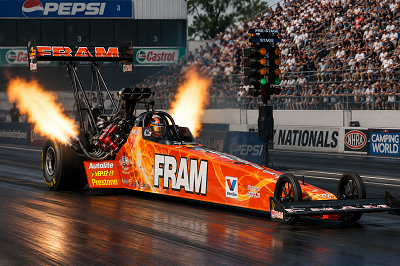
In 2010, NHRA introduced four-wide professional racing at Charlotte. Plenty of racers had opinions about putting four fuel cars on the starting line at once.
McClenathan had been changing cars, teams and circumstances for twenty years. One extra opponent did not constitute a crisis.
He won the inaugural Four-Wide Nationals, edging Doug Kalitta by one thousandth of a second. Later that year at Seattle, Cory won again for career victory number 34.
It became his final Top Fuel national-event victory — one fewer than Don Garlits. Cory has admitted that one bothers him too.
Good. A fellow with I PLAY TO WIN on the car should not become philosophical about losing by one.
Retirement Did Not Take Immediately
McClenathan’s final full Top Fuel season was 2010, but he continued making occasional appearances for several teams. He announced a retirement run in 2019, then raced again in 2020.
Drag racers have historically used the word retirement with less precision than accountants prefer.
McClenathan also went off-road racing and later climbed into Nostalgia Funny Cars. At the 2023 Winternationals, more than a decade after his last NHRA Top Fuel victory, he won the Legends Nitro Funny Car title.
The car was different. The decade was different. The old instruction still worked.
The Championship Column Is Still Empty
There is no reason to pretend otherwise. Cory McClenathan never won the NHRA Top Fuel championship, and he came second four times.
In 1992, a family operation that could not afford Montreal missed the championship by 92 points. In 1997, he won six races and finished behind a driver who won five. In 1998, he won six again and finished second again.
That empty championship column is part of the record. So are 34 wins, two U.S. Nationals, a Western Swing sweep, the first 4.7-second Top Fuel run, the first 320-mph run and the first Four-Wide Top Fuel victory.
The column does not get veto power over everything beside it.
The Bottom Line
Cory McClenathan started with turbocharged Volkswagens and a family race team. He won the first NHRA national event he entered, then bought a used Top Fuel dragster, hired people smarter than himself where he needed them and tried to outrun teams with considerably more money.
Later came McDonald’s, Joe Gibbs, different owners, different sponsors, hard crashes, four-wide racing and enough career changes to make a less stubborn fellow decide he had already had his turn.
Cory kept starting the car. The motto stayed with him: I PLAY TO WIN.
Thirty-four times in Top Fuel, he did.
The championship never landed in Cory McClenathan’s trailer. Fine. He spent twenty years making sure everybody who did win one had to race through him first.
↑ Back to the Top, Before Cory Mac Finds Something Else He Intends to Win