
Gary Scelzi
If It Had a Blower and Too Much Power, He Usually Figured Out How to Win With It.
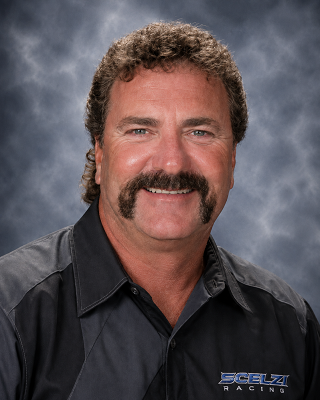
Some racers spend half a career finding the kind of car that suits them. Gary Scelzi was less fussy.
He won NHRA national events in Top Alcohol Dragster, then Top Alcohol Funny Car. Then somebody handed him an 8,000-horsepower Top Fuel dragster and he won his first professional race, five races that season and the championship.
That should have established the point. Scelzi eventually won three Top Fuel championships and 25 races in the class, then climbed into a Funny Car, discovered the shorter front-engined contraption was not simply a dragster with doors painted on it, and eventually won 12 races and another championship there.
Gary Scelzi was not one of drag racing’s great specialists. He was the fellow who kept changing the equipment and somehow forgot that changing equipment was supposed to make winning harder.
The Wild Thing Already Knew How to Drive
Gary Scelzi was born in California in 1960 and came out of the Central California racing scene around Fresno. By the time the national audience discovered him, local racers had already had plenty of opportunity to learn who he was.
The nickname was The Wild Thing. That sounds like a useful excuse for driving over your head; Scelzi inconveniently backed it up with trophies instead.
He won three NHRA national events in Top Alcohol Dragster during the 1980s, then moved into Top Alcohol Funny Car and won three more in the early 1990s.
Different chassis. Different driving manners. Same fellow collecting hardware.
By 1996 Scelzi was an accomplished Sportsman racer waiting for the right professional opportunity. The opportunity that arrived was about as far from ordinary as one could get.
The Seat Came With a Lot More Than a Steering Wheel
Blaine Johnson had dominated Top Alcohol Dragster, winning four consecutive championships before moving into Top Fuel in 1994 with his brother Alan Johnson doing the tuning.
By 1996 the brothers had figured out the professional class too. Blaine won three races, qualified No. 1 repeatedly and arrived at the U.S. Nationals leading the championship.
During qualifying at Indianapolis, Johnson was killed in a crash at the end of a run. The Johnson family stopped racing.
When they decided to return for 1997, Alan needed somebody to drive the Top Fuel car his brother had left behind. There was no replacing Blaine Johnson, and anybody with enough sense to understand the situation knew better than to try.
Alan chose Gary Scelzi.
The new driver was getting one of the quickest dragsters in the country, one of the sharpest tuners in the business and a job carrying considerably more weight than the race car.
His first professional event was the Winternationals.
The Rookie Skipped Rookie School
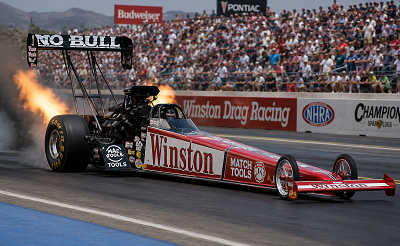
Scelzi qualified No. 1 at Pomona. That would have been a perfectly respectable professional debut, but instead he kept racing on Sunday.
He reached the final against Joe Amato, who already owned five Top Fuel championships and did not need a rookie wandering into his lane looking ambitious.
Both cars lost traction. Amato’s blower eventually gave up, while Scelzi pedaled the Johnson dragster and kept it pointed toward the other end.
Gary Scelzi won his first professional race in his first professional start.
The usual procedure is to spend some time learning the class first. Scelzi had other errands.
Five Wins and a Championship Will Do for Year One
The Winternationals could still have been dismissed as one glorious afternoon. Then Scelzi kept turning on win lights.
He won five national events during the 1997 season, took the Top Fuel championship and earned NHRA Rookie of the Year honors. A rookie winning races is impressive. A rookie winning the championship usually means somebody has misplaced the normal learning curve.
The title also carried a meaning no points sheet could explain. Alan Johnson and his family had returned to competition after losing Blaine, put Scelzi into the car and gone straight back to the top of the sport.
Scelzi never needed to pretend that made him Blaine Johnson. He only needed to do justice to the seat.
Five wins and a championship was a reasonable start.
The Second Championship Removed Any Convenient Excuses
A storybook rookie season invites one annoying question: can they do it again after the story wears off?
For much of 1998, the answer looked uncertain. Scelzi went through the first ten races without a victory while Cory McClenathan, Joe Amato and Kenny Bernstein were busy collecting points.
Then the Winston dragster started behaving like the one everybody remembered. Scelzi won six races, all in the second half of the season. He won the U.S. Nationals, pushed the performance numbers deeper into territory that had seemed ridiculous only a few years earlier, and charged back through the standings.
By season’s end, the championship belonged to him again.
The 1997 title had emotion, history and one heck of a rookie story attached to it. The 1998 title supplied something just as useful.
Proof.
Then Tony Schumacher Interrupted
Scelzi remained one of the cars to beat in 1999, but Tony Schumacher won the championship.
Three straight titles would have looked nice in the record book. Top Fuel was not decorating Scelzi’s record book.
The response came in 2000, when Scelzi and Alan Johnson put together their most dominant season.
Nine Wins Settled the Argument
Scelzi won nine of 24 races in 2000. At the time, nine victories represented the high-water mark for a Top Fuel champion in the modern expanded schedule.
The third championship followed, giving Scelzi a fairly tidy four-year professional introduction: champion in 1997, champion in 1998, somebody else’s turn in 1999, champion again in 2000.
By the time his Top Fuel period wound down, Scelzi had won 25 national events in the class.
A sensible racer with three championships might have decided he had finally found his specialty.
Scelzi changed cars.
The Funny Car Was Rude About It
Top Fuel dragsters and Funny Cars both burn nitromethane, both make unreasonable amounts of horsepower and both finish a run before most ordinary cars have completed a gear change. That is about where the similarity stops being helpful.
The dragster is long, with the engine behind the driver. The Funny Car is short, has the engine sitting in front of him and carries a body that occasionally treats straight ahead as a suggestion.
Scelzi moved to Funny Car with Alan Johnson in 2002. This time there was no first-race trophy waiting. The new Toyota struggled, the operation never became what everybody expected, and Scelzi left during the season.
After making Top Fuel look almost indecently easy, he had finally found a race car willing to make him work for it.
Good. Otherwise this story was getting suspicious.
Don Schumacher Handed Him Another Funny Car
Scelzi joined Don Schumacher Racing for 2003 in the Oakley Dodge. The second attempt went better.
At Sonoma, Scelzi beat Dean Skuza in the final and earned his first professional Funny Car victory. That put him into a small group of drivers who had won national events in both nitro classes.
It also completed a particularly untidy collection: victories in Top Alcohol Dragster, Top Alcohol Funny Car, Top Fuel and Funny Car.
Four supercharged classes. Four kinds of race car. Winner’s-circle photographs in all of them.
The Wild Thing was becoming difficult to pigeonhole.
Then He Took Funny Car Past 330
With Mike Neff handling the tune-up, the Oakley Dodge kept getting quicker. At Chicago in 2004, Scelzi ran 330.15 mph, the first 330-mph pass in NHRA Funny Car history.
There is a nice symmetry to that. Scelzi had helped move the speed markers in Top Fuel, switched to the shorter car, and soon helped move its marker too.
He won three races during 2004 and finished third in the standings. The car was ready to contend for a championship.
Unfortunately, Funny Car championships in that era tended to have John Force’s name already written on them.
John Force Had Been Hoarding These Things
John Force and John Force Racing had spent most of the previous decade treating the Funny Car championship as shop property. Force won ten consecutive titles from 1993 through 2002. Tony Pedregon kept the championship inside John Force Racing in 2003, and Force took it back in 2004.
So Gary Scelzi was not merely trying to win a Funny Car championship. He was trying to pry one out of a building that had forgotten anybody else was allowed to keep it.
In 2005, Scelzi, teammate Ron Capps and Force carried the fight into the final races.
Pomona settled it.
Eight Points
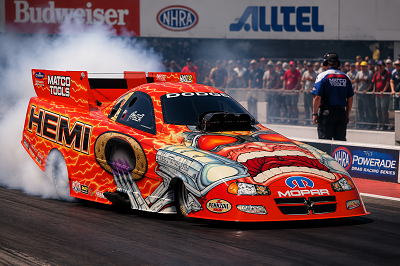
Scelzi entered the 2005 finale leading Capps by only two points. Two points is not a championship lead. It is a rounding error with sponsor decals.
Scelzi beat Tim Wilkerson in the first round, then lost to Tommy Johnson Jr. in the quarterfinals. Now there was nothing left for Gary to drive; he had to watch Capps.
Capps had already survived the first round, but Cruz Pedregon beat him in the quarterfinals. The arithmetic stopped moving.
Gary Scelzi finished with 1,516 points. Ron Capps finished with 1,508.
Eight points.
Gary Scelzi was the 2005 NHRA Funny Car world champion. Five years after his third Top Fuel championship, he had won another one in the car that had initially refused to cooperate.
That made the struggle worthwhile.
Only Kenny Bernstein Had Done It Before
Kenny Bernstein had been the first driver to win NHRA championships in both professional nitro classes. Gary Scelzi became the second.
That distinction explains his career better than the four championship trophies by themselves. A Top Fuel dragster and a Funny Car do not ask the driver the same questions. The view is different. The wheelbase is different. The way the car reacts when the tires shake, spin or grab is different. Even the location of several thousand angry horsepower relative to the driver’s backside is different.
Scelzi won championships in both.
Years later Del Worsham joined them. The club remains small because the cars are not interested in making membership convenient.
Thirty-Seven Professional Wins in Two Nitro Classes
Scelzi stayed with Don Schumacher Racing through 2008 before stepping away from regular NHRA competition. His professional record finished at 37 victories: 25 in Top Fuel and 12 in Funny Car.
Add the six earlier alcohol-class wins and the career becomes less a story about changing classes than a demonstration that Scelzi never cared much what label NHRA had put over the staging lanes.
Give him something supercharged. Give him enough time to understand what it was trying to do.
Then keep an eye on the win light.
Scelzi entered the International Drag Racing Hall of Fame in 2025 and was selected for NHRA’s Top 75 Drivers in 2026. Neither selection required anybody to dig very deep for supporting evidence.
The Bottom Line
Gary Scelzi arrived in professional drag racing with one of the hardest first assignments imaginable: drive the late Blaine Johnson’s Top Fuel car for Blaine’s brother and somehow get everybody back to racing.
He won the first race. By the end of the year he had won five of them and the championship.
Then he proved it again in 1998, and again in 2000.
When the Top Fuel chapter ended, Scelzi switched to Funny Car. That car finally had the decency to give him some trouble before surrendering another dozen victories and the 2005 championship.
Some racers find one kind of race car that fits and spend a career perfecting it. Gary Scelzi kept climbing into different ones. After a while, the safest assumption was that the car would eventually learn to fit him.
↑ Back to the Top, Before Scelzi Finds Another Blown Car to Figure Out