Ford Model T Torque Specs
On This Page:
Intro | Torque Specs | Notes | Mistakes | Bottom Line | Links

Intro
The Model T engine is simple, but it sure isn’t modern simple.
This is poured babbitt, shims, cotter pins, soft gaskets, thin flanges, and nearly century-old fasteners. The torque wrench belongs in the job, but it can’t replace bearing fit, locking hardware, gasket condition, or knowing when an old part has already had enough.
First job: identify what’s in front of you. A Model T isn’t a Model A / B with an earlier date stamped on the calendar. Its rods, mains, head, manifolds, pan, and surrounding hardware belong to the T. Dragging later Ford numbers backward because all early four-cylinder Fords look related is how simple machinery gets an unnecessary repair bill.

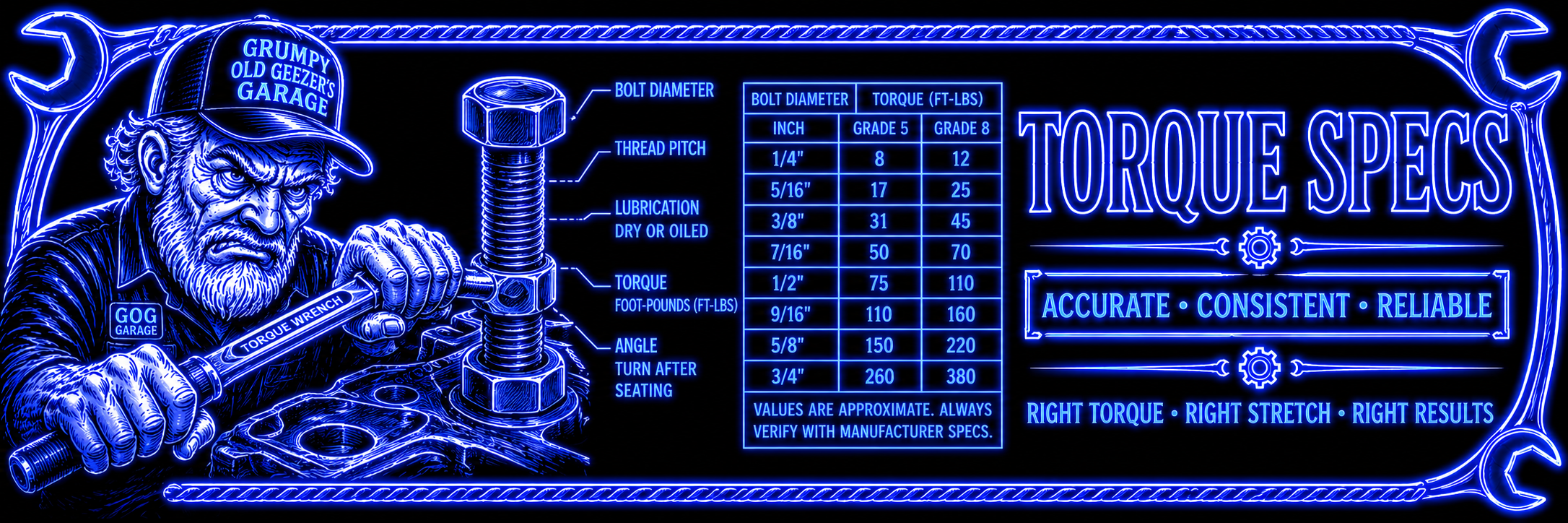
General Torque Specs
| Bottom End | Top End | ||
|---|---|---|---|
| Main Bearing Cap Nuts | 35 lb-ft1 | Head Nuts | 45-55 lb-ft |
| Connecting Rod Nuts | 35 lb-ft1 | Spark Plugs | 20-25 lb-ft |
| Valve Door / Cover Hardware | snug only2 | ||
| Manifolds and Carburetor | Driveline Side | ||
| Intake / Exhaust Manifold Nuts | 30-35 lb-ft | Flywheel Bolts | 55-65 lb-ft3 |
| Carburetor Mounting Hardware | snug only2 | Engine Pan / Hog Pan Hardware | snug only2 |
| External Engine | |||
| Water Outlet / Inlet Hardware | 20-30 lb-ft | Oil Pan / Lower Cover Hardware | snug only2 |
1 35 lb-ft is a common Model T working value for main and rod hardware, but the bearing still has to be fitted correctly. Babbitt clearance, shims, and cotter-pin alignment are part of the assembly, not chores the torque wrench performs afterward.
2 “Snug only” means exactly that. Valve doors, pans, carburetor flanges, small screws, and cork-style gaskets can be distorted long before the mechanic runs out of leverage.
3 55-65 lb-ft is a practical Model T flywheel-bolt range. Replacement fasteners, altered assemblies, and rebuilt parts should follow the specification supplied for the hardware being used.
A century of repairs can leave factory assumptions in the dust. Rebuilt babbitt, aftermarket rods, replacement studs, reproduction fasteners, high-compression heads, and changed driveline parts all get a vote. Once the part changes, its own instructions outrank a general chart.
A published range isn’t permission to let every nut vote for its favorite number. Pick the appropriate value within the range and use it across the matched set unless the procedure says otherwise.

Important Notes
- Rod and main-bearing nuts with cotter pins have two jobs, and the torque wrench only handles one of them: establish the proper fastener load and leave the locking arrangement correct. Don’t keep tightening indefinitely just because the hole missed the first time.
- The table mixes real torque values with several “snug only” entries because the engine mixes substantial structural fasteners with thin covers and sealing flanges. Treat them alike and you might as well leave the specifications in the drawer.
- Model T hardware has survived enough repair shops to make assumptions dangerous. Reproduction parts, repaired threads, changed studs, and replacement nuts deserve inspection before the wrench comes out. Old doesn’t automatically mean original.
- The engine pan, valve door, carburetor flange, and lower covers reward even clamping. If one spot needs another turn just to stop a leak, inspect the sealing surface before you bend the part around the gasket.

Common Mistakes
- Borrowing Model A / B torque values just because both engines are early Ford fours. The calendar and cylinder count don’t make the hardware interchangeable.
- Tightening a rod or main nut farther and farther just to chase a cotter-pin hole. Locking hardware is part of the procedure, not a free pass to abuse the fastener.
- Thinking a correctly torqued main or rod nut proves the babbitt work underneath it is right. The bearing still needs proper fit, clearance, and shimming.
- Trying to stop a pan, valve-door, or carburetor leak by tightening the fasteners again. Once the flange bends, more torque is usually working for the leak.
- Mixing original and replacement fasteners without checking the threads, fit, and the instructions that came with the replacement parts.

Bottom Line
The Model T is simple machinery from a time when the torque number was just one part of putting an engine together right.
Use the proper T specifications, mind the locking methods and delicate sealing pieces, and don’t let a century-old Ford convince you that everything sitting there is still what Henry put there.
A modern torque wrench can make the tightening repeatable. It still can’t make old parts modern.
Related Links
Engine Specs
- Ford Model T 177 Inline-Four Engine Specs
Engine Family
- Ford Model T Four-Cylinder Engine Family
↑ Back to the Top, Before “Good and Tight” Breaks Something Else