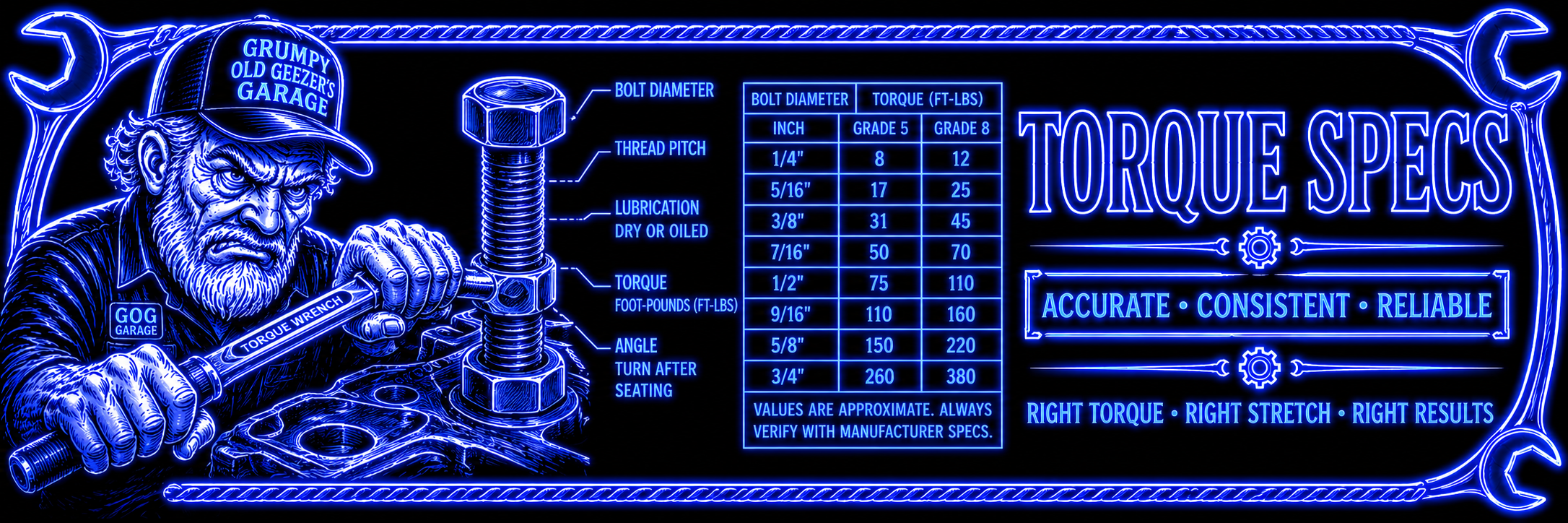
Ford 385 Series Torque Specs
On This Page:
Intro | Torque Specs | Notes | Mistakes | Bottom Line | Links

Intro
The 385-series big block isn’t an FE with more lunch money.
Ford started fresh when it built the 429 / 460 family. Different architecture, different valvetrain arrangement, different hardware, different torque requirements. Calling both engines “big-block Fords” works at a car show. It won’t cut it once the torque wrench comes out.
The 429 and 460 themselves are close relatives, but decades of passenger-car, truck, performance, rebuilt, and aftermarket combinations mean the family name doesn’t guarantee untouched factory hardware. Identify the engine first, then find out what’s been changed before treating any number as automatic.

General Torque Specs
| Bottom End | Top End | ||
|---|---|---|---|
| Main Cap Bolts | 95-105 lb-ft | Head Bolts | 140 lb-ft |
| Connecting Rod Bolts | 40-45 lb-ft | Rocker Arms, Non-Adjustable | 18-22 lb-ft |
| Oil Pump Bolt | 25 lb-ft | ||
| Intake and Exhaust | Driveline Side | ||
| Intake Manifold Bolts | 25-30 lb-ft | Flywheel / Flexplate Bolts | 75-85 lb-ft |
| Exhaust Manifold Bolts | 25 lb-ft | Pressure Plate Bolts | 35 lb-ft |
| Starter Bolts | 35 lb-ft | ||
| External Engine | |||
| Harmonic Damper Bolt | 70-90 lb-ft | Water Pump Bolts | 30-35 lb-ft |
| Camshaft Sprocket Bolt | 40-45 lb-ft | Fuel Pump Bolts | 25 lb-ft |
| Timing Cover Bolts | 12-18 lb-ft | Valve Cover Bolts | 5-7 lb-ft |
| Oil Pan Bolts | 10-15 lb-ft | Distributor Hold-Down Bolt | 15-20 lb-ft |
Swap in aftermarket bolts, studs, rods, roller rockers, or aluminum heads and the factory chart loses jurisdiction over that piece. Those parts can change both the torque figure and the lubrication requirement, so the replacement part’s instructions take over.
The numbers show why “big engine” is a lousy tightening method. The head bolts call for 140 lb-ft while the valve-cover bolts want only 5-7 lb-ft. Both belong on the same engine. Only one of them appreciates enthusiasm.
When a matched set carries a range such as 95-105 lb-ft, choose the appropriate value for the procedure and stay with it unless the instructions say otherwise. The range belongs to the job; it isn’t ten pounds of playground for every bolt to wander through.

Important Notes
- That 140 lb-ft head-bolt figure isn’t a permission slip to muscle past the rest of the job. It belongs with the preparation and tightening procedure that gets the head clamped evenly. Dirty threads, damaged fasteners, and a skipped sequence don’t improve because the final number is big.
- The listed 18-22 lb-ft rocker figure applies to factory-style non-adjustable rocker hardware. Roller rockers, studs, guideplates, and adjustable valvetrain conversions make that row history, not an instruction.
- Light sheet-metal hardware still lives on this big block. Valve covers at 5-7 lb-ft and oil-pan bolts at 10-15 lb-ft need even clamping, not the main-cap treatment.
- Water pumps, timing covers, distributors, and fuel pumps all live well below the torque used on the major internal fasteners. The engine may be big, but it doesn’t hand every bolt a big-engine torque number.

Common Mistakes
- Reaching for FE specifications because the engine was identified only as a Ford big block. Know the family before you pick the torque number.
- Assuming the rebuilt 429 or 460 in front of you still has one matched generation of factory hardware. Heads, fasteners, valvetrain pieces, and aftermarket parts have had decades to migrate from one engine to another.
- Putting factory torque on aftermarket studs or bolts without checking whether the new fastener calls for different lubricant or tightening instructions.
- Trying to cure valve-cover or oil-pan seepage with another pull on the wrench. The thin flange loses that argument before the leak does.
- Letting the torque-range value wander across a matched set. The range belongs to the procedure, not to whichever number happens to appear on the wrench next.

Bottom Line
The 429 / 460 is straightforward machinery, but there’s a mighty wide spread between its heaviest and lightest fasteners.
Use the right specification for the part in front of you, follow the tightening procedure on the major assemblies, and recognize when decades of rebuilding have moved the engine away from factory assumptions.
A 385-series block is strong. That doesn’t mean it owes careless assembly a free pass.