Ford Model T
On This Page:
Intro | Torque Specs | Notes | Mistakes | Bottom Line | Links

Intro
The Model T engine is simple, but it is not modern simple.
This is babbitt, shims, cotter pins, soft gaskets, old iron, and hardware that does not care how confident you feel. A torque wrench helps, but it does not replace bearing fit, nut alignment, gasket feel, or common sense.
General Torque Specs
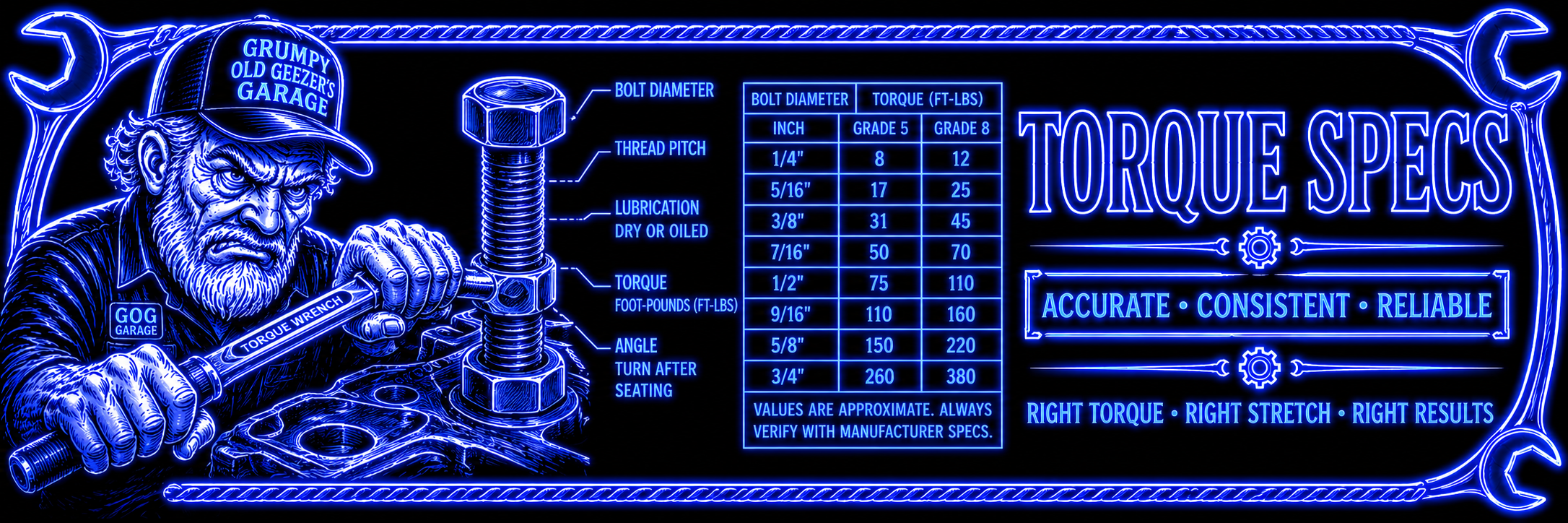
| Bottom End | Top End | ||
|---|---|---|---|
| Main Bearing Cap Nuts | 35 lb-ft1 | Head Nuts | 45-55 lb-ft |
| Connecting Rod Nuts | 35 lb-ft1 | Spark Plugs | 20-25 lb-ft |
| Valve Door / Cover Hardware | snug only2 | ||
| Manifolds and Carburetor | Driveline Side | ||
| Intake / Exhaust Manifold Nuts | 30-35 lb-ft | Flywheel Bolts | 55-65 lb-ft3 |
| Carburetor Mounting Hardware | snug only2 | Engine Pan / Hog Pan Hardware | snug only2 |
| External Engine | |||
| Water Outlet / Inlet Hardware | 20-30 lb-ft | Oil Pan / Lower Cover Hardware | snug only2 |
1 Common Model T babbitt-era working value. Bearing fit, shims, cotter-pin alignment, and rebuilder instructions matter here.
2 Thin covers, small screws, carburetor flanges, and cork-style gaskets distort easily. Snug evenly; do not reef on them.
3 Practical range for Model T flywheel hardware. Use the fastener and rebuilder guidance when the assembly has been changed.
Aftermarket rods, rebuilt babbitt work, replacement studs, reproduction fasteners, high-compression heads, and changed driveline hardware use the rebuilder or part maker’s number. Don’t use this chart to overrule the parts in your hand.
A range is not a game of horseshoes. If a matched set shows 45-55, don’t give one nut 45, the next one 51, and the last one whatever your elbow liked. Pick one value in the range and use it consistently across the set unless the real procedure says certain fasteners get different numbers.

Notes
- The Model T is not a Model A, not a Model B, and not a later Ford four-cylinder. Do not drag A / B numbers backward onto T hardware.
- Babbitt fit and shim work matter more than blind torque. A click from the wrench does not mean the bearing was fitted right.
- Cotter-pin alignment matters on rods and mains. Do not keep tightening forever just because the hole did not line up the first time.
- Transmission, magneto, accessory, and reproduction hardware vary enough that the actual fastener matters. Do not invent a universal number.
- Thin covers, pans, and carburetor flanges are easy to distort. If the gasket squeezes out, that was not extra sealing. That was you.

Common Mistakes
- Using Model A / B torque values on a Model T because all early Ford fours looked old enough.
- Trusting torque alone on poured bearings instead of checking fit, shims, and alignment.
- Cranking rod or main nuts past sense just to chase a cotter-pin hole.
- Overtightening covers, pans, and carburetor hardware until the old parts bend.
- Reading a range and scattering random values across head nuts, mains, rods, or manifold nuts like that was ever a plan.
Bottom Line
The Model T engine is old, simple, and easy to damage with modern confidence.
The torque wrench is only one tool on this engine.
Match the actual T hardware, respect the babbitt and cotter-pin details, keep matched fasteners consistent, and don’t let “early Ford” do your thinking.
Related Links
Covered Engines
Engine Family
- Ford Model T inline-four engine
Back to the Top, Before “Good and Tight” Breaks Something Else