Chevy W Series Big Block
On This Page:
Intro | Torque Specs | Notes | Mistakes | Bottom Line | Links

Intro
The Chevy W engine is not a Mark IV big block with prettier valve covers.
The 348 and 409 have their own block, heads, combustion-chamber layout, valve-cover shape, intake pattern, and old-Chevy habits. Treating one like a small-block, a later 396 / 427 / 454, or a “close enough” big Chevy is how the wrench starts lying.

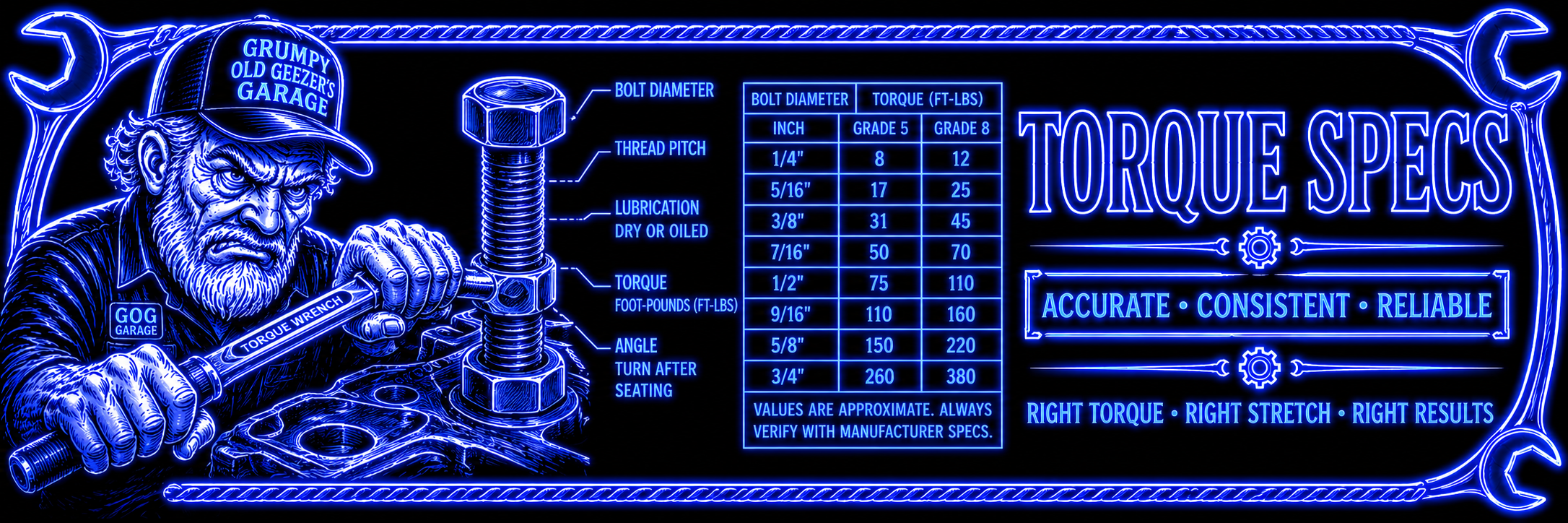
General Torque Specs
| Bottom End | Top End | ||
|---|---|---|---|
| Main Bearing Cap Bolts | 100 lb-ft | Head Bolts | 65 lb-ft |
| Connecting Rod Bolts | 40 lb-ft | Rocker Arm Nuts | set preload1 |
| Oil Pump to Rear Bearing Cap Bolt | 50 lb-ft | Valve Cover Screws | 20 in-lb2 |
| Oil Pump Cover to Body Screws | 6-9 lb-ft | Spark Plugs | 25 lb-ft |
| Intake and Exhaust | Driveline Side | ||
| Intake Manifold Bolts | 25-35 lb-ft3 | Flywheel / Flexplate Bolts | 60-65 lb-ft4 |
| Exhaust Manifold Bolts | 20-30 lb-ft5 | Pressure Plate Bolts | 30-35 lb-ft4 |
| Carburetor Mounting Nuts | 12-15 lb-ft | Flywheel Housing to Block Bolts | 25-30 lb-ft |
| External Engine | |||
| Pulley to Balancer Hub Bolts | 15-20 lb-ft6 | Water Pump Bolts | 30 lb-ft |
| Fuel Pump Bolts | 30 lb-ft | Oil Filter Bolt | 20-30 lb-ft |
| Timing Cover Bolts | 6-8 lb-ft | Oil Pan Bolts | 8-12 lb-ft |
| Distributor Hold-Down Bolt | 20 lb-ft | ||
1 Stock adjustable rockers are set by lifter preload, not fixed bolt torque.
2 Valve-cover screws are inch-pounds, not foot-pounds. Bend the cover and the gasket will make you pay for it.
3 Stock W-engine intake value. Aluminum intakes, replacement heads, and aftermarket intake bolts use their own instructions.
4 Practical Chevrolet driveline-side range for stock-type bolts. Match the actual flywheel, flexplate, clutch, and fastener instructions.
5 Use the lower value on end bolts where the factory pattern calls for it.
6 Pulley-to-balancer-hub bolts, not permission to invent a crankshaft snout bolt value.
Aftermarket bolts, studs, rods, aluminum heads, intake manifolds, roller rockers, stroker rotating assemblies, and replacement fasteners use the part maker’s number and lube instructions. Don’t use this chart to overrule the parts in your hand.
A range is not a game of horseshoes. If a matched set shows 60-65, don’t give one bolt 60, the next one 63, and the last one whatever your elbow liked. Pick one value in the range and use it consistently across the set unless the real procedure says certain fasteners get different numbers.

Notes
- The W engine is not a Gen I small block and not a Mark IV big block. Do not drag later big-block Chevy torque habits onto a 348 / 409.
- The W combustion-chamber setup is its own animal. The head, block, piston, gasket, and deck relationship are not “just like a 396.”
- Stock rocker arms are adjusted by lifter preload. If you “torque” an adjustable valvetrain like a fixed pedestal, you are not adjusting it; you are guessing.
- Many surviving 348 / 409 engines have aftermarket heads, aluminum intakes, stroker parts, replacement rods, or mixed fasteners. The parts in the engine beat the chart on the wall.
- Valve covers, timing covers, and oil pans use small fasteners. If the gasket squashes out, that was not “extra sealing.” That was you.

Common Mistakes
- Using Mark IV 396 / 427 / 454 torque habits on a W engine because both were called big-block Chevys.
- Using small-block Chevy assumptions on the oil pump, rocker adjustment, intake, or valve-cover hardware.
- Treating valve-cover inch-pound screws like foot-pound bolts and bending the covers into scrap.
- Assuming every 409 has untouched factory rods, heads, intake, and fasteners just because the valve covers look right.
- Reading a range and scattering random values across mains, rods, flywheel bolts, or intake bolts like that was ever a plan.

Bottom Line
The Chevy W big block is famous, valuable, and easy to misfile under the wrong Chevrolet family.
That is where the trouble starts.
Match the actual 348 / 409 hardware, keep the W-family differences straight, follow aftermarket instructions when the parts have changed, and don’t let “big-block Chevy” do your thinking.

Related Links
Covered Engines
Engine Family
Back to the Top, Before “Good and Tight” Breaks Something Else