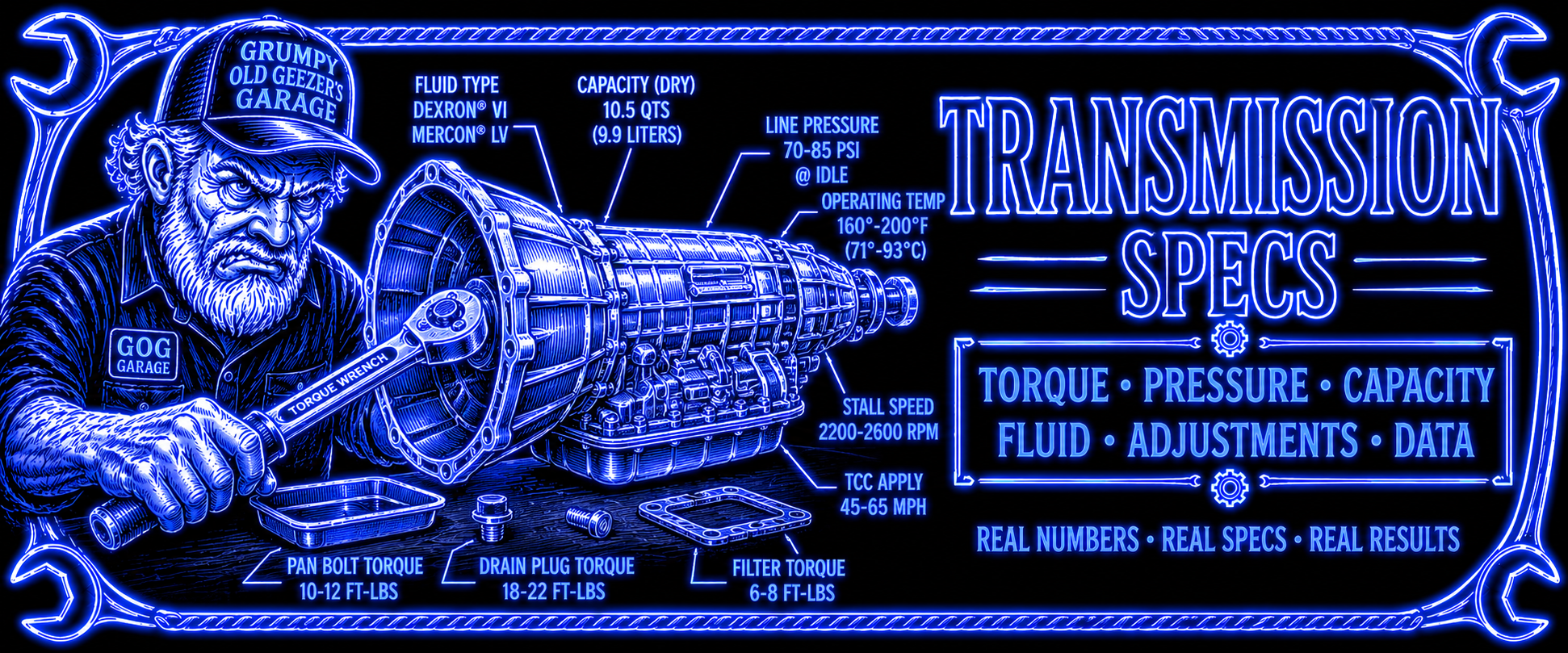
Mopar Transmission Specs
You don’t identify a Mopar transmission by saying A833, A904, A727, or TorqueFlite and calling the job finished. You identify it by the transmission family, case style, pan shape, tag, casting, bellhousing pattern, tailhousing, output shaft, gearset, linkage, converter or clutch setup, and application.
That’s what this section is for: Mopar transmission reference, not badge guessing dressed up like drivetrain knowledge. Dodge, Plymouth, Chrysler, DeSoto, and Imperial used familiar transmission names across different years, bodies, engines, duty levels, and control styles. The name gets you close. The case tells the truth.
Start with automatic or manual, then narrow down the actual transmission. After that, confirm the physical evidence before ordering parts, planning a swap, or trusting whatever story came with the car.
Reality Check: A TorqueFlite pan doesn’t make every TorqueFlite the same transmission

Mopar Automatic Transmissions

A727 specs cover Mopar’s heavy-duty TorqueFlite lane. Small-block, big-block, Hemi, truck, van, 4×4, lockup, non-lockup, output, and case-pattern differences still have to be identified before the tough name gets trusted.
A904 specs cover Mopar’s lighter-duty small-case TorqueFlite lane. It belongs behind sensible Slant Six and small-block combinations when vehicle weight, tire, gearing, converter, and abuse level all agree.
Mopar Manual Transmissions
A230 specs cover Mopar’s common three-speed manual transmission family where case style, gear ratios, input, output, linkage, bellhousing fit, and application need checking before parts get ordered.
A833 specs cover Mopar’s main four-speed manual family, including standard 23-spline, 18-spline Hemi-duty, cast-iron, aluminum, direct-drive, and overdrive branches. Same family name doesn’t mean the same job.
Parting Shot
Know the Mopar transmission family.
Know the version.
Know the case, pattern, output, ratios, linkage, converter or clutch setup, and application before you build around it.
Mopar reused names, patterns, parts, and assumptions for decades. Identify the transmission first, then spend money.