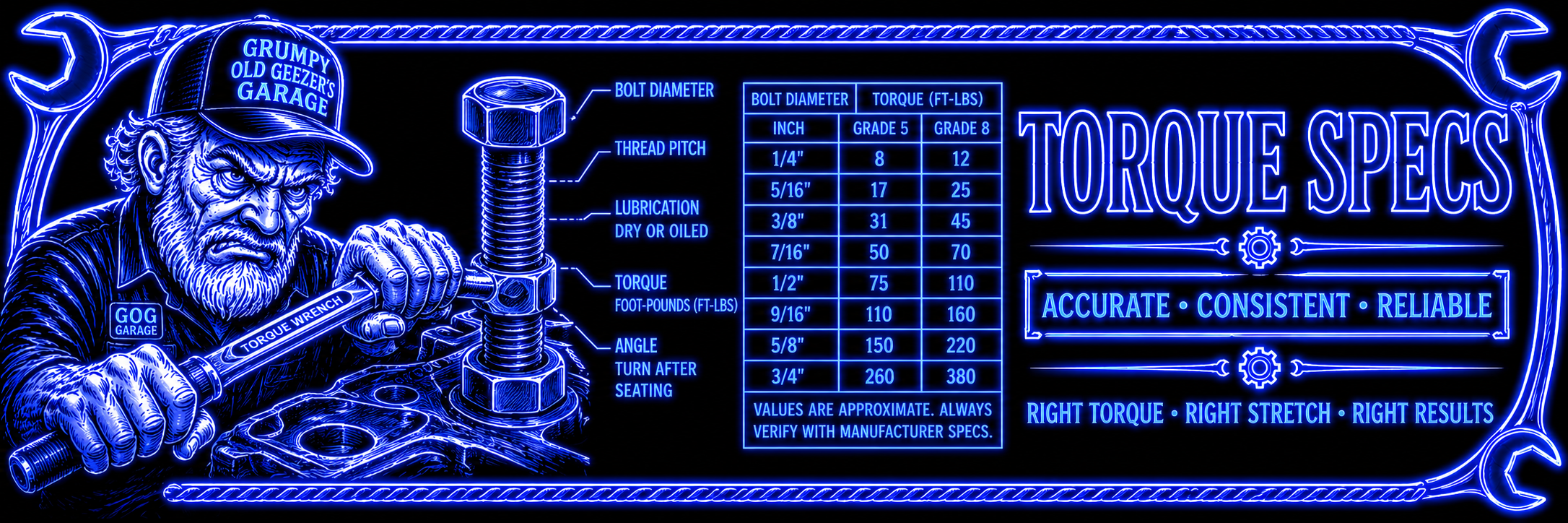
Ford Model A / B Torque Specs
On This Page:
Intro | Torque Specs | Notes | Mistakes | Bottom Line | Links

Intro
The Model A / B four isn’t a Model T with a better hat.
Ford had moved things along by then. The A / B engine brought different head, bottom-end, manifold, flywheel, and external-engine hardware, and those pieces need their own numbers. Reaching backward for Model T specifications because both engines are upright Ford fours is the sort of shortcut that saves thirty seconds and then spends the afternoon collecting interest.
Age doesn’t make this job any tidier. These engines have had nearly a century to collect rebuilt babbitt, replacement studs, reproduction fasteners, high-compression heads, modified Model B pieces, and several generations of somebody improving things. The table gives the proper A / B baseline. What’s actually bolted together decides whether that baseline still applies without qualification.

General Torque Specs
| Bottom End | Top End | ||
|---|---|---|---|
| Main Bearing Cap Nuts | 70-80 lb-ft1 | Head Nuts | 55 lb-ft2 65 lb-ft3 |
| Connecting Rod Nuts | 45 lb-ft | Spark Plugs | 25 lb-ft |
| Oil Pump / Oiling Hardware | 10-15 lb-ft | Valve Cover / Side Cover Hardware | snug only5 |
| Manifolds and Carburetor | Driveline Side | ||
| Intake / Exhaust Manifold Nuts | 45 lb-ft | Flywheel Bolts | 55-65 lb-ft4 |
| Carburetor Mounting Hardware | snug only5 | Pressure Plate Bolts | 20-25 lb-ft |
| Flywheel Housing to Block Bolts | 55 lb-ft | ||
| External Engine | |||
| Crank Pulley / Ratchet Nut | 80 lb-ft | Water Inlet / Outlet Hardware | 35-40 lb-ft |
| Camshaft Nut | 100 lb-ft | Timing Cover Bolts | 25 lb-ft |
| Oil Pan Bolts | snug only5 | ||
1 70-80 lb-ft is a common Model A / B main-bearing range, but babbitt bearings aren’t assembled by torque wrench alone. Bearing fit, shims, and the rebuilder’s instructions still have the final word.
2 55 lb-ft is the standard Model A / B head-nut value.
3 Some high-compression heads call for 65 lb-ft. Those two head numbers are alternatives for different equipment, not two stages of the same tightening procedure. If the head maker supplied a specification, use it.
4 55-65 lb-ft is a common Model A / B flywheel-bolt range. Match the number to the fasteners and retain the proper safety-wire arrangement where the setup calls for it.
5 “Snug only” is deliberate. Thin covers, oil pans, carburetor flanges, small screws, and cork-style gaskets need even clamping, not a demonstration of arm strength. Once the flange bends, the wrench has created a sealing problem instead of curing one.
After nearly a century, the factory drawing doesn’t get to pretend nothing happened. Aftermarket rods, rebuilt babbitt work, high-compression heads, replacement studs, reproduction fasteners, and modified Model B pieces can all change the instructions. If the rebuilder or part maker gives a specification for the component in your hand, that number outranks a general factory-style chart.
A torque range isn’t a bowl of numbers to dip into. If a matched set calls for 55-65 lb-ft, choose the appropriate value and apply it consistently unless the procedure specifically separates the fasteners. One at 55, another at 61, and the next wherever your elbow quits is still guessing. The torque wrench merely makes the guessing look official.

Important Notes
- The table puts a 45 lb-ft manifold specification only a few lines away from carburetor mounting hardware marked “snug only.” Those fasteners live in the same neighborhood, but they sure don’t do the same job. Don’t let location choose the torque.
- Getting 55-65 lb-ft on the flywheel bolts only finishes the tightening part of the job. Use the correct fasteners and retain the safety-wire arrangement where the original setup requires it. The wrench can’t do the locking method’s job for it.
- Take a good look at the spread of values on this engine. Oil-pump hardware begins at 10-15 lb-ft while the camshaft nut reaches 100 lb-ft. “Early Ford hardware” isn’t one specification with different-sized wrenches.
- Babbitt-bearing work is every bit as much about fitting as tightening. Torque the cap correctly, but judge the bearing by clearance, fit, and the rebuild work—not by whether the wrench clicked.

Common Mistakes
- Seeing an early Ford four-cylinder and reaching for Model T specifications. Ford didn’t stop changing engines in 1927 just to make later wrenching easier.
- Using the standard 55 lb-ft head-nut figure on a high-compression head that came with different instructions. The name on the valve cover doesn’t overrule the head bolted underneath it.
- Giving carburetor mounting hardware the 45 lb-ft manifold specification because both pieces happen to share the intake side of the engine. That is a quick way to make a flat carburetor flange less flat.
- Over-tightening the oil pan, side covers, or other “snug only” pieces while chasing a leak. Bent sheet metal and squeezed-out gaskets don’t prove you did a thorough repair.
- Finishing the torque job and walking away from flywheel hardware that still needs its safety wire. Correct torque and correct retention are two separate jobs.

Bottom Line
The Model A / B four hasn’t got especially mysterious torque specifications. The trouble starts when you ask nearly century-old machinery to behave as though every part still matches the drawing Ford started with.
Start with Model A / B numbers on Model A / B equipment, then look hard enough to notice when later parts or rebuild work changed the instructions.
A torque wrench is valuable because it removes guesswork from tightening. It becomes useless again the minute somebody lets the number do the looking instead of checking the engine.

Related Links
Engine Specs
- Ford Model A / B 201 Inline-Four Engine Specs
Engine Family
- Ford Model A / B Four-Cylinder Engine Family
↑ Back to the Top, Before “Good and Tight” Breaks Something Else