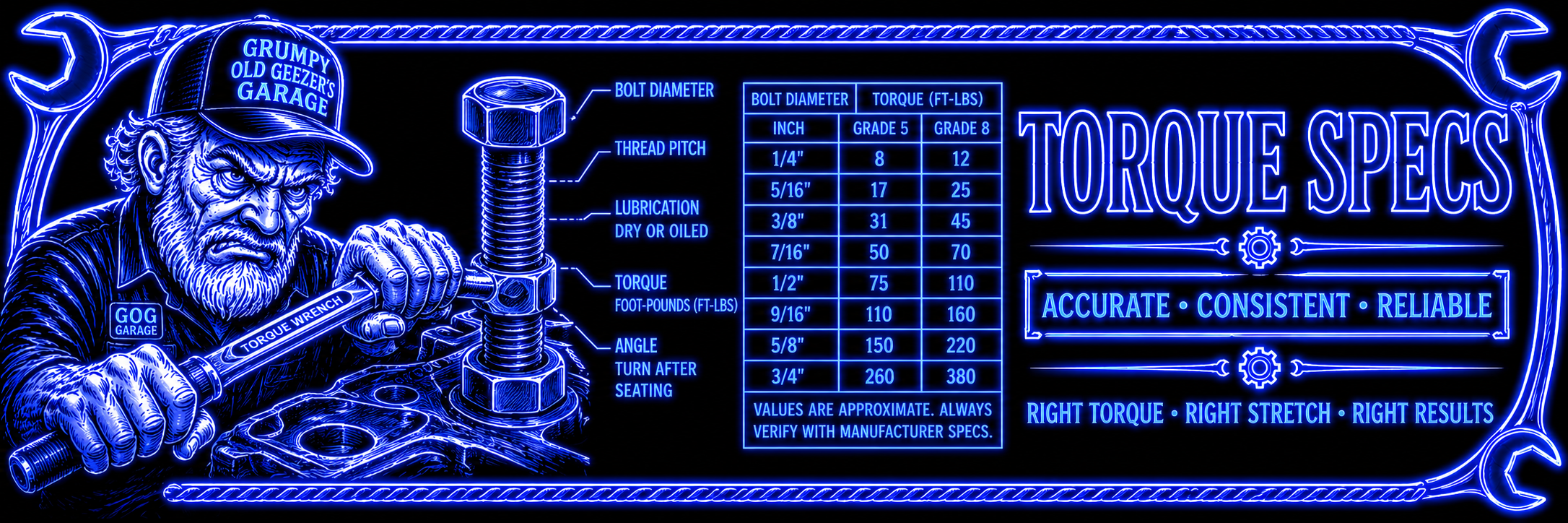
Ford Y-Block Torque Specs
On This Page:
Intro | Torque Specs | Notes | Mistakes | Bottom Line | Links

Intro
The Y-block is old enough to have collected bad habits, bad memories, and at least one torque figure that should have been retired decades ago.
The 239, 256, 272, 292, and 312 share the same basic Ford Y-block architecture, but age and family resemblance don’t erase the differences inside it. Main-cap torque changes across the family, 312 main-cap hardware has its own bolt-length concerns, head bolts aren’t all the same length, and the end intake bolts can reach into pushrod territory if somebody installs whatever happens to fit the threads.
On this engine, knowing the torque number is only half the job. Bolt location, bolt length, engine version, and assembly orientation can decide whether the number belongs there in the first place.

General Torque Specs
| Bottom End | Top End | ||
|---|---|---|---|
| Main Cap Bolts | 80-901 / 95-1052 lb-ft | Head Bolts | 65-75 lb-ft |
| Connecting Rod Bolts | 45-50 lb-ft | Rocker Shaft Stand Bolts | 12-15 lb-ft |
| Oil Pump Bolts | 12-15 lb-ft | Valve Lash Adjuster Lock Nuts | 12-15 lb-ft |
| Intake and Exhaust | Driveline Side | ||
| Intake Manifold Bolts | 23-28 lb-ft | Flywheel Bolts | 75-85 lb-ft |
| Exhaust Manifold Bolts | 23-28 lb-ft | Pressure Plate Bolts | 25-35 lb-ft |
| Starter Bolts | 25-35 lb-ft | ||
| External Engine | |||
| Vibration Damper Bolt | 85-90 lb-ft | Water Pump Bolts | 23-28 lb-ft |
| Timing Cover Bolts | 23-28 lb-ft | Fuel Pump Bolts | 15-20 lb-ft |
| Camshaft Sprocket Bolt | 35-45 lb-ft | Valve Cover Bolts | 3-5 lb-ft |
| Camshaft Retainer Bolts | 12-18 lb-ft | Oil Pan Bolts | 12-15 lb-ft |
1 Early/smaller Y-block main-cap territory where the lower factory value applies.
2 292 and 312 main-cap hardware where the higher factory value applies. Don’t use the old 120 lb-ft number unless cracked iron is on your wish list.
That main-cap split is substantial enough without dragging the old 120 lb-ft figure back into the shop. Early and smaller Y-blocks live in the 80-90 lb-ft range, while 292 and 312 hardware moves to 95-105. More isn’t better once you’ve reached the correct specification.
The table also shows how fast the required load drops as the hardware gets smaller. Head bolts are 65-75 lb-ft, rod bolts 45-50, rocker stands and oil-pump bolts only 12-15, and valve-cover bolts just 3-5. The engine may be heavy iron; that doesn’t make every fastener on it heavy-duty.
Aftermarket bolts, studs, rods, and aluminum heads can carry their own torque and lubrication instructions. Once original hardware is gone, the old Ford number doesn’t inherit the replacement part by marriage; the new hardware gets the final word.

Important Notes
- Y-block head bolts aren’t all the same length. Those two longer upper bolts belong at the ends. Put them elsewhere and the tightening sequence may look proper while the hardware underneath it isn’t.
- The 312 uses taller main caps than the 292, so it also uses different-length main-cap bolts. The shorter bolts belong at the rear cap. Those bolts may all look like family, but where each one goes is part of the assembly procedure.
- The end intake-manifold bolt holes open into the pushrod holes. A bolt that’s too long can reach the pushrods while threading in as politely as anything. The threads saying yes doesn’t make the bolt right.
- The rocker-shaft oil holes face down toward the cylinder head. Install the shafts upside down and the top end can lose lubrication even with every torque value on this page dead right.
- The very light 3-5 lb-ft valve-cover figure is there for a reason. Old stamped covers won’t get straighter or seal better just because somebody doubles the load.

Common Mistakes
- Using the old 120 lb-ft main-cap figure simply because it appeared in an old source. A printed page can be wrong with all the confidence of a mechanic.
- Mixing the long and short head bolts, then blaming the gasket when the clamping isn’t what the wrench reading promised.
- Putting 312 main-cap bolts in the wrong holes and figuring equal thread diameter means the bolts can trade places.
- Using intake bolts that are too long and letting them reach into the pushrod holes. A bolt can thread in beautifully and still be the wrong bolt.
- Installing the rocker shafts with the oil holes facing the wrong way, then chasing the resulting lubrication problem somewhere else.
- Cranking down the valve covers or oil pan to stop a leak after the sealing surface is already bent.

Bottom Line
The Y-block doesn’t demand exotic technique. It demands that the mechanic pay attention to details old engines have had seventy years to hide.
Main-cap torque changes across the family. Head bolts have assigned lengths. A 312 cares where its main-cap bolts go. Intake bolts can reach the pushrods, and a rocker shaft can be torqued perfectly while sitting there upside down and starving the top end.
The torque wrench only knows how hard you pulled on it. The rest of the job still belongs to whoever chose the bolt, the hole, and the direction it went in.