Ford Small Inline-6
On This Page:
Intro | Torque Specs | Notes | Mistakes | Bottom Line | Links

Intro
The small Ford six is simple enough to fool people.
That is where the trouble starts. The 144, 170, 200, and 250 belong together, but they are not a 240 / 300 truck six and they are not a small-block Ford with two cylinders missing. Use the small-six numbers, not whatever Ford number was closest on the bench.

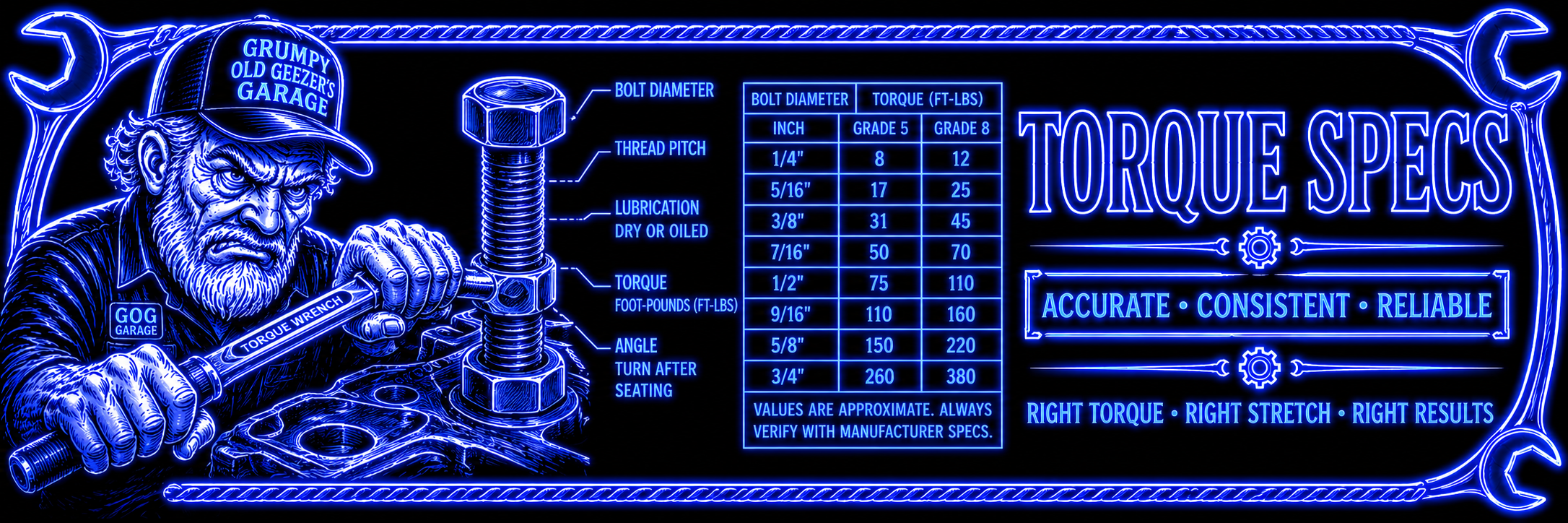
General Torque Specs
| Bottom End | Top End | ||
|---|---|---|---|
| Main Cap Bolts | 60-70 lb-ft | Head Bolts | 70-75 lb-ft |
| Connecting Rod Bolts | 19-24 lb-ft1 21-26 lb-ft2 |
Rocker Shaft Bolts | 30-35 lb-ft |
| Oil Pump Bolts | 10-15 lb-ft | Valve Cover Bolts | 3-5 lb-ft |
| Intake and Exhaust | Driveline Side | ||
| Intake Adapter / Carb Spacer Bolts | 16-18 lb-ft3 | Flywheel / Flexplate Bolts | 75-85 lb-ft |
| Exhaust Manifold Bolts | 18-24 lb-ft | Pressure Plate Bolts | 32-36 lb-ft |
| Carburetor Mounting Nuts | 8-12 lb-ft | Starter Bolts | 35 lb-ft |
| External Engine | |||
| Crankshaft Damper / Pulley Bolt | 55 lb-ft4 85-100 lb-ft5 |
Water Pump Bolts | 12-16 lb-ft |
| Camshaft Sprocket Bolt | 42-45 lb-ft | Fuel Pump Bolts | 15-20 lb-ft |
| Camshaft Thrust Plate Bolts | 14-16 lb-ft | Oil Pan Bolts | 7-10 lb-ft |
| Distributor Hold-Down Bolt | 15-20 lb-ft | ||
1 144 / 170 / 200 small-six connecting rod bolts.
2 250 small-six connecting rod bolts.
3 Adapter or bolt-on intake hardware where used. Most log-head small sixes do not have a separate conventional intake manifold.
4 144 damper / pulley value.
5 170 / 200 / 250 damper / pulley value.
Aftermarket bolts, studs, rocker gear, aluminum heads, and replacement head bolts use the part maker’s number and lube instructions. Don’t use this chart to overrule the parts in your hand.
A range is not a game of horseshoes. If a matched set shows 60-70, don’t give one bolt 60, the next one 66, and the last one whatever your elbow liked. Pick one value in the range and use it consistently across the set unless the real procedure says certain bolts get different numbers.

Notes
- The small Ford six is not the 240 / 300 big six. Do not drag truck-six numbers onto 144 / 170 / 200 / 250 hardware.
- The long inline-six head needs staged tightening and the proper sequence. This is not the place to freestyle.
- The 144 damper / pulley value is lower than the later small-six value. Do not turn that split into one lazy number.
- Most small-six heads use the integral log-style intake. If the engine has bolt-on adapters, aftermarket intake parts, or oddball conversion hardware, match the hardware before trusting a generic row.

Common Mistakes
- Using 240 / 300 torque values on a small Ford six because both engines are straight sixes.
- Forgetting that the 144 uses a different damper / pulley value than the later small sixes.
- Overtightening valve covers and oil pans until the gasket has no chance.
- Treating aftermarket adapters, aluminum heads, or replacement fasteners like factory log-head hardware.
- Reading a range and scattering random values across head bolts, mains, rods, or manifold bolts like that was ever a plan.

Bottom Line
The small Ford six is durable, simple, and easy to underestimate.
That does not make it a 240 / 300 truck six or a generic Ford bolt chart.
Match the actual small six, respect the 144 / later-small-six split where it matters, keep matched fasteners consistent, and don’t let “straight six” do your thinking.
Related Links
Covered Engines
Engine Family
- Ford small inline-six engines.
Engine Family
- 144
- 170
- 200
- 250
Back to the Top, Before “Good and Tight” Breaks Something Else