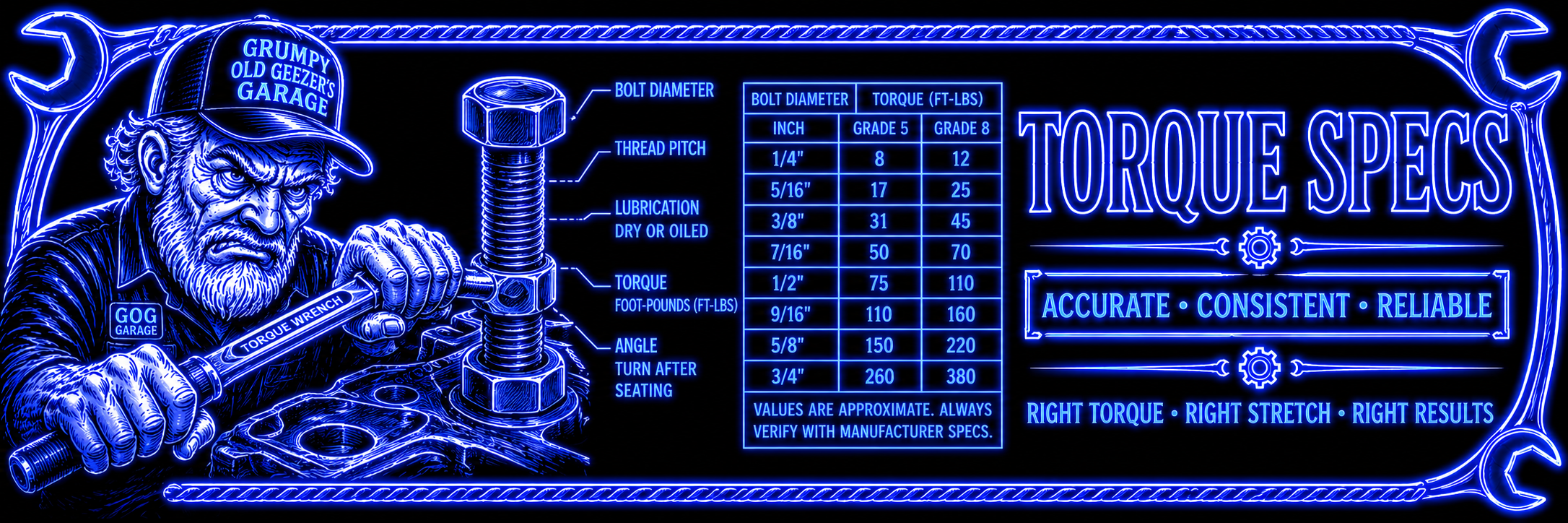
Mopar RB Big Block Torque Specs
On This Page:
Intro | Torque Specs | Notes | Mistakes | Bottom Line | Links

Intro
The RB is the tall-deck Mopar wedge family: 413, 426 wedge, and 440. Calling it a “big-block Mopar” is accurate in the same way calling a dump truck “transportation” is accurate. It leaves out the part that determines whether the pieces in your hands actually belong together.
The taller deck moves the heads farther apart than on a B-series engine, which means the intake has to span a different distance. That one physical difference is enough to make a pile of apparently familiar big-block parts become very expensive shelf decorations. Then add decades of 440 swaps, Six Pack pieces, Max Wedge hardware, aftermarket heads, replacement rods, and race parts, and the badge on the air cleaner stops being much help.
The torque chart looks deceptively familiar because many B and RB wedge values are shared. That is useful until somebody mistakes shared numbers for shared parts. Plain and heavy-duty rod bolts still need to be identified. Factory iron-head and iron-intake values stop being authoritative when the top end has been changed. The 270 in-lb converter specification is still inch-pounds no matter how large the engine looks.
A 440 may be the engine everybody remembers. The wrench still has to know whether it is tightening a factory RB part, a Max Wedge-style piece, or something that arrived in a box forty years later.
↑ Back to the Top, Before “Good and Tight” Breaks Something Else

General Torque Specs
| Bottom End | Top End | ||
|---|---|---|---|
| Main Cap Bolts | 85 lb-ft | Cylinder Head Bolts | 70 lb-ft3 |
| Connecting Rod Bolts | 45 lb-ft1 50-55 lb-ft2 |
Rocker Shaft Bracket Bolts | 25 lb-ft |
| Crankshaft Rear Bearing Seal Retainer Bolts | 30 lb-ft | Spark Plugs | 30 lb-ft |
| Oil Pump Attaching Bolt | 35 lb-ft | Valve Cover Bolts | 6-7 lb-ft4 |
| Oil Pump Cover Bolt | 10 lb-ft | ||
| Oil Pan Bolts | 15 lb-ft | ||
| Intake and Exhaust | Driveline Side | ||
| Intake Manifold Bolts | 40 lb-ft3 | Flywheel / Flexplate Bolts | 55 lb-ft |
| Exhaust Manifold Bolts / Nuts | 30 lb-ft | Torque Converter Bolts | 270 in-lb |
| Carburetor Mounting Nuts | 7 lb-ft4 | Bellhousing / Flywheel Housing Bolts | 50 lb-ft |
| Starter Mounting Bolts | 50 lb-ft | ||
| External Engine | |||
| Harmonic Damper Bolt | 135 lb-ft | Water Pump Bolts | 30 lb-ft |
| Camshaft Lock Bolt | 35 lb-ft | Fuel Pump Bolts | 30 lb-ft |
| Timing Cover Bolts | 10 lb-ft | Distributor Hold-Down Bolt | 15 lb-ft |
1 Plain connecting rod bolts.
2 Heavy-duty connecting rod bolts.
3 Factory iron-head / iron-intake wedge value. Aluminum heads, aftermarket intakes, Max Wedge-style parts, special gaskets, or replacement fasteners use their own instructions.
4 Thin covers, carburetor flanges, and cork-style gaskets distort easily. Tighten evenly and do not turn seep control into bent metal.
The two rod-bolt values are there because Chrysler did not hand every RB rod the same hardware and call it a day. Plain bolts are listed at 45 lb-ft; heavy-duty bolts at 50-55. A 413 or 440 that has been apart a few times may contain rods nobody at the assembly plant ever met, so displacement alone does not settle anything.
The 70 lb-ft head and 40 lb-ft intake figures describe the factory-style iron wedge combination represented by this chart. Max Wedge-style pieces, aluminum heads, aftermarket manifolds, special gaskets, studs, and replacement fasteners can change the instructions. Once the hardware changes, nostalgia can admire the engine from across the garage; it does not get a vote.
The small numbers deserve every bit as much respect as the large ones. Carburetor nuts are 7 lb-ft, valve-cover bolts only 6-7, while the harmonic damper bolt wants 135. They may all live on a 440, but only one of them is volunteering for gorilla duty.
And that converter row says 270 in-lb. Not 270 lb-ft. Big engine, little unit. Read both before the wrench gets ambitious.
↑ Back to the Top, Before “Good and Tight” Breaks Something Else

Important Notes
- RB means raised deck. That extra height spreads the heads farther apart, which is why a B-series intake can sit there looking almost right while being completely wrong.
- The 413, 426 wedge, and 440 share the RB architecture, but special-performance engines and decades of swapping mean the parts on one engine may be far from ordinary production pieces.
- Max Wedge-style and other performance top-end hardware deserves positive identification. A familiar casting shape does not guarantee the factory iron-head or iron-intake torque value still belongs there.
- Plain and heavy-duty rod bolts get different numbers. If the rods have been replaced, reworked, or upgraded, look at the fasteners before the torque chart starts making decisions for parts it has never seen.
- Factory rocker-shaft brackets use 25 lb-ft. Aftermarket shafts, stands, rockers, or fasteners follow the instructions supplied with those parts.
- Thin covers and carburetor flanges need flat sealing surfaces more than they need extra wrench. Once the rail bends around the bolt hole, another quarter-turn is not repair work; it is finishing the damage.
↑ Back to the Top, Before “Good and Tight” Breaks Something Else

Common Mistakes
- Buying B-series intake parts for an RB engine because the bolt pattern looked right in a photograph. The raised deck moved the heads apart whether the catalog picture mentioned it or not.
- Assuming a 440, 413, and 426 wedge must contain ordinary production hardware because they all belong to the same family. Max Wedge pieces, Six Pack equipment, old race parts, and later upgrades have been mixed into these engines for decades.
- Using the 45 lb-ft rod figure on heavy-duty bolts, or 50-55 on plain bolts, because nobody bothered to identify what was actually installed.
- Applying factory iron-head and intake numbers to aluminum heads, aftermarket manifolds, studs, or special-performance hardware after the engine has stopped being a factory iron combination.
- Reading 270 in-lb on the converter row as though the chart said 270 lb-ft. The engine’s reputation does not protect the fastener from the wrong unit.
- Trying to cure valve-cover or carburetor seepage by tightening distorted sheet metal harder. Once the flange is bent, the wrench is no longer fixing the leak.
↑ Back to the Top, Before “Good and Tight” Breaks Something Else

Bottom Line
The RB family became famous because 413s, 426 wedges, and especially 440s could make serious power without requiring exotic architecture. That fame also guaranteed that generations of people would swap, modify, race, rebuild, and generally rearrange the hardware.
So the shared B/RB torque numbers are only the beginning. The raised deck changes the intake geometry. Rod hardware can change the rod specification. Max Wedge-style and aftermarket top-end pieces can throw factory iron values out the window. A forty- or fifty-year-old 440 may still be an RB while containing very little hardware Chrysler installed.
Identify the engine. Then identify the parts. “It came off a big-block Mopar” has already filled enough shelves with parts that almost fit.
↑ Back to the Top, Before “Good and Tight” Breaks Something Else