Mopar B Big Block Torque Specs
On This Page:
Intro | Torque Specs | Notes | Mistakes | Bottom Line | Links

Intro
The Mopar B big block is not an RB with a shorter name, and a 383 is not a 440 that stopped growing early.
The 350, 361, 383, and 400 belong to Chrysler’s low-deck B-series wedge family. They share plenty of architecture and plenty of torque values with the raised-deck RB engines, which is exactly why people get careless. Similar hardware is not identical hardware. Intake width, deck height, brackets, exhaust pieces, swap parts, and the collection of fasteners accumulated during fifty years of rebuilding can turn a casual “big-block Mopar” assumption into a pile of parts that almost fit.
The torque chart has its own places to pay attention. Plain and heavy-duty rod bolts use different values. Factory iron head and intake numbers stop applying when aluminum or aftermarket parts arrive. Thin valve covers and carburetor flanges need restraint, while the harmonic damper bolt sits at the other end of the wrench at 135 lb-ft. The engine may be simple enough to understand. That does not make every fastener interchangeable.
↑ Back to the Top, Before “Good and Tight” Breaks Something Else

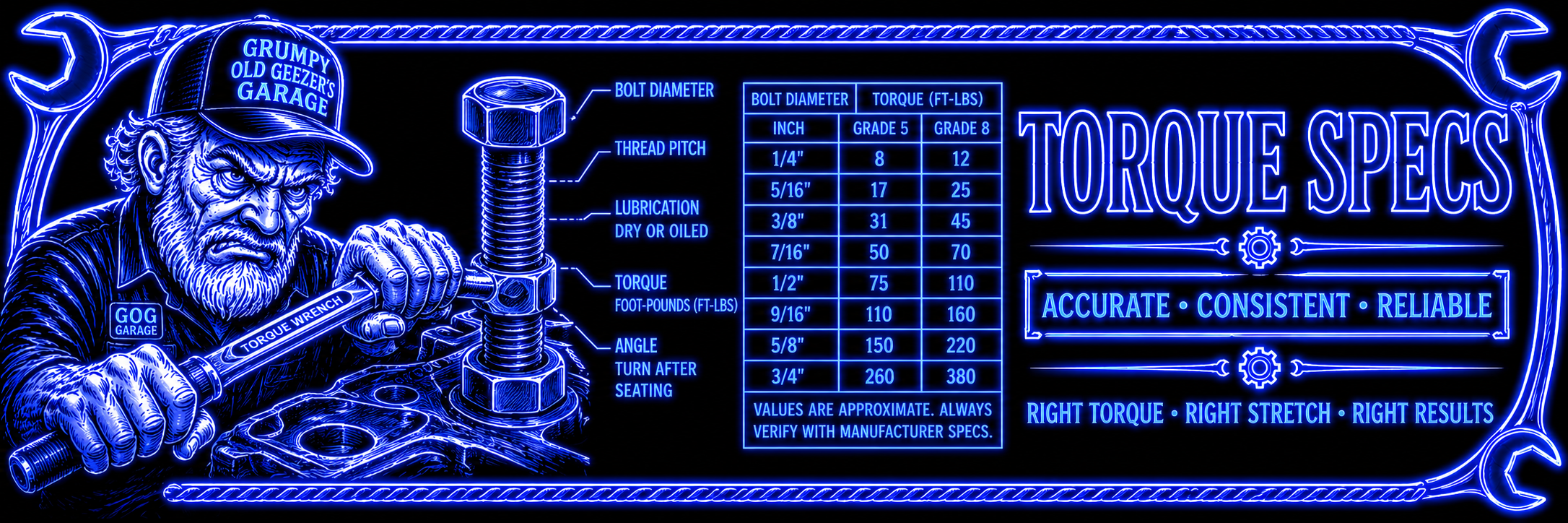
General Torque Specs
| Bottom End | Top End | ||
|---|---|---|---|
| Main Cap Bolts | 85 lb-ft | Cylinder Head Bolts | 70 lb-ft3 |
| Connecting Rod Bolts | 45 lb-ft1 50-55 lb-ft2 |
Rocker Shaft Bracket Bolts | 25 lb-ft |
| Crankshaft Rear Bearing Seal Retainer Bolts | 30 lb-ft | Spark Plugs | 30 lb-ft |
| Oil Pump Attaching Bolt | 35 lb-ft | Valve Cover Bolts | 6-7 lb-ft4 |
| Oil Pump Cover Bolt | 10 lb-ft | ||
| Oil Pan Bolts | 15 lb-ft | ||
| Intake and Exhaust | Driveline Side | ||
| Intake Manifold Bolts | 40 lb-ft3 | Flywheel / Flexplate Bolts | 55 lb-ft |
| Exhaust Manifold Bolts / Nuts | 30 lb-ft | Torque Converter Bolts | 270 in-lb |
| Carburetor Mounting Nuts | 7 lb-ft4 | Bellhousing / Flywheel Housing Bolts | 50 lb-ft |
| Starter Mounting Bolts | 50 lb-ft | ||
| External Engine | |||
| Harmonic Damper Bolt | 135 lb-ft | Water Pump Bolts | 30 lb-ft |
| Camshaft Lock Bolt | 35 lb-ft | Fuel Pump Bolts | 30 lb-ft |
| Timing Cover Bolts | 10 lb-ft | Distributor Hold-Down Bolt | 15 lb-ft |
1 Plain connecting rod bolts.
2 Heavy-duty connecting rod bolts.
3 Factory iron-head / iron-intake wedge value. Aluminum heads, aftermarket intakes, special gaskets, or replacement fasteners use their own instructions.
4 Thin covers, carburetor flanges, and cork-style gaskets distort easily. Tighten evenly and do not turn seep control into bent metal.
The two rod-bolt numbers are not alternatives for the same hardware. Plain bolts use 45 lb-ft; heavy-duty bolts use 50-55. A B-series block does not tell you which rods survived the last rebuild, so the wrench waits until the hardware has been identified.
The 70 lb-ft head and 40 lb-ft intake figures belong to the factory-style iron wedge arrangement represented here. Aluminum heads, aftermarket intakes, different gaskets, studs, and replacement bolts can change both torque and procedure. Once the factory never installed the part, the factory number does not get to boss it around.
7 lb-ft carburetor nuts and a 135 lb-ft harmonic damper bolt both live on the same engine. One clamps a flange that can warp if you look at it cross-eyed; the other is serious crankshaft hardware. The wrench had better know which neighborhood it wandered into.
The converter row is another place where two little letters save expensive parts: 270 in-lb, not 270 lb-ft and not whatever engine-fastener number somebody remembers from last Tuesday. Reading the whole specification is part of using it.
↑ Back to the Top, Before “Good and Tight” Breaks Something Else

Important Notes
- The B-series is the low-deck Mopar wedge family. The 350, 361, 383, and 400 belong here; the 413, 426 wedge, and 440 live in the raised-deck RB family. Sharing a big-block last name does not make the intakes cousins close enough to swap.
- A 400 is still a B engine. Four hundred cubic inches do not magically lift the deck and turn it into a 440.
- Rod hardware gets identified before the wrench gets a number. Plain and heavy-duty bolts carry different values, and a rebuilt engine may contain rods its original build sheet never met.
- Factory rocker-shaft brackets use the listed 25 lb-ft value. Once aftermarket shafts, stands, rockers, or fasteners move in, Chrysler is no longer the landlord; the hardware maker writes the rule.
- The factory iron-head and iron-intake values belong together. Change the head material, manifold, gasket package, bolts, or studs and the new parts get a vote.
- Valve covers and carburetor flanges do not seal better because the metal has been bent around the bolt holes. Straight rails and even clamp load beat another quarter-turn.
↑ Back to the Top, Before “Good and Tight” Breaks Something Else

Common Mistakes
- Buying or installing RB intake parts for a B engine because somebody stopped reading after “big-block Mopar.” The bolt pattern may look familiar while the deck-height difference finishes the argument.
- Seeing “400” and treating the engine like a 440. Displacement is not an engine-family identification system.
- Using the 45 lb-ft rod value on heavy-duty hardware, or 50-55 on plain bolts, without first determining what is actually in the engine.
- Using factory head, intake, rod, or rocker numbers on aftermarket hardware simply because those numbers worked on the parts that were removed.
- Trying to stop a valve-cover or carburetor seep by tightening the fasteners until the sealing rail is no longer flat enough to seal anything.
- Missing the inch-pound unit on the converter bolts and treating 270 as though it belonged in the same scale as the 135 lb-ft damper bolt.
↑ Back to the Top, Before “Good and Tight” Breaks Something Else

Bottom Line
The B-series big block is straightforward hardware with one dangerous talent: it looks familiar enough to make shortcuts feel respectable.
A 383 and a 440 can share plenty of Mopar thinking while still being different engines. The B block sits lower, takes its own intake geometry, and may carry standard rods, heavy-duty rods, factory iron pieces, or fifty years of replacement hardware. None of those details care how confidently somebody says “they’re all the same.”
Identify the family first. Identify the hardware second. Then use the number that belongs to both. A torque wrench is very good at tightening the wrong part to the wrong specification with perfect accuracy.
↑ Back to the Top, Before “Good and Tight” Breaks Something Else