Chevy Mark IV Big Block
On This Page:
Intro | Torque Specs | Notes | Mistakes | Bottom Line | Links

Intro
The Mark IV Chevy big block is the engine most people mean when they say “big-block Chevy.”
That familiarity is useful right up until it turns lazy. A 396, 402, 427, and 454 share the Mark IV family, but main caps, rod bolts, head bolts, rocker hardware, and replacement parts still have to match the engine in front of you. W-engine guesses, small-block habits, and later Gen V / Gen VI assumptions do not belong here.

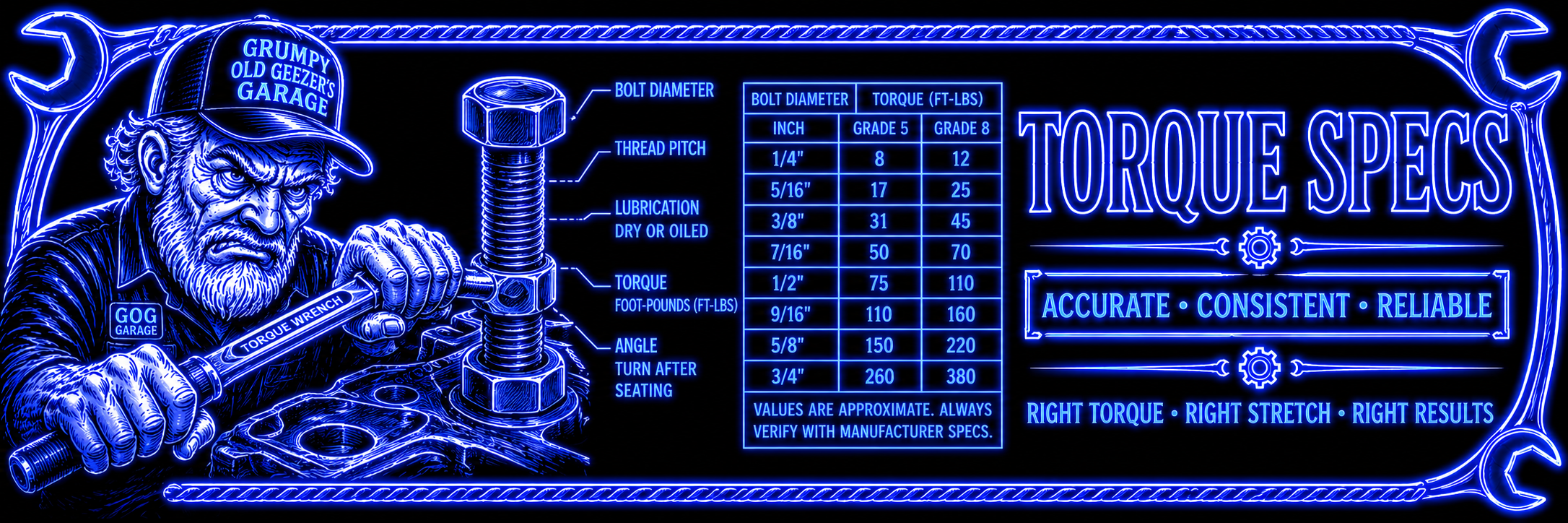
General Torque Specs
| Bottom End | Top End | ||
|---|---|---|---|
| Main Cap Bolts | 95 lb-ft1 110 lb-ft2 |
Cylinder Head Bolts | 75 lb-ft5 65-68 lb-ft6 |
| Connecting Rod Bolts | 50 lb-ft3 70 lb-ft4 |
Screw-In Rocker Studs | 50 lb-ft |
| Oil Pump to Rear Main Cap Bolt | 65 lb-ft | Factory Rocker Arm Nuts | set preload7 |
| Intake and Exhaust | Driveline Side | ||
| Intake Manifold Bolts | 25 lb-ft8 | Flywheel / Flexplate Bolts | 60-65 lb-ft |
| Exhaust Manifold Bolts | 25-30 lb-ft | Pressure Plate Bolts | 35 lb-ft |
| Carburetor Mounting Nuts | 12-15 lb-ft | Starter Bolts | 30-35 lb-ft |
| Bellhousing Bolts | 35 lb-ft | ||
| External Engine | |||
| Harmonic Damper Bolt | 85 lb-ft | Water Pump Bolts | 30 lb-ft |
| Camshaft Sprocket Bolts | 20 lb-ft | Fuel Pump Bolts | 25 lb-ft |
| Timing Cover Bolts | 8-12 lb-ft | Valve Cover Bolts | 5-7 lb-ft |
| Oil Pan Bolts | 8-12 lb-ft | Distributor Hold-Down Bolt | 15-20 lb-ft |
1 Two-bolt main block.
2 Four-bolt main block.
3 Factory 3/8 in. connecting rod bolts.
4 Factory 7/16 in. connecting rod bolts.
5 Long cylinder-head bolts.
6 Short cylinder-head bolts.
7 Factory adjustable rocker nuts are set by lifter preload, not fixed bolt torque.
8 Cast-iron-head Mark IV intake value. Aluminum heads, aftermarket intakes, and special gaskets use their own instructions.
Aftermarket bolts, studs, rods, aluminum heads, intake manifolds, roller rockers, and replacement fasteners use the part maker’s number and lube instructions. Don’t use this chart to overrule the parts in your hand.
A range is not a game of horseshoes. If a matched set shows 25-30, don’t give one bolt 25, the next one 28, and the last one whatever your elbow liked. Pick one value in the range and use it consistently across the set unless the real procedure says certain fasteners get different numbers.

Notes
- The Mark IV big block is not a Chevrolet W engine. A 348 / 409 page does not belong on a 396 / 427 / 454 job just because both got called big blocks.
- Mark IV does not automatically mean later Gen V or Gen VI. Some habits carry over. Some hardware does not. Check before the wrench clicks.
- Head-bolt length matters. Long and short Mark IV head bolts do not use the same value.
- Rod-bolt size matters. A 3/8 in. rod bolt and a 7/16 in. rod bolt are not asking for the same clamp load.
- Factory rocker nuts are adjusted for lifter preload. Don’t treat them like ordinary bolts just because they are threaded.

Common Mistakes
- Using Chevy W big-block torque specs on a Mark IV because both engines got called big blocks.
- Using small-block Chevy habits on a big block because the orange paint looked familiar.
- Missing the two-bolt / four-bolt main split and torquing every main cap like the block layout does not matter.
- Using the 3/8 in. rod-bolt number on 7/16 in. rod bolts, or the other way around, because measuring was apparently too much work.
- Treating factory rocker nuts like a fixed-torque part instead of setting lifter preload.
- Using factory iron-head intake torque on aluminum heads or an aftermarket intake that came with its own instructions.
- Reading a range and scattering random values across head bolts, mains, rods, or intake bolts like that was ever a plan.

Bottom Line
The Mark IV big-block Chevy is common, strong, and forgiving right up until someone gets lazy.
It is not a W engine, not a small block, and not automatically the same as every later big-block Chevrolet.
Check the main caps, check the rod bolts, respect the head-bolt split, set the rockers correctly, and don’t let “big-block Chevy” do your thinking.

Related Links
Covered Engines
Engine Family
Back to the Top, Before “Good and Tight” Breaks Something Else