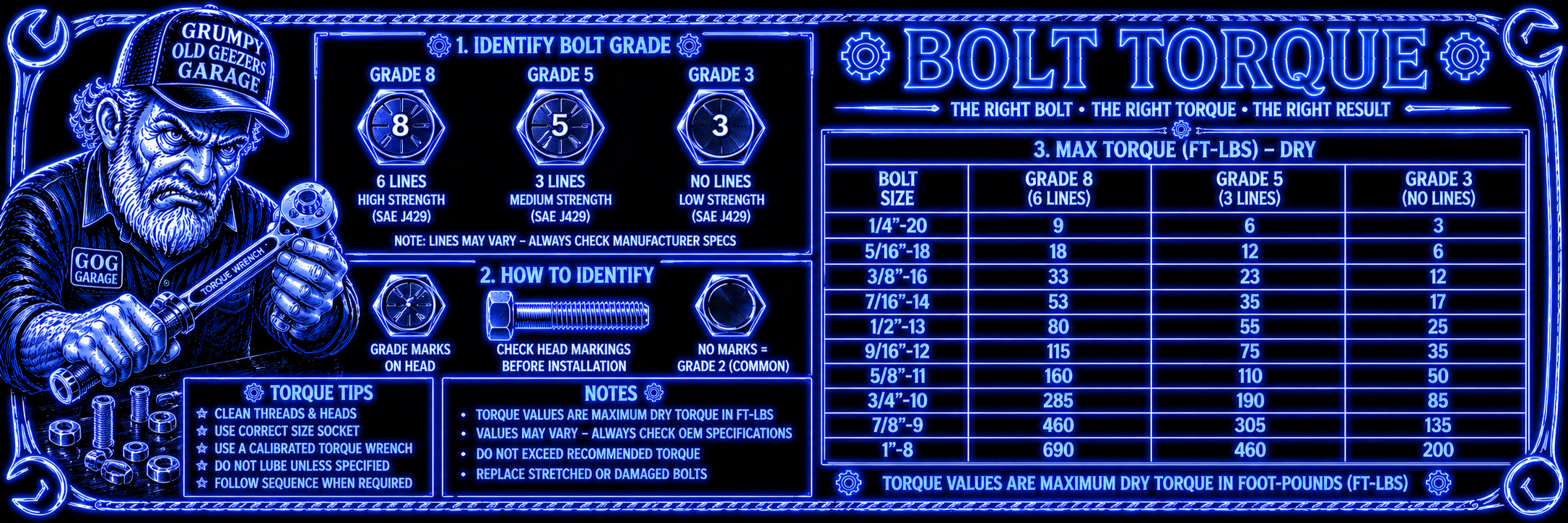
Mopar Torque Specs
Mopar torque specs follow the engine family, not just the badge, displacement, or valve cover shape.
Start with the actual engine family. A/Poly, LA, B, RB, early Hemi, and 426 Hemi engines are not one big Chrysler bolt chart with different names.

Mopar Big Block Torque Specs
B-Series Family 350, 361, 383, and 400 Big Block Mopar
The B-series big block has its own deck height, parts mix, and hardware details. Do not treat it like an RB page with shorter numbers.
RB-Series Family 413, 426 wedge, and 440 Big Block Mopar
The RB family is related to the B-series, but taller deck height, different parts, and real-world swaps make the correct family page matter before the wrench comes out.
Gen 1 Hemi 331, 354, and 392 early Hemi
The early Hemi family is not a 426 Hemi and not a wedge big block. Use the Gen I Hemi page when the engine is one of the early Chrysler-style Hemi designs.
Gen 2 Hemi 426 street and race Hemi
The 426 Hemi is its own animal. It does not belong mixed into the B/RB wedge chart just because people call everything big and Mopar a big block.
Older Mopar Torque Specs
Inline 6 Family 170, 198, and 225 Mopar inline six
The Slant Six earned its reputation by surviving abuse, not by being assembled with guesses. Use the Slant Six page for the right family, fasteners, and tightening patterns.
What’s Different
- Mopar looks simple until someone starts mixing family names. A/Poly, LA, B, RB, Gen I Hemi, and Gen II Hemi engines are separate families.
- A/Poly and LA engines are both small-block Mopar territory in casual conversation, but they are not the same engine family.
- B and RB big blocks are related, but deck height, components, and application differences still matter when clamping load is involved.
- Early Hemi and 426 Hemi engines do not belong in one generic Hemi chart. The name is familiar; the hardware is not always the same.
- The Slant Six is tough, but tough is not the same as immune to wrong torque, dirty threads, warped covers, or over-tightened hardware.
- Mopar swaps are common. The torque spec follows the engine family and the part with the threads, not the name someone uses at a swap meet.
- Dirty threads, wrong bolt length, damaged holes, mixed hardware, and bottomed fasteners can make a torque reading lie.
- Most Mopar torque mistakes start with the same lazy thought: “Close enough.” It isn’t.
↑ Back to the Top, Before the Parts Start Arguing
Parting Shot
The badge gets you close.
The engine family gets you correct.
If you tighten by assumption, Mopar gives you plenty of ways to be wrong.